


For years, health-conscious homeowners have faced a frustrating trade-off. They could either use harsh chemical disinfectants that kill everything but leave behind toxic residues, or they could accept that their indoor air and surfaces would remain colonized by mold, bacteria, and allergens. Traditional air purifiers helped with airborne particles but did nothing for surface contamination. Then came probiotic purification, and suddenly the trade-off disappeared. A growing number of thoughtful homeowners are making the switch, not because they are attracted to flashy marketing, but because the science is compelling. Probiotic systems offer something that bleach sprays and HEPA filters cannot, active, continuous, non-toxic management of the indoor microbiome. This is not a fad. It is a rational upgrade based on decades of microbial ecology research finally being applied to the places where we live, work, and raise our families.
The Hidden Costs of Chemical Disinfection
Before understanding why homeowners are switching, it helps to understand what they are leaving behind. Chemical disinfectants like bleach, quaternary ammonium compounds, and hydrogen peroxide are effective at killing microbes on contact. But they come with hidden costs that health-conscious people are increasingly unwilling to pay. First, these chemicals are themselves irritants. Bleach fumes can trigger asthma attacks. Quaternary ammonium compounds have been linked to skin rashes and respiratory issues. Second, chemical disinfectants leave residues that persist on surfaces long after the smell fades. Your family touches those residues, your pets lick them, and your children crawl through them. Third, and most importantly, chemical disinfection creates a vicious cycle. You kill everything, the surface is recolonized within hours, often by hardier, more resistant strains, and you have to spray again. This is not cleaning. It is chemical dependency. Health-conscious homeowners are recognizing that the cure has become part of the problem.
What Traditional Air Purifiers Miss
HEPA filters and UV air purifiers have their place, but they leave a massive gap in coverage that many homeowners do not realize exists. A HEPA filter captures airborne particles, but it does nothing about the mold growing on your window sill, the bacteria colonizing your kitchen sponge, or the dust mites thriving in your carpet. Those surface contaminants are the source of most indoor allergens. They are constantly shedding particles into the air, meaning your HEPA filter is essentially trying to empty a bathtub with a teaspoon while the faucet is still running. UV purifiers are even more limited. They only kill microbes that pass directly in front of the UV bulb, leaving shadows where pathogens survive. Neither technology addresses the fundamental problem, which is that your indoor surfaces are an ecological vacuum waiting to be filled. As long as that vacuum exists, harmful microbes will rush to fill it.
How Probiotic Purification Closes the Gap
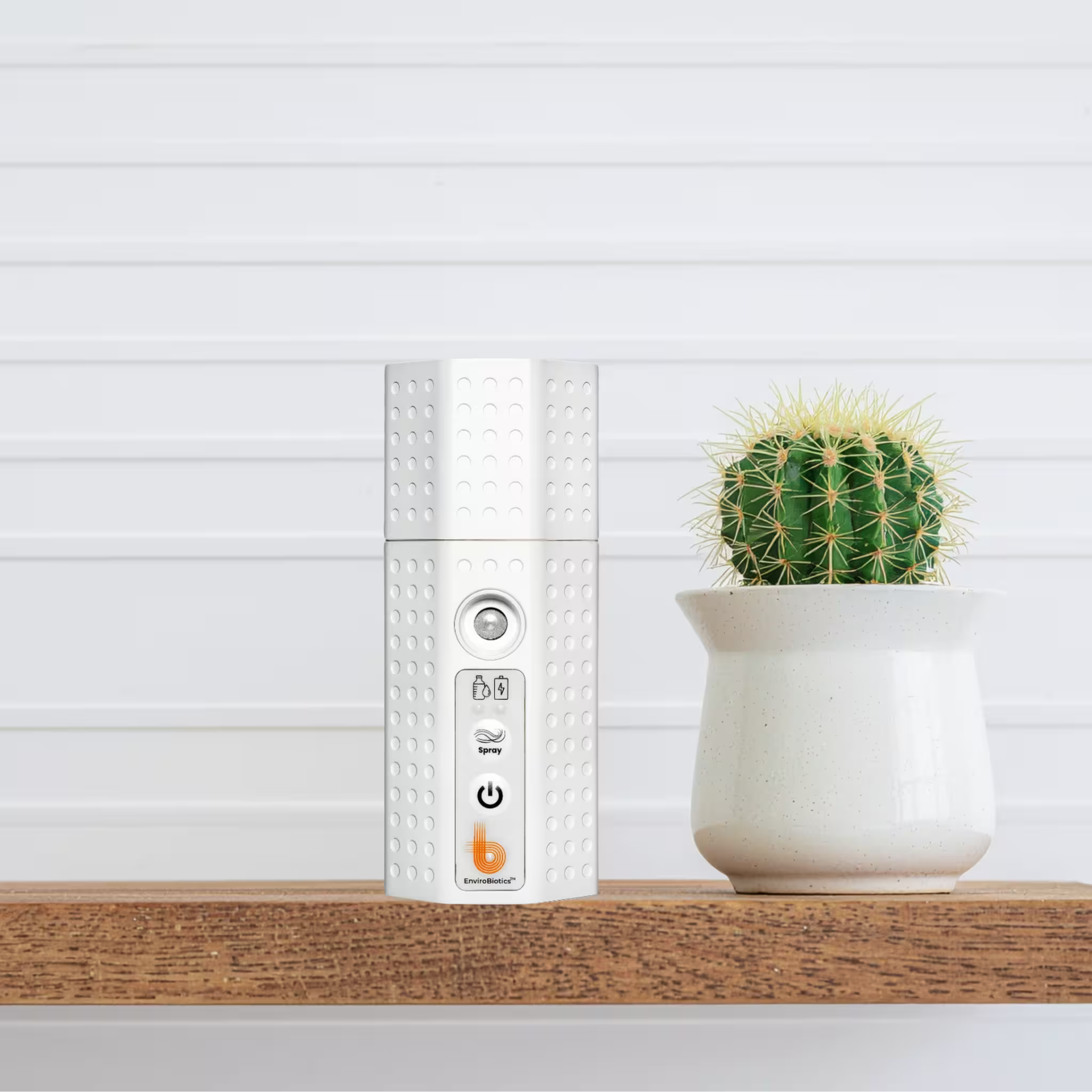
Probiotic purification takes a completely different approach that directly addresses the limitations of both chemical disinfection and mechanical filtration. Instead of trying to kill everything or trap particles, EnviroBiotics systems release beneficial Bacillus bacteria that colonize your surfaces. These probiotics actively outcompete mold, pathogenic bacteria, and dust mites. They consume the organic debris that harmful microbes need to survive. They produce natural antimicrobial compounds that suppress pathogens. And they break down allergens at the surface level. The result is a home where the microbial balance is shifted strongly in favor of the good guys. You are not sterilizing your home, which is impossible anyway. You are managing your indoor ecosystem. This is not a temporary fix that requires constant reapplication. Once the probiotic colony is established, it maintains itself with minimal ongoing input. For health-conscious homeowners, this is the difference between fighting a never-ending war and establishing a lasting peace.
The Safety Advantages for Families
For families with young children, elderly relatives, or immunocompromised members, the safety advantages of probiotic purification are compelling. The Bacillus strains used by EnviroBiotics are FDA Generally Recognized as Safe, meaning they have been extensively tested and found to pose no health risk to the general population. They do not produce toxins, do not cause infections in healthy people, and do not carry transferable antibiotic resistance genes. In clinical trials, even immunocompromised participants showed no adverse effects from exposure. Compare this to chemical disinfectants, which are known respiratory irritants, or to ozone-generating ionizers, which are banned in some states for health reasons. Probiotic purification allows you to actively manage biological contaminants without introducing new risks. You are not trading one health problem for another. You are solving the problem cleanly.
The Financial Case for Switching
The financial argument for probiotic air purifier is more nuanced than simply comparing upfront costs, but for many homeowners, the long-term economics favor the switch. A probiotic system like the BA-2080 costs around three hundred dollars upfront, with replacement cartridges costing about thirty to forty dollars every four months. Over five years, that is roughly seven hundred fifty to eight hundred fifty dollars. A good HEPA purifier for a similar sized space might cost two hundred dollars upfront, with replacement filters at forty dollars every six months, totaling about six hundred dollars over five years. The probiotic system costs slightly more. However, probiotic users often find they can reduce or eliminate other expenses. Less need for professional mold remediation. Fewer allergy medications. Less spending on chemical cleaning products that were not working anyway. When you factor in the value of not breathing chemical residues and not fighting a losing battle against surface mold, the financial difference becomes negligible. For health-conscious homeowners, the marginal cost is well worth the peace of mind.
A Shift from Sterilization to Stewardship
Ultimately, the switch to probiotic purification represents a philosophical shift as much as a technological one. The old paradigm was sterilization. Kill everything. Leave nothing alive. The problem is that sterilization is impossible outside of a laboratory clean room, and even if it were possible, it would be unhealthy. A truly sterile home would leave your immune system untrained and vulnerable. The new paradigm is stewardship. Manage your indoor ecosystem. Cultivate beneficial microbes. Suppress harmful ones through ecological competition rather than chemical warfare. This is not a softer approach. It is a smarter one. Health-conscious homeowners are making the switch because they have realized that fighting nature is exhausting and ultimately futile. Working with nature, by contrast, is sustainable, effective, and deeply satisfying. The probiotic purification system humming quietly in the corner is not just cleaning your air. It is a declaration that you trust biology more than bleach, and that you are ready to live in harmony with the invisible world instead of trying to destroy it.
Comments (0)