


Dublin is a city that never really slows down, and when an emergency happens in the middle of a busy office, a crowded pub, or a bustling construction site, you cannot wait twenty minutes for an ambulance that might be stuck in traffic. You need someone right there who knows exactly what to do. That is where a proper First Aid Response course comes in. Irish First Aid has developed a reputation across Dublin for delivering training that is practical, thorough, and genuinely useful. But what exactly do you learn in their First Aid Response course? It is not just about putting on a plaster or calling for help. It is about stepping into a chaotic situation and bringing calm, competence, and care. Let me walk you through the core skills and knowledge areas that Irish First Aid teaches, so you understand exactly what you are getting when you sign up for this training in Dublin.
Patient Assessment and the DRABC Protocol
The very first thing Irish First Aid teaches you is how to assess a situation before you even touch the casualty. Panic is contagious, but so is calm, and a structured assessment is your anchor. You learn the DRABC protocol, which stands for Danger, Response, Airway, Breathing, and Circulation. First, you check for danger to yourself, the casualty, and any bystanders. There is no point in rushing in if you are about to become a second victim. Next, you check for a response by tapping the person’s shoulders and shouting clearly. If there is no response, you open the airway using a head tilt and chin lift. Then you check for breathing, looking, listening, and feeling for no more than ten seconds. Finally, if the person is breathing normally, you check circulation by looking for signs of bleeding or shock. This protocol sounds simple, but Irish First Aid drills it into you until it becomes automatic. By the end of the course, you will not have to think about the steps. Your brain will just run through them whenever you encounter someone who might be in trouble. That automaticity is what saves precious seconds in a real emergency.
High Quality CPR and AED Use
Cardiopulmonary resuscitation is the skill that most people associate with first aid, and for good reason. When someone’s heart stops, their brain starts dying within minutes. Irish First Aid dedicates serious time to making sure you can perform high quality CPR. You will kneel on the floor with a training manikin and practice pushing hard and fast, at a rate of one hundred to one hundred and twenty compressions per minute. Instructors watch your hand placement, your compression depth, and your chest recoil. They will correct you until your technique is spot on. But CPR alone is not enough. You also learn how to use an automated external defibrillator, or AED. These devices are becoming common in Dublin workplaces, shopping centres, and train stations, but they only work if someone uses them correctly. Irish First Aid teaches you to turn the machine on, place the adhesive pads on the casualty’s bare chest, and follow the voice prompts while continuing compressions. You practice this repeatedly until using an AED feels as natural as using a fire extinguisher. By the end of the course, you will have the confidence to take charge in a cardiac emergency.
Managing Bleeding and Wounds
Accidents involving blood can be deeply unsettling, especially for people who have never dealt with them before. Irish First Aid does not shy away from this discomfort. Instead, they tackle it head on with realistic, hands on practice. You learn to distinguish between venous bleeding, which tends to flow steadily, and arterial bleeding, which spurts with each heartbeat and is far more dangerous. For minor wounds, you practice cleaning and dressing the injury properly to prevent infection. For serious bleeding, you learn to apply direct pressure using gauze or a clean cloth, and you practice elevating the injured limb above the heart. Irish First Aid also introduces you to modern haemostatic dressings, which contain agents that help blood clot faster. You learn when and how to use a tourniquet, though the instructors emphasise that this is a last resort for catastrophic bleeding that will not stop with pressure alone. Throughout this training, the focus is on acting quickly but carefully, protecting yourself from blood borne diseases by wearing gloves, and getting the casualty to professional medical help as soon as possible. You leave knowing that you can handle a bleeding emergency without freezing or making things worse.
Treating Shock and Medical Emergencies
Shock is one of the most misunderstood and dangerous conditions in first aid. It is not the emotional reaction you see in movies. It is a life threatening physical response to trauma or blood loss, where the body starts shutting down to protect its vital organs. Irish First Aid teaches you to recognise the early warning signs, which include pale, cold, clammy skin, a rapid but weak pulse, rapid shallow breathing, and confusion or anxiety. Once you recognise shock, you learn how to manage it. You lay the person down, raise their legs to encourage blood flow to the heart and brain, and keep them warm with a blanket or coat. You do not give them anything to eat or drink, even if they beg for water. Beyond shock, the course covers a range of common medical emergencies. You learn to recognise the signs of a stroke using the FAST test, which looks at the face, arms, speech, and time. You learn how to help someone having an asthma attack or a severe allergic reaction, including how to use an epinephrine auto injector. You also cover seizures, diabetic emergencies, and chest pain. Each condition has its own set of warning signs and actions, and Irish First Aid gives you clear, memorable frameworks for each one.
Choking, Burns, and Fractures
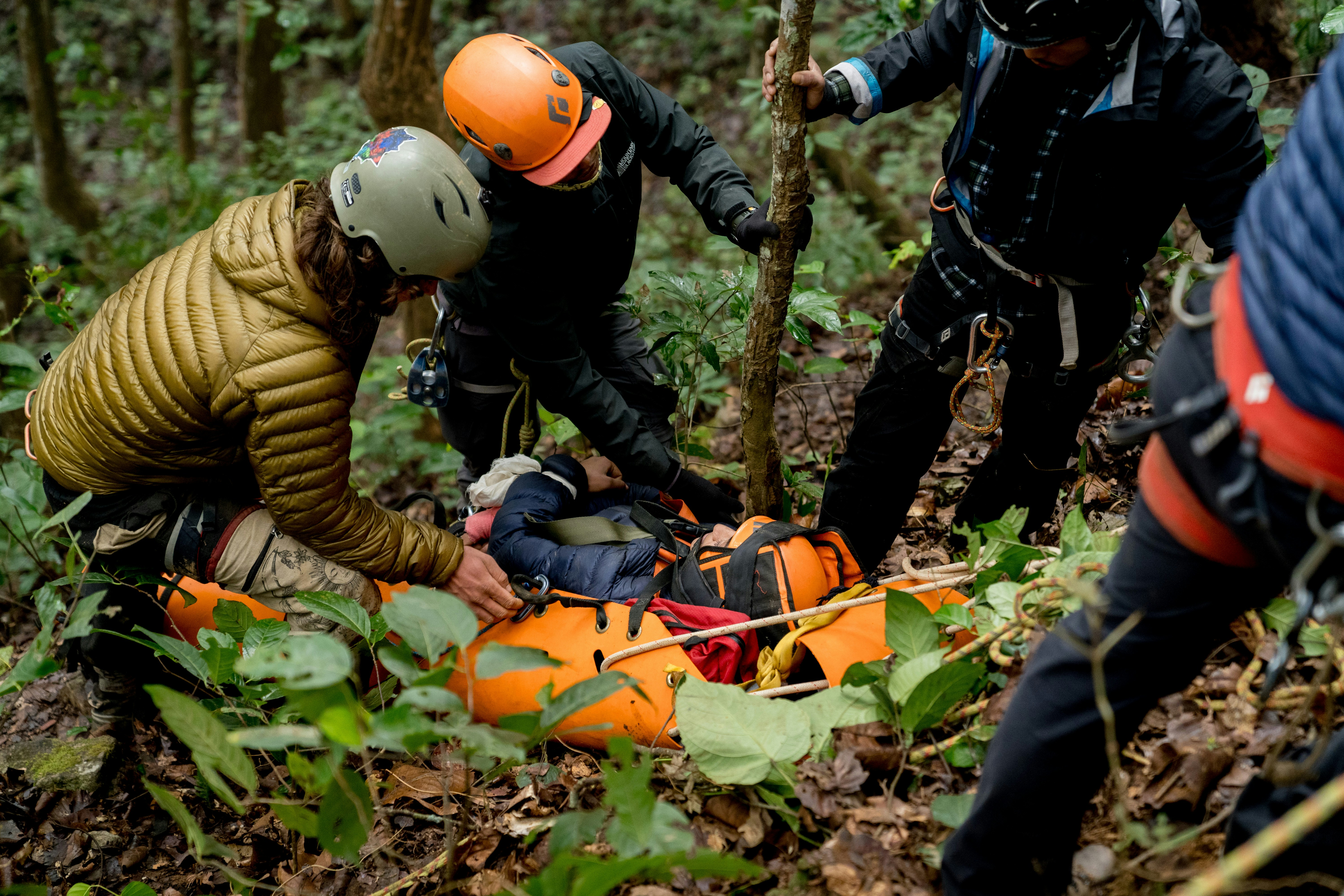
Life does not always throw dramatic, high intensity crises at you. Sometimes, an emergency looks like a colleague suddenly clutching their throat during lunch, or a child pulling a hot drink onto themselves, or someone tripping on the stairs and landing awkwardly. Irish First Aid makes sure you are ready for these everyday emergencies too. For choking, you practice back blows and abdominal thrusts on manikins and with fellow students, learning exactly how much force to use for adults versus children versus infants. The instructors emphasise that a choking person is still getting some air until they cannot speak or cough, at which point you must act immediately. For burns, you learn to cool the area with running water for at least twenty minutes, never use ice or butter, and cover the burn loosely with cling film or a clean dressing. For fractures, you learn to recognise the signs, which include swelling, deformity, and the casualty refusing to move the injured area. You practice immobilising a suspected fracture using slings, splints, or simply supporting the limb in a comfortable position. The golden rule across all these scenarios is to do no further harm. Irish First Aid teaches you what to do, but just as importantly, what not to do.
Practical Scenario Training and Confidence Building
The real value of Irish First Aid’s course is not in any single skill, but in the confidence you gain from putting all the skills together. Towards the end of the training, the instructors run scenario based drills that mimic real emergencies as closely as possible. You might walk into a room and find an unconscious person on the floor with a pool of fake blood near their head, while another person is pretending to have a seizure nearby. There is background noise, people shouting, and distractions everywhere. Your job is to stay calm, run through your DRABC assessment, prioritise your actions, and deliver the correct first aid while communicating clearly with bystanders. These simulations feel intense, and that is exactly the point. When you successfully complete one, something clicks inside you. You realise that you did not freeze, you did not run away, and you actually remembered what to do. That moment of realisation is where real confidence is born. It stays with you long after the course ends and follows you back to your Dublin workplace, your home, and your community. You are no longer someone who hopes help arrives in time. You are the help.
Comments (0)