


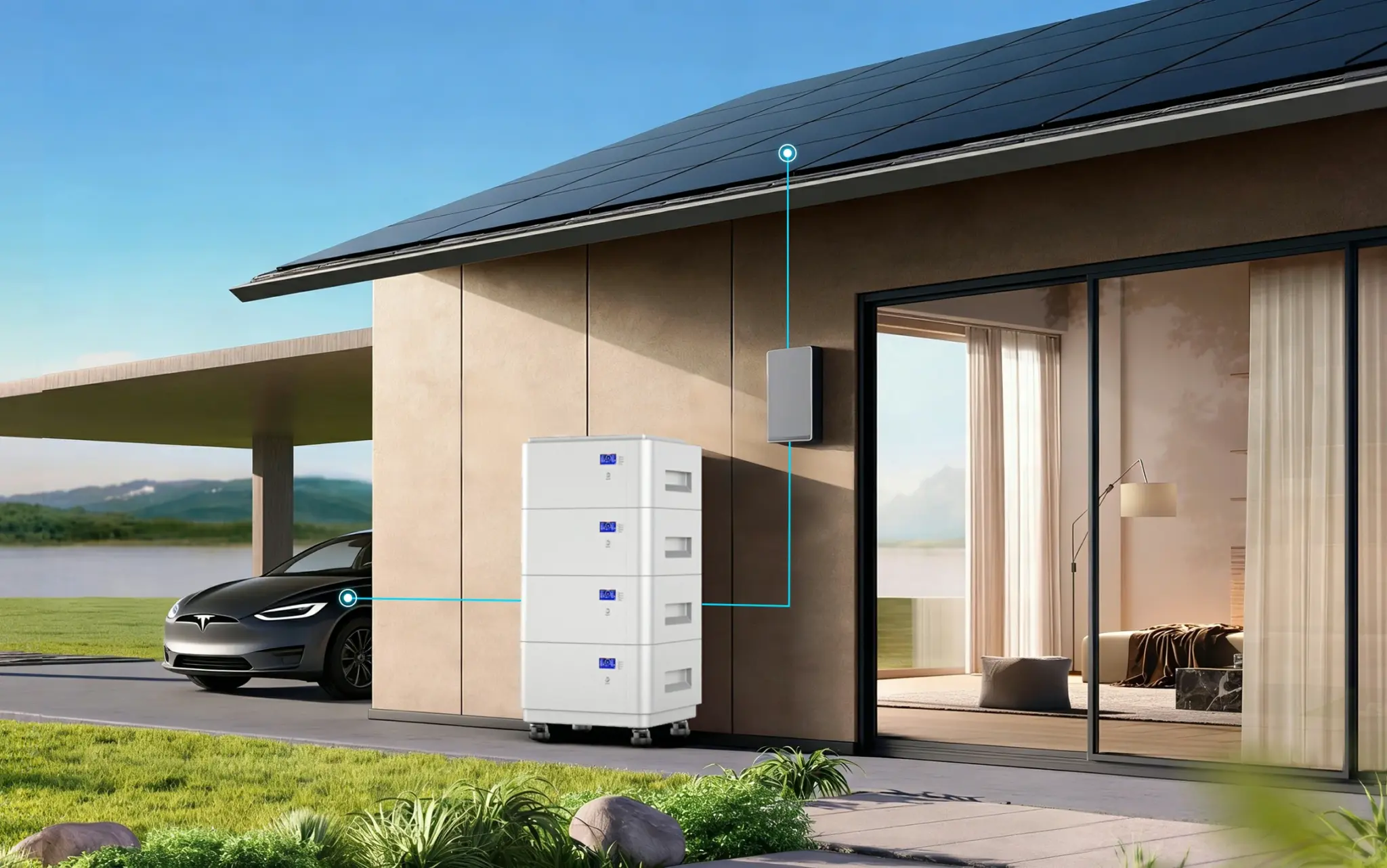
When we think about sustainable energy storage, the conversation often stops at solar panels and wind turbines. But what about the batteries themselves? An eco friendly stackable battery system goes beyond just storing clean energy – it’s manufactured with minimal environmental impact, uses non-toxic materials, lasts long enough to avoid frequent replacements, and can be easily recycled at the end of its life. This is a stark contrast to older battery technologies like lead-acid, which involve toxic lead and sulfuric acid, or early lithium-ion batteries that used cobalt mined under questionable conditions. Today’s eco friendly stackable systems primarily use lithium iron phosphate (LiFePO4) chemistry, which contains no heavy metals, no cobalt, and no toxic rare earth elements. The phosphate and iron are abundant and benign, making production far less damaging to the planet. Moreover, because these systems are stackable and modular, you’re never throwing away a whole battery bank when one piece ages – you simply replace individual modules. For homeowners who want their green energy setup to be genuinely green from end to end, eco friendly stackable batteries are the obvious choice.
Why Lithium Iron Phosphate Is the Green Chemistry Choice
Let me explain why lithium iron phosphate (LiFePO4) has become the darling of sustainable energy storage. Unlike the nickel-manganese-cobalt (NMC) batteries found in many electric vehicles and early home storage units, LiFePO4 contains no cobalt whatsoever. Cobalt mining has been linked to severe environmental destruction and human rights concerns, particularly in the Democratic Republic of Congo. By eliminating cobalt, LiFePO4 batteries avoid that entire moral and ecological quagmire. The remaining materials – lithium, iron, and phosphate – are far more abundant and less harmful to extract. Iron mining is already widespread and well-regulated, while phosphate is a common mineral used in agriculture. Even the lithium, which does require mining, is used in much smaller quantities per kilowatt-hour than in NMC batteries. Additionally, LiFePO4 cells are manufactured using water-based electrode processing rather than toxic organic solvents like NMP (N-methyl-2-pyrrolidone), which is a reproductive hazard. The manufacturing process generates fewer volatile organic compounds and requires less energy-intensive drying. Some manufacturers now power their LiFePO4 production lines with solar or hydroelectricity, further reducing the carbon footprint. When you choose a LiFePO4 stackable battery, you’re not just storing clean power – you’re supporting a fundamentally cleaner supply chain.
Long Life Means Less Waste Over Time
One of the most powerful eco friendly features of stackable battery systems is their extraordinary lifespan. A typical eco friendly LiFePO4 stackable module is rated for 6,000 to 10,000 cycles at 80% depth of discharge. Let me put that in perspective. If you cycle your battery once per day, that’s sixteen to twenty-seven years of useful life before it drops to 80% of original capacity. And even after that, the battery isn’t dead – it still holds 80% of its charge, which is perfectly useful for less demanding applications like overnight backup or time-of-use shifting. Compare that to lead-acid batteries, which often need replacement every three to five years, or early NMC lithium batteries that might last seven to ten years. Every time you replace a battery, the old one must be recycled or disposed of, consuming energy and resources. By lasting two to three times longer, eco friendly stackable systems dramatically reduce the number of batteries that end up in the recycling stream over a homeowner’s lifetime. Furthermore, because the stackable design allows you to replace individual modules rather than whole banks, you’re not discarding perfectly good modules along with the failed one. That single-module replacement generates a fraction of the waste of a full bank replacement. For a truly sustainable approach, longevity is just as important as recyclability.
Recyclability and End of Life Considerations
No battery lasts forever, so what happens when your eco friendly stackable system finally reaches the end of its life? The news is surprisingly good. Lithium iron phosphate batteries are highly recyclable, with recovery rates for materials like lithium, iron, and copper exceeding 90% in modern recycling facilities. Unlike lead-acid batteries where toxic lead must be handled with extreme care, LiFePO4 recycling is safer and less energy-intensive. The process typically involves shredding the batteries, then using mechanical and chemical separation to recover the black mass containing lithium, iron, and phosphate. The recovered materials can be used to manufacture new batteries, creating a genuine circular economy. Several battery manufacturers now offer take-back programs for their end-of-life modules, some even providing a small rebate toward new purchases. Additionally, because LiFePO4 cells contain no hazardous heavy metals like cadmium or mercury, they are classified as non-hazardous waste in most jurisdictions, simplifying disposal logistics. The stackable form factor helps here too – each module can be individually processed, and the common enclosure materials (steel, aluminum, and recyclable plastics) are easily separated. When you’re shopping for an eco friendly system, look for manufacturers that publish their recycling partnerships or have their own closed-loop programs. It’s a sign that they take end-of-life responsibility seriously.
Energy Efficiency as an Environmental Benefit
An often overlooked aspect of eco friendly battery storage is operational efficiency. Every watt-hour of energy lost as heat during charging and discharging is a watt-hour that had to be generated somewhere – often by burning fossil fuels. High quality stackable LiFePO4 systems achieve round-trip efficiencies of 95% to 98%, meaning only 2% to 5% of the energy you put in is lost. Compare that to lead-acid at 70% to 85% efficiency, or older nickel-based batteries at 60% to 75%. Over a year of daily cycling, that efficiency gap adds up to hundreds of kilowatt-hours of saved energy – energy that didn’t need to be produced by your solar panels or pulled from the grid. In grid-charging applications, higher efficiency means you’re using less electricity from power plants, reducing overall carbon emissions. Some eco friendly stackable systems also feature extremely low self-discharge rates, losing less than 1% of charge per month when idle. That means if you go on vacation, your stored clean energy will still be there when you return, rather than having been wasted as internal heat. For homeowners striving for a low-carbon lifestyle, choosing a highly efficient battery is as important as choosing efficient appliances or LED lighting. Every percentage point of efficiency is a direct reduction in environmental impact.
Sustainable Manufacturing and Ethical Supply Chains
The most eco friendly stackable battery systems go beyond chemistry and efficiency – they also pay attention to how and where the batteries are made. Look for manufacturers that have achieved certifications like ISO 14001 (environmental management) and that publish sustainability reports detailing their supply chain. Some companies now use renewable energy to power their factories, reducing the carbon footprint of each module by 30% or more. Others have implemented closed-loop water systems that recycle manufacturing wastewater rather than discharging it. On the supply chain side, ethical sourcing of lithium is becoming more important. Lithium from brine extraction in South America (evaporating salt flats) has a different environmental profile than hard rock mining in Australia – neither is perfect, but some manufacturers are transparent about where their lithium comes from and what steps they take to minimize ecosystem disruption. A few innovative companies are even working on battery modules designed for easy disassembly, using snap-fit connections and standardized screws rather than permanent adhesives. This design for recycling makes it far more likely that the materials will actually be recovered rather than landfilled. As a consumer, you have power here. By choosing eco friendly stackable batteries from transparent, responsible manufacturers, you send a clear market signal that sustainability matters. And because stackable systems are built to last and be upgraded incrementally, you’re making a long-term commitment to that value. In the end, truly sustainable energy storage isn’t just about the electrons – it’s about the entire lifecycle of the box that holds them.
Comments (0)