


If you have ever looked inside a slurry pump after it has been running for a while, you already know that the impeller takes the worst beating. It spins at high speed, flings sharp particles against the casing, and constantly battles the forces of abrasion, corrosion, and cavitation. For years, pump manufacturers treated the impeller as just another wear part, something to be replaced regularly and thought about rarely. CNSME PUMP decided to challenge that assumption. Their engineers went back to the drawing board and asked a simple question. What if we designed an impeller that actually resists wear rather than just accepting it? The result is a series of innovations that have changed how mines and plants think about slurry pump impeller design.
Logarithmic Spiral Vanes for Smoother Flow
Most slurry pump impellers use radial or slightly curved vanes that push particles outward through centrifugal force. This works, but it creates turbulence and recirculation at the vane entry points. CNSME introduced logarithmic spiral vanes, a geometry that follows the natural path that particles want to take as they enter the impeller. The curve of each vane matches the flow trajectory, meaning particles change direction gradually rather than slamming into a sharp vane leading edge. The difference in wear patterns is dramatic. Standard impellers show deep gouging at the vane inlet tips, where particles strike at an angle. CNSME impellers wear evenly across the vane surface because the flow never hits a hard corner. Dredging operators who switched to the logarithmic spiral design reported that impeller life increased by forty percent without any other changes to the pump or operating conditions. That is the power of getting the geometry right.
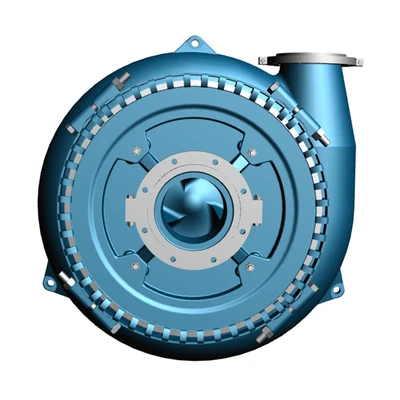
Thickened Leading Edges with Hardfacing
The leading edge of each impeller vane is the front line of defense. It is the first surface that particles encounter as they enter the pump, and it takes a tremendous amount of punishment. Standard impellers use the same material thickness and hardness throughout the vane, which means the leading edge wears thin and sharp, like a knife blade. Once that happens, flow patterns change and efficiency drops. CNSME thickened the leading edges of their impeller vanes by nearly double the standard thickness in high wear zones. But thickness alone is not enough. They also applied a specialized hardfacing alloy to the leading edges through a precision welding process. This hardfacing contains even higher concentrations of chromium carbides than the base material, creating a surface that resists the initial impact of sharp particles. As the hardfacing slowly wears, it maintains a rounded profile rather than sharpening. A rounded leading edge creates less turbulence and experiences less localized stress than a sharp one. Mines that have examined worn CNSME impellers note that the leading edges remain smooth and rounded even after thousands of hours, while competitor impellers have turned into jagged, knife edged remnants.
Variable Vane Thickness for Stress Distribution
Wear does not happen evenly across an impeller. Some areas experience high velocity particle impact. Other areas see mostly sliding abrasion. Still other zones are protected by the flow patterns and wear very slowly. CNSME recognized that a uniform vane thickness wastes material in slow wear areas and provides insufficient protection in high wear zones. Their impellers feature variable vane thickness, starting thick at the leading edge and tapering to a thinner profile near the vane tip. Finite element analysis guided this design, showing where stresses concentrate during operation. The thicker zones align perfectly with the areas that experience the highest impact forces and wear rates. This approach does not just extend impeller life. It also reduces the rotating mass of the impeller, which lowers the load on bearings and shaft. A lighter impeller accelerates faster, responds more quickly to variable frequency drive changes, and puts less stress on the entire rotating assembly during startup and shutdown. The variable thickness design is a win for both durability and efficiency.
Swept Back Vane Profile for Passing Debris
Standard impeller vanes are often straight or only slightly curved. This geometry works fine for uniform slurries, but it struggles when the slurry contains stringy materials, fibrous debris, or occasional oversize particles. Dredging and industrial wastewater applications frequently deal with these challenging materials. CNSME introduced a swept back vane profile that angles the vanes away from the direction of rotation. When a long, stringy particle enters the impeller, the swept back vanes guide it toward the outer diameter rather than allowing it to wrap around the vane tip. This feature dramatically reduces the chance of the impeller becoming fouled with rag, rope, or plastic debris. Municipal plants and dredging contractors who have tested both designs report that standard impellers needed manual cleaning every few days, while CNSME swept back impellers ran for months without clogging. The sweeping angle was carefully calibrated to balance debris handling against efficiency loss, resulting in only a minor efficiency penalty that most operators consider well worth the clog free operation.
Precision Machined Wearing Surfaces
Casting is the standard method for making impellers, and casting is inherently imprecise. As cast surfaces have roughness, dimensional variation, and hidden porosity. CNSME takes the extra step of precision machining critical wearing surfaces on their impellers after casting. The vane faces, the hub diameter, and the suction side shroud all receive machining to tight tolerances. The result is an impeller that fits perfectly within the volute, maintaining minimal clearances for maximum efficiency. The smooth machined surfaces also wear more evenly than as cast surfaces because there are no high spots or rough patches to initiate localized erosion. The initial cost of machining is higher, but the extended wear life and sustained efficiency more than justify it. Plants that have tracked impeller performance note that a machined CNSME impeller maintains its original profile much longer than an as cast competitor impeller, which begins wearing unevenly from the first minute of operation.
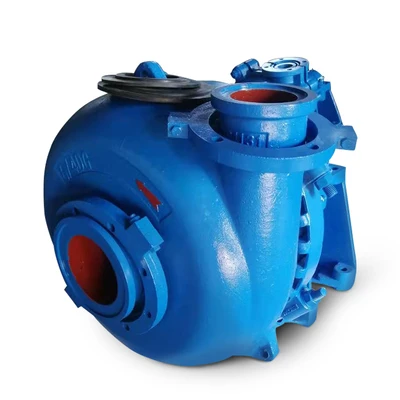
Shorter Overhang for Reduced Shaft Deflection
Impeller design is not just about the vanes and the hub. It is also about how the impeller attaches to the shaft and how far it extends from the bearing support. A heavy duty slurry pump impeller mounted far from the bearings creates a cantilever load that bends the shaft slightly during operation. That bend, even if only a few thousandths of an inch, causes the impeller to run off center, increasing wear and reducing efficiency. CNSME reduced the distance from the bearing housing to the impeller center of gravity, effectively shortening the overhang. They also optimized the hub design to move mass closer to the bearings without sacrificing hydraulic performance. The shorter overhang means less shaft deflection, which means the impeller runs truer, seals last longer, and the wear pattern remains even. This innovation is invisible to the operator, but the longer service life it enables is very visible on the maintenance log.
Hard Iron Alloys Tailored to Each Impeller
The final innovation is perhaps the most important. CNSME does not use the same alloy for every impeller. They match the metallurgy to the application. High chrome white iron with twenty five percent chromium works well for general purpose abrasive slurries. For extreme abrasion with large particles, they increase the chromium to thirty percent and add molybdenum to improve toughness. For corrosive abrasive applications, they use a nickel chromium alloy that resists chemical attack while maintaining hardness. Each impeller receives the specific alloy formulation that best matches the slurry it will handle. This tailored approach requires CNSME to maintain multiple alloy recipes and casting processes, which adds complexity to their manufacturing. But for the plant operator who receives an impeller that lasts twice as long as the previous one, that complexity is invisible. What matters is the result. The innovations in CNSME impeller design all point to the same goal. Moving more slurry, more reliably, with less maintenance. That is not just better engineering. That is better business.
Comments (0)