# Embodied AI Market Report: Driving Innovation Through Intelligent Robotics
The global Embodied AI Market is witnessing remarkable growth as artificial intelligence moves beyond software applications and into physical machines capable of interacting with the real world. Embodied AI integrates advanced technologies such as robotics, machine learning, computer vision, and sensors, enabling systems to perceive their surroundings, make decisions, and perform tasks autonomously.
One of the primary... more# Embodied AI Market Report: Driving Innovation Through Intelligent Robotics
The global Embodied AI Market is witnessing remarkable growth as artificial intelligence moves beyond software applications and into physical machines capable of interacting with the real world. Embodied AI integrates advanced technologies such as robotics, machine learning, computer vision, and sensors, enabling systems to perceive their surroundings, make decisions, and perform tasks autonomously.
One of the primary factors driving the market is the increasing adoption of intelligent automation across industries. Manufacturers are leveraging AI-powered robots to improve production efficiency, reduce operational costs, and maintain consistent quality standards. These systems can perform repetitive and complex tasks with high precision, making them valuable assets in modern industrial environments.
The logistics sector is also embracing embodied AI to optimize warehouse operations and supply chain management. Autonomous mobile robots are helping companies enhance inventory tracking, accelerate order processing, and improve overall operational performance. As e-commerce continues to expand globally, demand for intelligent robotic solutions is expected to grow significantly.
In healthcare, embodied AI is revolutionizing patient care and medical procedures. From robotic-assisted surgeries to rehabilitation and elderly care solutions, AI-driven machines are helping healthcare providers deliver more accurate and efficient services. The growing need for healthcare automation is creating substantial opportunities for market expansion.
Technological advancements in AI chips, edge computing, and sensor technologies are further accelerating adoption. These innovations enable embodied AI systems to process information faster, adapt to changing environments, and operate with greater autonomy. Additionally, the development of humanoid robots is attracting significant attention from investors and technology companies worldwide.
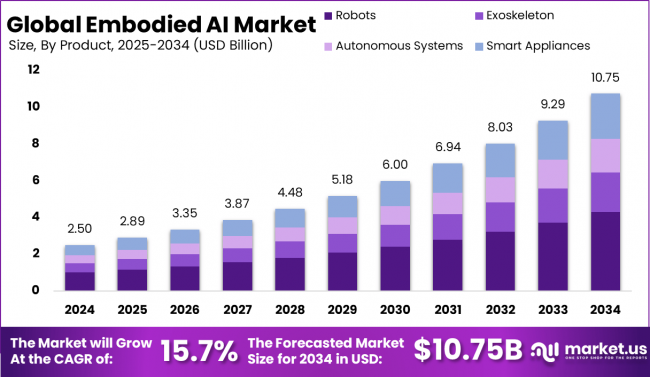
As organizations continue to pursue digital transformation and automation strategies, embodied AI is expected to become a cornerstone of future business operations. The market’s strong growth trajectory reflects the increasing importance of intelligent machines in enhancing productivity, innovation, and competitiveness across multiple sectors.