For decades, award shows were the most glamorous events on television.
Annual events such as the Oscars and the Emmys gave viewers a front-row seat to their favorite stars in designer clothes, while music award shows featured the hottest artists performing live.
But in recent years, the shows have become money losers and the network TV business — faced with a decline in viewers that is squeezing profits — are cutting them loose.
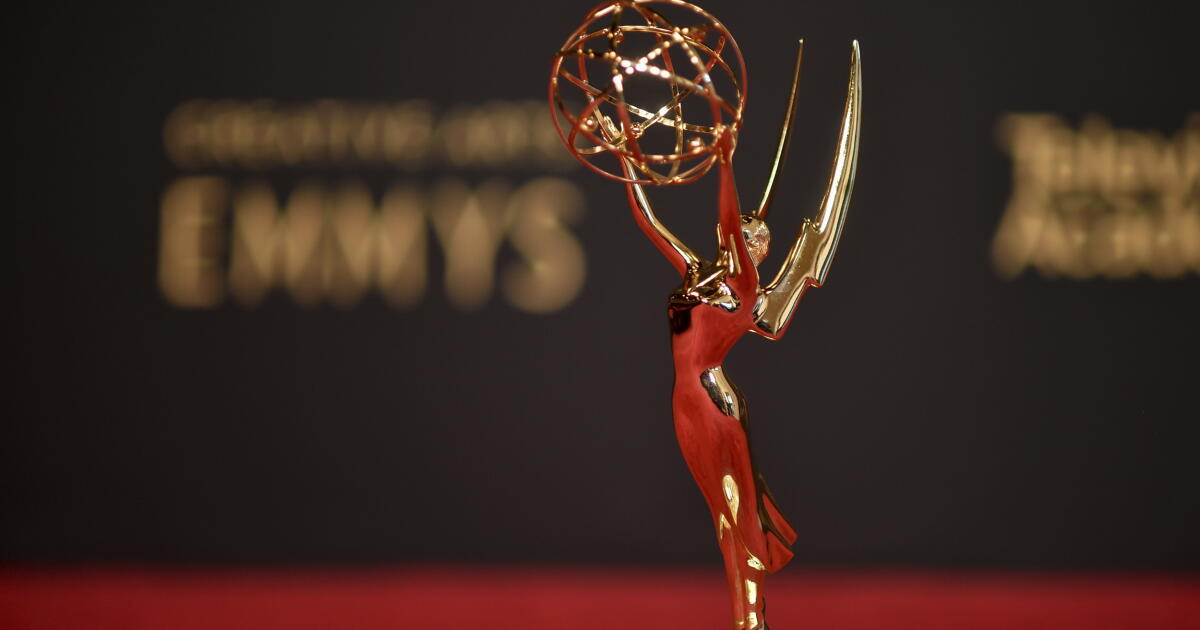
The latest evidence of that surfaced last week when the TV Academy announced a six-year deal with Amazon Prime Video.
Amazon will be the home of the Emmy Awards next year, ending more than seven decades of the ceremony airing on broadcast networks. The Oscars are headed to YouTube in 2029, as ABC passed on renewing its rights deal, ending a relationship that dates back to 1961, interrupted only by a five-year return to NBC in the 1970s.
They join the other trophy shows that have headed to streaming platforms in recent years. The Actor Awards (formerly known as the Screen Actors Guild Awards) moved to Netflix in 2024, after a test run on the streamer’s YouTube channel the year before, following more than two decades on TNT and TBS, while the Academy of Country Music Awards have been on Prime Video since 2022, ending its run on CBS.
The reasons behind the shift to streaming are clear. The shows no longer deliver the ratings necessary to attract enough ad revenue to cover their costs on broadcast networks, which include rights fees and production costs.
“The value proposition got turned upside down,” said Kelly Kahl, former entertainment president for CBS. “If you look over the last 10 years, the ratings for all of them have dropped through the floor, but the prices have not.”
The migration of viewers to streaming platforms is a factor in driving down the ratings of all programs on traditional TV over the last decade. Award shows were holding up better than sitcoms and dramas, as viewers watched them live.
But that advantage diminished in the age of social media. The format itself is less appealing to many younger viewers, who prefer to watch clips of performances, acceptance speeches and red carpet walks on their phone rather than sit through a three-hour ceremony.
ABC considered dropping the Oscars before signing its last rights deal with the Academy of Motion Picture Arts and Sciences. But former Walt Disney Co. Chief Executive Bob Iger — who started his career at the network shortly before it won back the rights to the event — still liked the prestige that it brought to the company.
The Academy cited YouTube’s global scale as a reason for the move, reflecting the increasingly international focus of the organization.
The departure of the Emmy Awards was not sudden. Executives at the broadcast networks have groused for years that the telecast had become an advertisement for its competition, first when premium cable networks such as HBO and Showtime scored multiple wins and nominations. The delta between the taste of Emmy voters and broadcast TV viewing widened even more as streaming platforms dominated the top categories, and the ratings fell sharply, bottoming out at a record low in early 2024.
Most of the exposure for the broadcast networks on the Emmys in recent years has come through tributes to classic shows and the “In Memoriam” segments.
This year’s telecast on NBC and Peacock was watched by 6.7 million viewers, according to Nielsen, down nearly 10% from the year before.
Amazon will pay $15 million annually in its six-year deal with the Television Academy, a substantial increase over what the broadcast networks were paying.
It may take some work to turn the program into a moneymaker again. Executives at Netflix — who are taking a closer look at costs as the streaming behemoth matures — considered a bid for the Emmys telecast, but could not see a way to make the show profitable, according to one person familiar with the discussions who was not authorized to comment publicly.
But a property that no longer is a good business proposition for the networks can still be attractive to a streamer that wants to make a statement.
“The Emmys may not attract tens of millions of viewers, but they do provide Amazon with a prestigious award show which can more closely associate premium TV with Prime Video in the minds of consumers,” said Brandon Katz, director of insights and content strategy at Greenlight Analytics.
Katz said adding a major award program such as the Emmys will help attract advertisers to Prime Video who want to reach audiences who watch live. “As live appointment viewing, it can also feed Amazon’s ad-tier,” he said. “They’re not really buying a new audience — they’re buying a new toy for their existing audience to play with.”
Amazon Prime Video hasn’t been as competitive in the Emmys as competitors HBO Max, Apple TV and Netflix. But it will be able to feature the stars of its original shows as presenters, the same as the broadcast networks have done for years. And the biggest winners at the last two Emmys, Apple TV’s “Widow’s Bay” and “The Studio,” can both be watched on Prime Video through its partnership with Apple TV. Television Academy Chairman Cris Abrego said Prime’s role as a TV hub factored into the decision.
The Television Academy also touted the global reach of Prime Video, which will show the ceremony in more than 200 countries.“Television has never been more global, and the Emmys should be a celebration that the world can share,” Abrego said in a statement when the deal was announced last week. The telecast will also be available to view without a Prime Video subscription.
Purists may lament that a program celebrating television will no longer be shown on the networks that built the medium. But the audience has already moved to streaming, which now accounts for half of all video consumption, according to Nielsen. Having a major award shows with a long legacy will add to their stature.
“They get to bring their exacts and talents, they get to throw big parties and appear big players, which they increasingly are,” said Kahl.
Networks have pushed back against the shift to clips where they could. Kahl recalls that when CBS was negotiating its rights deal for the Grammy Awards, the network tried to further delay the time between the live broadcast and the posting of clips on social media as a way to drive more viewers to the telecast.
Not every trophy show is leaving broadcast, though.
While Disney no longer wanted to shell out more than $100 million a year to carry the Oscars, the company was willing to take on the Grammy Awards when CBS decided to pass.
ABC has a 10-year agreement to carry the Recording Academy’s annual show starting in 2027, paying in the range of $50 million a year. The telecast will also stream on Disney+ and Hulu. The belief inside ABC is that music-driven award shows have broader appeal than movies and television, which have become more niche in the age of streaming.
The Grammy Awards celebrate the hottest current stars but also pay homage to older legendary acts, giving it broader appeal. One person familiar with the negotiations said it was important to the Recording Academy to reach the millions of viewers still showing up to watch traditional television.
Disney is also expected to look for synergies between the Grammy Awards on Feb. 7 and its first Super Bowl telecast since 2006, which airs the following week on Feb. 14. A walk-on by Kansas City Chiefs tight end Travis Kelce with Taylor Swift? Don’t count it out.
Times staff writer Wendy Lee contributed to this report.