
Remember me





Marcio Luz can’t be accused of not being customer-focused.
During our half-hour conversation, the Kerry Latin America CEO mentions customers at least 35 times.
But that’s hardly surprising. One year into the role, Luz has a simple view of success: If customers aren’t winning, neither is Kerry.
With nearly 25 years in food and beverage, including the last 16 at Kerry, Luz has spent much of his career helping manufacturers navigate change. His background combines food engineering with MBAs in marketing and business management, a blend that feels particularly relevant in today’s market.
And today’s market is anything but straightforward.
“The food industry is really facing a super structural transformation here in Latin America,” he says. “We have climate volatility, supply chain pressure, changing consumer expectations, affordability, as you know.”
Those challenges will sound familiar to food and beverage bosses anywhere in the world. But Luz is quick to point out that Latin America is not simply another version of Europe or North America. Consumer expectations, habits and opportunities can vary significantly across the region.
“Consumers want products to be healthier, more sustainable, accessible and desirable,” he says.
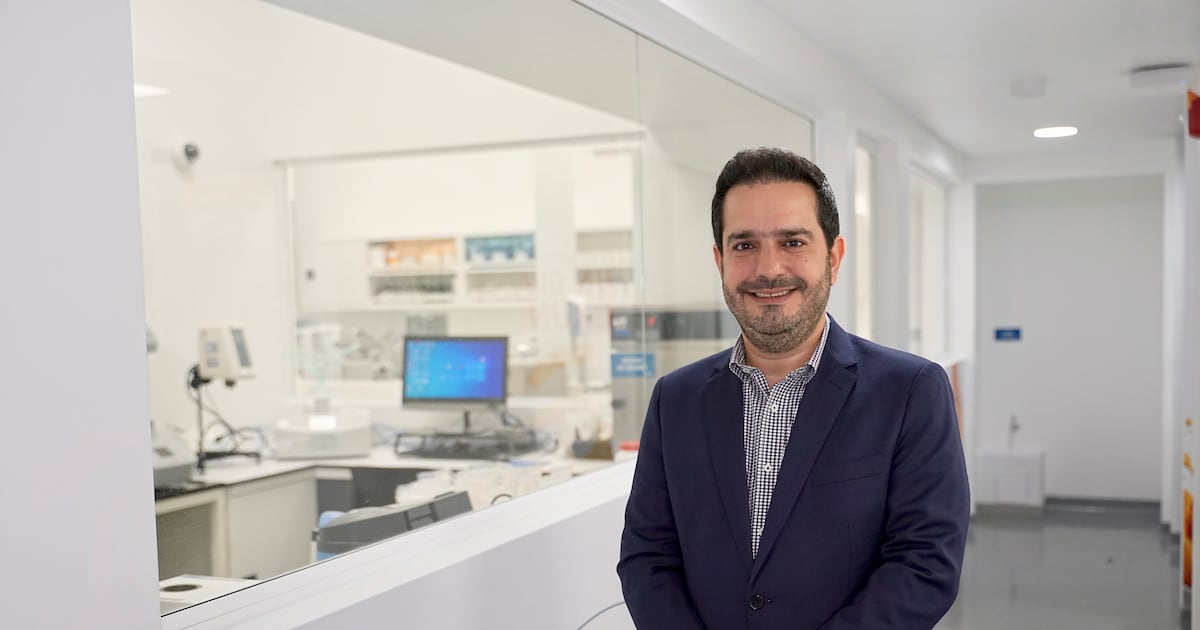
 Climate volatility, inflation and changing consumer habits are reshaping Latin America's food sector, says Kerry Latin America CEO Marcio Luz. (Image: Kerry Latin America)
Here, he argues, it’s Kerry’s role to help manufacturers deliver against those demands while strengthening their growth, competitiveness and reputation.
It’s not an easy task in a world shaped by inflation, geopolitical tensions, difficult harvests and supply chain disruption. But Luz sees opportunity rather than adversity.
“This is all a huge opportunity for us to grow using our capabilities, our expertise and our footprint that we have here in Latin America to help them succeed in the market. And of course, at the end of the day, help our customers and consumers to be happy and healthy.”
For many companies, climate change and supply chain pressures remain the dominant talking points. But another force is rapidly reshaping food innovation across Latin America.
GLP–1 and LATAMThe rise of weight-loss drugs has not passed the region by.
“The amount of GLP–1 advertisements that we are seeing here, specifically in Brazil, but also rising in Mexico and some other countries in Latin America, it’s huge,” says Luz.
According to Kerry’s data, around eight in 10 GLP–1 users in the region report eating less. Increasingly, consumers believe the drugs represent a long-term shift in health and weight management.
For Kerry, that creates both challenges and opportunities.
“For that, we are having lower portions, lower consumption. It’s a huge opportunity for us with our technologies to bring this reality to life.”
The impact is already being felt in new product development.
In Brazil alone, Luz says around 70% of beverage launches are now focused on protein, a trend being accelerated by consumer interest in GLP–1s and the growing demand for nutrient-dense products.
And unlike some recent health trends, he believes this one has staying power.
With obesity and overweight rates remaining high across the region, consumer eating habits are likely to continue evolving as GLP-1 adoption grows.
 GLP-1 drugs are reshaping eating habits across Latin America, creating new opportunities in protein, nutrition and product reformulation. (martin-dm/Image: Getty/martin-dm)
While GLP-1s may dominate headlines, Luz believes regulation could prove just as influential. Front-of-pack warning labels are reshaping product development across parts of Latin America, pushing manufacturers to reduce sugar, sodium and saturated fat.
For food and beverage companies considering Latin America, understanding all these nuances will be critical.
Many global manufacturers are well aware of the major trends shaping the region, from climate pressures and supply chain challenges to the growing popularity of GLP-1 drugs. But Luz warns against assuming that consumer behaviour mirrors other markets.
“I think any company needs to understand the trends in Latin America. Flavour trends, nutritional trends and consumer habits.”
That can create opportunities for companies able to spot emerging trends early.
Take pistachio.
“We alerted the industry about that trend two years ago and it exploded here,” he says.
Kerry LATAM’s strategyBeyond consumer trends, however, Luz is ultimately responsible for growing the business.
His strategy remains firmly customer-centric, but it is also about broadening Kerry’s reach across the food and beverage sector and expanding the company’s capabilities through both organic growth and acquisitions.
“We had an excellent track record of doing that in recent years,” he says. “As you may know, Kerry used to grow in an organic way, but also with M&As. So we follow this agenda very seriously.”
It’s in our DNA to make acquisitions. We’ve made one acquisition every two years in Latin America.
Marcio Luz, Kerry Latin AmericaPotential deals are actively being explored, although Luz is understandably unwilling to reveal specifics.
Still, he offers some clues about where Kerry’s attention is focused.
Taste remains a core priority, both globally and within Latin America. But biotechnology is becoming increasingly important too.
“We can split that basically into enzymes, food protection and preservation, and precision health,” he says.
Kerry is also looking at ways to strengthen its physical presence across the region.
The company currently operates 13 facilities across countries including Brazil, Mexico and Colombia. But not every market is covered, creating opportunities for future investment.
“If there is an opportunity for us to better attend to our customers and consumers, we are looking at all Latin America as a footprint. And we have a huge, intentional and affirmative pipeline.”
Acquisitions, he says, remain firmly part of that strategy.
“It’s in our DNA to make acquisitions. We’ve made one acquisition every two years in Latin America. So this is for sure on our agenda for us to keep growing organically, but also through M&As.”
Yet, after discussing climate pressures, GLP-1s, biotechnology and expansion plans, the conversation ultimately circles back to the same place it started: The customer.
Luz believes the food industry can sometimes become distracted by technology, trends or internal priorities and lose sight of the people ultimately driving success.
“For me, it’s impossible to disconnect from the customer,” he says. “They are the key to our success.”
And judging by the number of times he mentions customers during a single conversation, that’s a philosophy unlikely to change anytime soon.