Another record-distance Ukrainian strike leaves Russia’s Wildberries facing collapse — unless the Kremlin steps in(Ukraine Battlefield update, Day 1,625)
Every day, the Ukraine Battlefield update newsletter offers a clear look at how the war is unfolding on the ground. Subscribe for free here to get the full text delivered to your inbox.
Ukraine struck a Wildberries warehouse at a record distance — 1,700 km from the border.
The Bell website outlined the economic difficulties facing the Russian e-commerce giant and their potential impact on the Russian state.
Russia approved the use of the Euro-2 emissions standard following Ukrainian attacks.
The cautious optimism within Ukraine’s army at the start of the summer has evaporated, a German analyst wrote.
Map of the day: Russians are pushing towards Druzhkivka from the south-west.
Chart of the day: Russia’s advance remains consistently slow.
Videos of the day: A Russian multiple rocket launcher “danced” after a Ukrainian strike, while Ukrainians again hit vehicles on the road to Crimea.
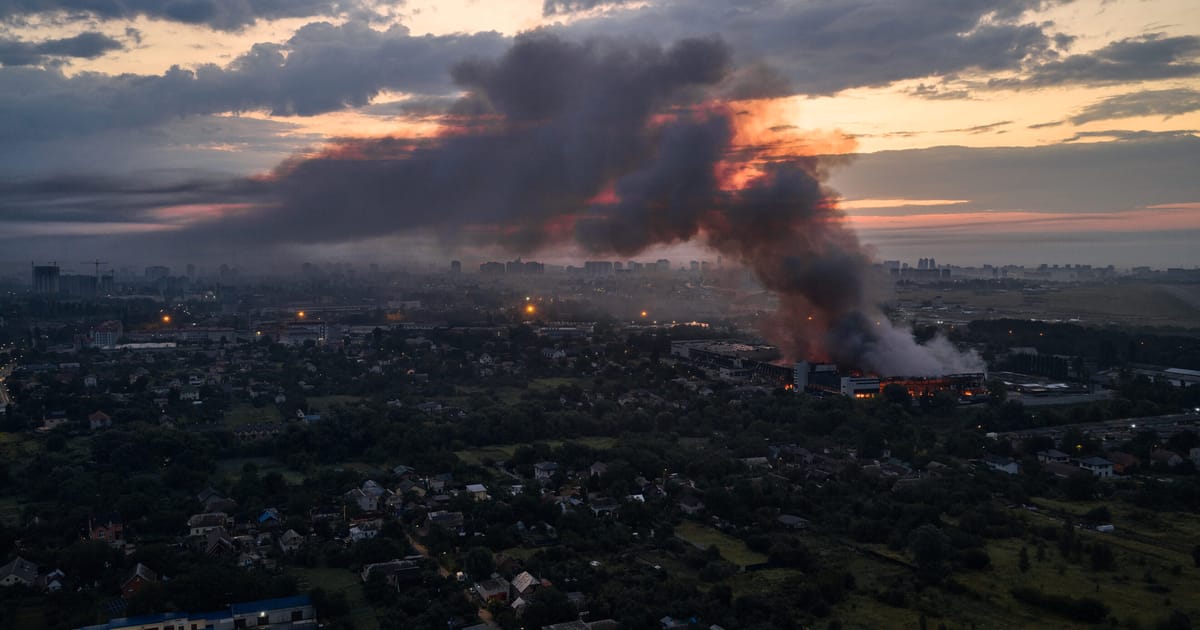
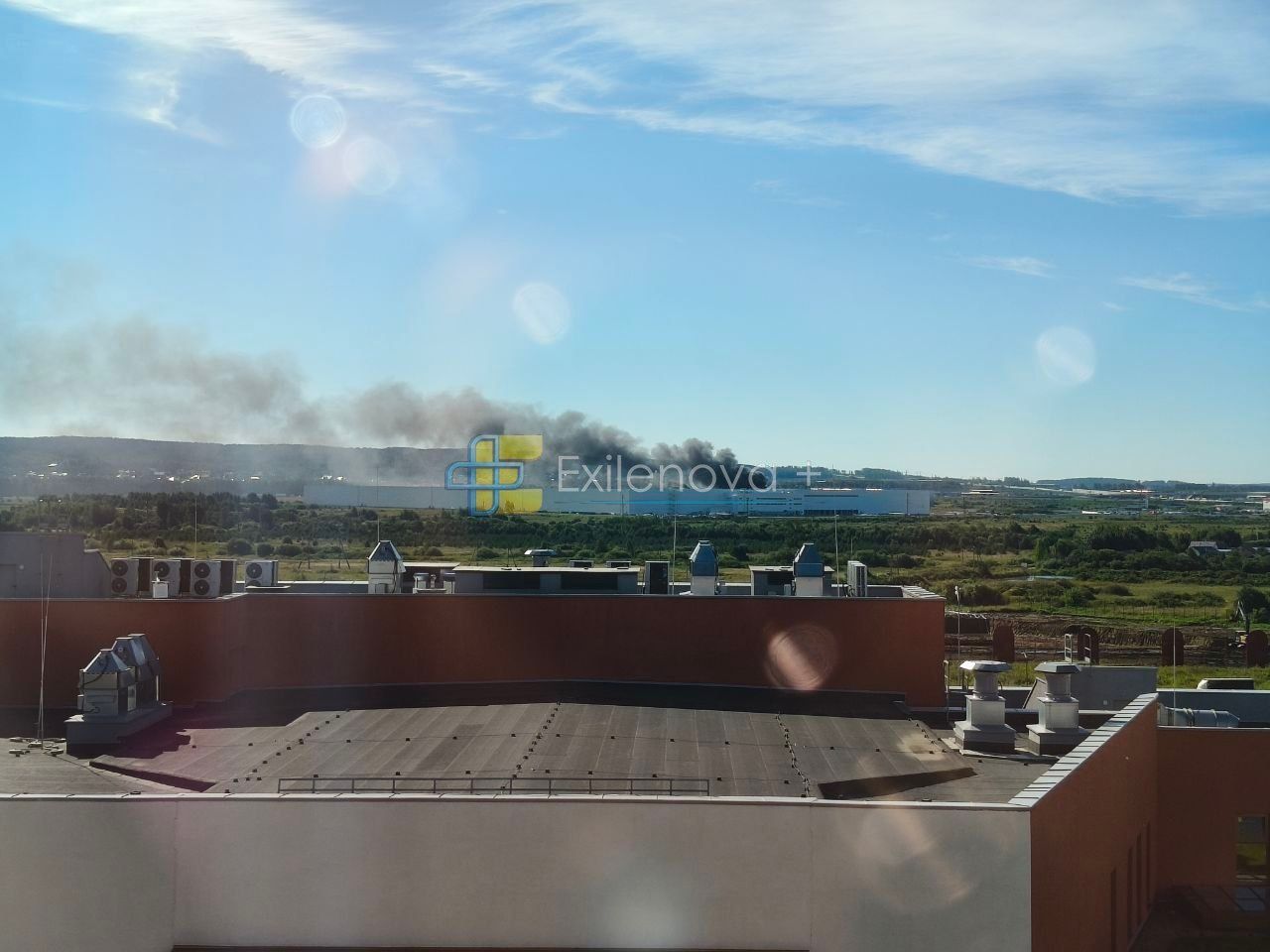
Records are made to be broken. On Friday morning, Russia struck a Wildberries warehouse in Yekaterinburg. Located more than 1,700 km from Ukraine’s border, it is the most distant warehouse of the “Russian Amazon” hit by Ukrainians so far. It is roughly the same distance as from Dublin to Budapest.
A Ukrainian drone had reached the site before, when it fell into a car park, but Russian authorities now reported three direct hits. Videos showed successful strikes by Ukrainian Liutyi drones.
The attacks caused a fire, but it was not yet clear whether the 158,000-square-metre warehouse would burn down completely, as happened to the warehouse in the town of Aleksin, which looked like this:
Several analysts were cautious in describing what systematic attacks on Wildberries could cause in Russia and what significance they might have. Russian opposition politician Andrei Pivovarov, who was held in a Russian prison from 2022 to 2024 and now lives in Germany, was also sceptical. He wrote on X last week that he did not understand the military or economic significance of the attacks on Wildberries.
He has now acknowledged that he was wrong. He referred to an article by the independent Russian website The Bell, which analysed the economic impact on the company and its effects on Russia’s economy.
“If The Bell’s analysis is correct, then the attacks on Wildberries are not merely a local matter concerning one marketplace. They are a strike against one of the key elements of the economic model on which the Russian economy currently rests,” he wrote.
In an article, the Russian website listed several ways the attacks are affecting the company. One is direct damage. This exceeds 100bn roubles (around €1bn); in the worst-case scenario, it could reach 200bn roubles (€2.1bn).
The reason is that Wildberries has directly lost not only warehouses — although it leased some of them — but also around 10 percent of the goods stored there.
According to Deutsche Welle, Ukrainians had hit 21 warehouses by 5 August. Some burned to the ground, and the company lost a total of 1.2 to 1.5 million square metres of warehouse space. This represents 17 to 22 percent of its total warehousing capacity, although these are older figures that do not include the latest strikes. The website Verstka puts the figure as high as 27 percent.
However, Russian sellers lost the overwhelming majority of the goods, with their losses estimated at €2.3bn to €3bn in the first days alone. “We collected testimony from sellers who say the level of compensation is extremely low, putting them on the brink of bankruptcy,” Deutsche Welle wrote.
What does this mean for Wildberries? It may still be possible to replace the warehouse space. The company made a profit of €2.1bn last year.
But its revenues have already fallen by around a quarter. The company is losing the trust of sellers, who, according to published reports, are moving to competitors — such as Ozon, a retailer that Ukrainians have not yet attacked.
“The decline in turnover on marketplaces has become one of the main causes of falling consumer spending in Russia. This is particularly sensitive because domestic consumption is now one of the last remaining engines of the Russian economy,” Russian opposition politician Pivovarov wrote.
The problem is that the attacks threaten the company’s business model itself. As The Bell, citing sources in Russia, wrote, Wildberries receives money from customers immediately after a purchase, but transfers it to sellers only later. Until then, the money remains in the company’s accounts as working capital. “This system works as long as turnover grows. If turnover falls, the inflow of new funds is no longer sufficient to cover expenses,” The Bell explained.
Wildberries will therefore probably have to be rescued by the Russian state — especially if the attacks continue. The question is how it will do so. According to The Bell’s sources, the online marketplace could receive a preferential loan from the state budget. But Russia’s deficit in the first half of the year had already reached one-and-a-half times the amount budgeted for the entire year. A sum of 200bn roubles would increase it by 0.1 percent of GDP; a higher amount would increase it substantially more.
The Russian website Riddle also wrote that the “Russian Amazon” is too big to fail and will almost certainly be rescued.
Mykhailo Podolyak, an adviser to the Ukrainian president, said that the aim was the financial collapse of a giant with turnover of 6.1 trillion roubles [€64bn]. It would trigger a chain reaction affecting hundreds of thousands of Russian sellers who would not normally be interested in politics. It should also affect Russian banks, to which the company owes 1.3 trillion roubles. In theory, the state will have to cover this sum, significantly increasing Russia’s deficit.
Of course, this scenario is not certain yet. The company is seeking to take steps to mitigate the impact of the attacks — for example, by looking for warehouse space in Kazakhstan.
Russia has shown that it can adapt, including in the case of the fuel crisis. Its effects have eased in recent weeks. This was due to fuel supplies from other countries, including Belarus, Morocco, India and — perhaps surprisingly — South Korea. Some may view it as humiliating that Russia, until recently the world's third-largest producer of refined fuels, now has to import them, but the pressure has been eased for a time.