
Remember me



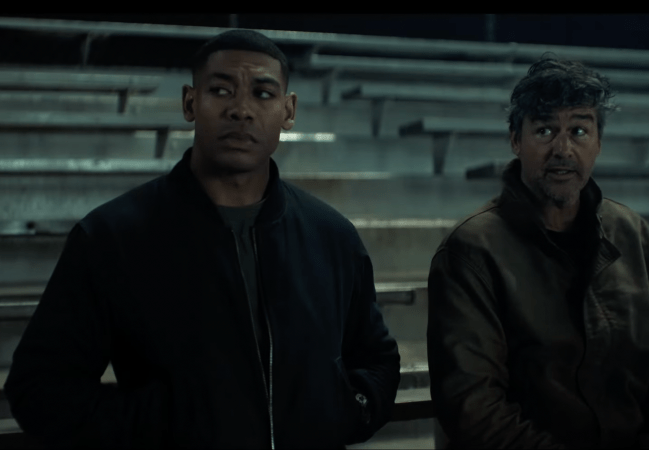
In “Fightland’s” first scene, Calvin (Jurell Carter) tells his brother Maduka “Duke” Kilroy (Howard Charles), “The only round that matters is the next one.” It’s the heavyweight title fight and Calvin, a trainer, is just trying to motivate his fighter; he needs Duke to forget about the hits he took in the previous round and focus on what’s in front of him. The way he says it, too — forehead to forehead, eye to eye — implies a shared, deeper meaning between the two men. And it works. Duke delivers a crushing sequence of blows to claim the championship belt, and both brothers’ dreams come true at once.
When you’re against the ropes (literally in Duke’s case), words can take on a different meaning. What motivates a person to push past their limits doesn’t have to be poetic or even coherent. It just has to put them in the right state of mind to do what they have to do.


But the Kilroy brothers’ shared motto — invoked again later in the premiere, while also elevated as the episode’s title — comes to epitomize “Fightland’s” broader failings. Not only is the crime drama built around trite threats and goofy posturing that never pays off, but it embodies the literal interpretation of the brothers’ mantra instead of how they’ve come to understand it. “Fightland” is always hyping what’s next rather than finding meaning in what’s happening in the moment, which renders the action dull and its consequences empty.
It doesn’t help that Duke’s crowning achievement gets zero buildup and only lasts a few seconds. Shortly after his big win, he’s attacked by two thugs in a parking garage. They break Duke’s hand, and when Calvin shows up to help, they kill him. In a blind rage after watching his brother die, Duke catches up to one of their assailants and beats him to death — with a crowd watching.
Cut to: eight years later, and Duke is in prison. Presumably, his excessive use of violence left a sour taste in the public’s mouth, preventing a defense attorney from pleading self-defense and provocation, but it’s hard to say because the details of his fate are brushed aside to better support a revenge arc. All we know is that Duke was stripped of his title and he’s now trapped behind bars. He’s primed and ready to explode, so naturally an imprisoned cartel boss named Amado Rodriguez (Miguel Álvarez) soon points him at a shared target.
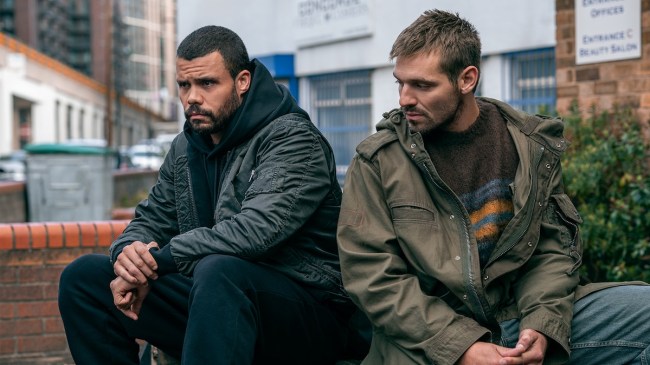
Turns out, Duke’s promotor, Kingsley Marshall (Nicholas Pinnock), set up the attack because he knew Duke was sleeping with his wife, Joy (Deborah Ayorinde). He wanted to take him down a peg, and — as the U.K.’s premier gambling and drug kingpin — he had the resources to do so. But now, Kingsley has disappeared. His impetuous son Zeek (Charles Babalola) and shrewd but overlooked daughter Cece (Anita-Joy Uwajeh) are running the business(es) in his absence, with the former focused on boxing promotion, the latter on the family casino, and both a bit lost in the drug trade.
 Nicholas Pinnock and Charles Babalola in ‘Fightland’Courtesy of Christopher Raphael / Starz
Amado sees an opening amid the confusion. He wants to take control of the Marshall family’s illicit dealings, but he knows he can’t guarantee control unless Kingsley isn’t just gone, but dead. That’s where Duke comes in: If he draws Kingsley out of hiding and kills him, Amado gets an empire and Duke gets his revenge.
So Duke agrees, gets out of prison (again, who knows how), and returns to his old life. His father, Gazzer (Richard Pepple), is still bitter over Calvin’s death, but he lets his other son sleep in the spare room. His childhood best friend, Jay (Tyler Conti), remains fiercely loyal, but his comparatively sound morals keep him at arm’s length from Duke’s latest pursuits. And then there’s Kim Harper (Tahirah Sharif), a new ring girl who has her eye on Duke, even though his heart still belongs to Joy.
They all play their parts to stir up “Fightland’s” stock melodrama, complicating Duke’s mission by making him doubt its imperative. But creators Daniel Fajemisin-Duncan & Marlon Smith, as well as Damione Macedon & Raphael Jackson Jr. (“Power”), can only feign an ethical conflict, at best, since they cherry-pick which brutal killings Duke should regret (or even question).
The series uses Duke’s boxing background solely as an explanation for his superhuman ability to murder people. When he bludgeons his brother’s killer with his bare hands, or kills a convict held hostage in a cage, or shoots an innocent accomplice who’s in the wrong place at the wrong time, there’s no allusion to what started him down such a troubling, violent path, nor are we meant to question his heroic framing. He merely did what needed to be done — to get what he wants, and to fulfill “Fightland’s” quota for bloodshed.
It sure as shit isn’t going to get there with sanctioned fights.
For a series selling itself as a boxing drama, very little time is spent in the ring, and none of it honors the sport nicknamed “The Sweet Science.” (Boxers just land and absorb hits when the story needs them to, rather than win with a strategy or lose because they were outsmarted.) This is a crime drama, through and through, built around blunt-force action scenes and braindead emotional logic. If the former were anything better than brutal, over-edited montages (set to some of the dullest music to ever populate an action soundtrack — thanks, 50 Cent!), or the latter was enlivened by actors who could internalize menace instead of merely imitating it (although Charles proves to be a serviceable lead), “Fightland” might be a darkly satisfying drama.
As is, you’re stuck waiting for a next round — the only one that matters — that never comes.
“Fightland” premieres Friday, July 31 on Starz and the Starz app. New episodes will be released weekly through the finale (Episode 8) on September 18.