The Brenner Base Tunnel has reached one of its most significant construction milestones with the completion of the final cross-border connections in its two main railway tunnels, creating a continuous underground rail link between Italy and Austria beneath the Alps.
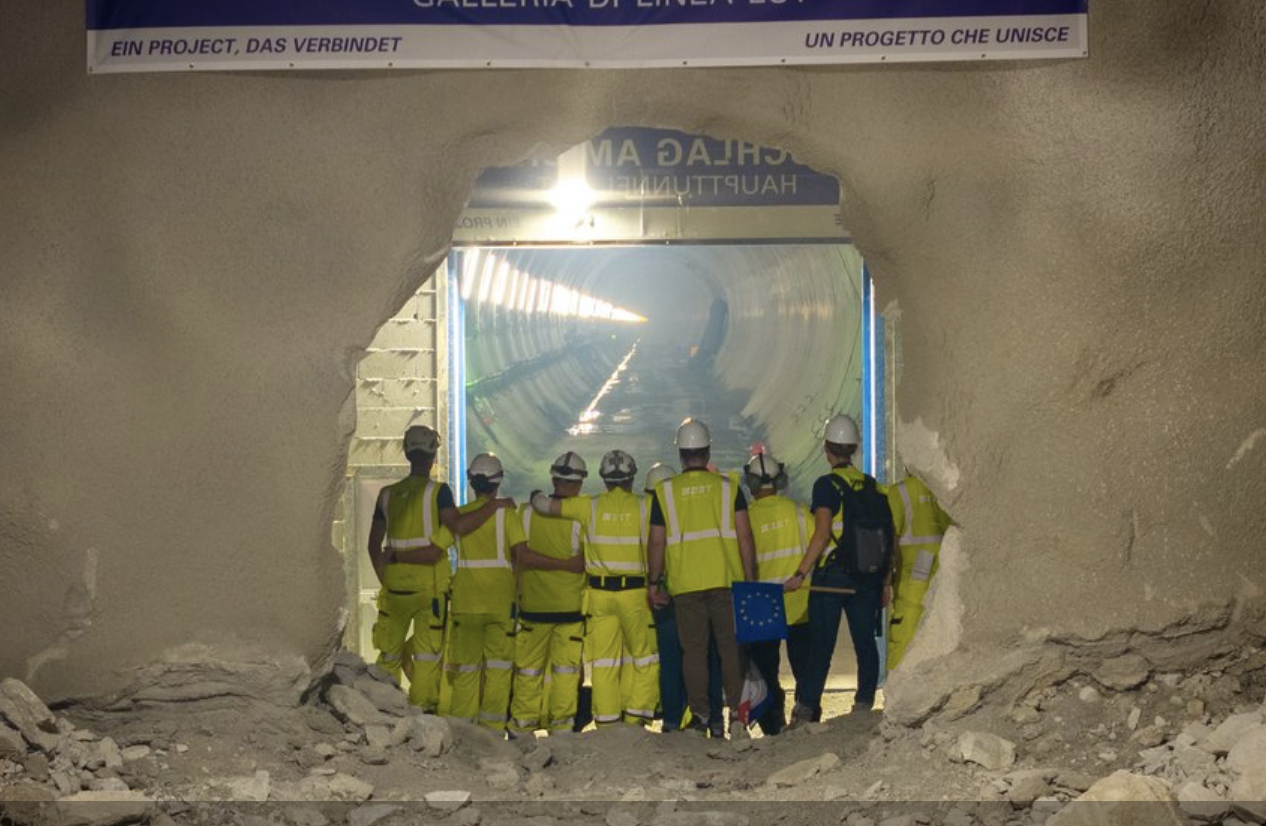
The milestone was achieved approximately 1,400m beneath the Brenner Pass, where excavation teams removed the final rock separating the two countries. Within the space of around an hour, both the eastern and western main tunnel bores were connected, marking the first time the completed railway tunnels have crossed the international border.
The twin connections join Austria’s H53 Pfons–Brenner section with the H61 Mules 2–3 contract in Italy, which was excavated by a Webuild-led consortium on behalf of project owner BBT SE. Following the breakthrough, miners and engineers working from opposite sides of the Alps met underground for the first time, celebrating the achievement after years of excavation.
The latest milestone follows completion of the project’s exploratory tunnel connection in September 2025 and means both the eastern and western running tunnels now extend continuously across the international border.
When completed, the Brenner Base Tunnel, including the Innsbruck bypass, will extend for 64km, making it the world’s longest underground railway. The scheme forms the centrepiece of the Scandinavian-Mediterranean Corridor within the Trans-European Transport Network (TEN-T), creating a high-capacity rail link between Munich and Verona as part of the wider Helsinki-Valletta transport corridor.
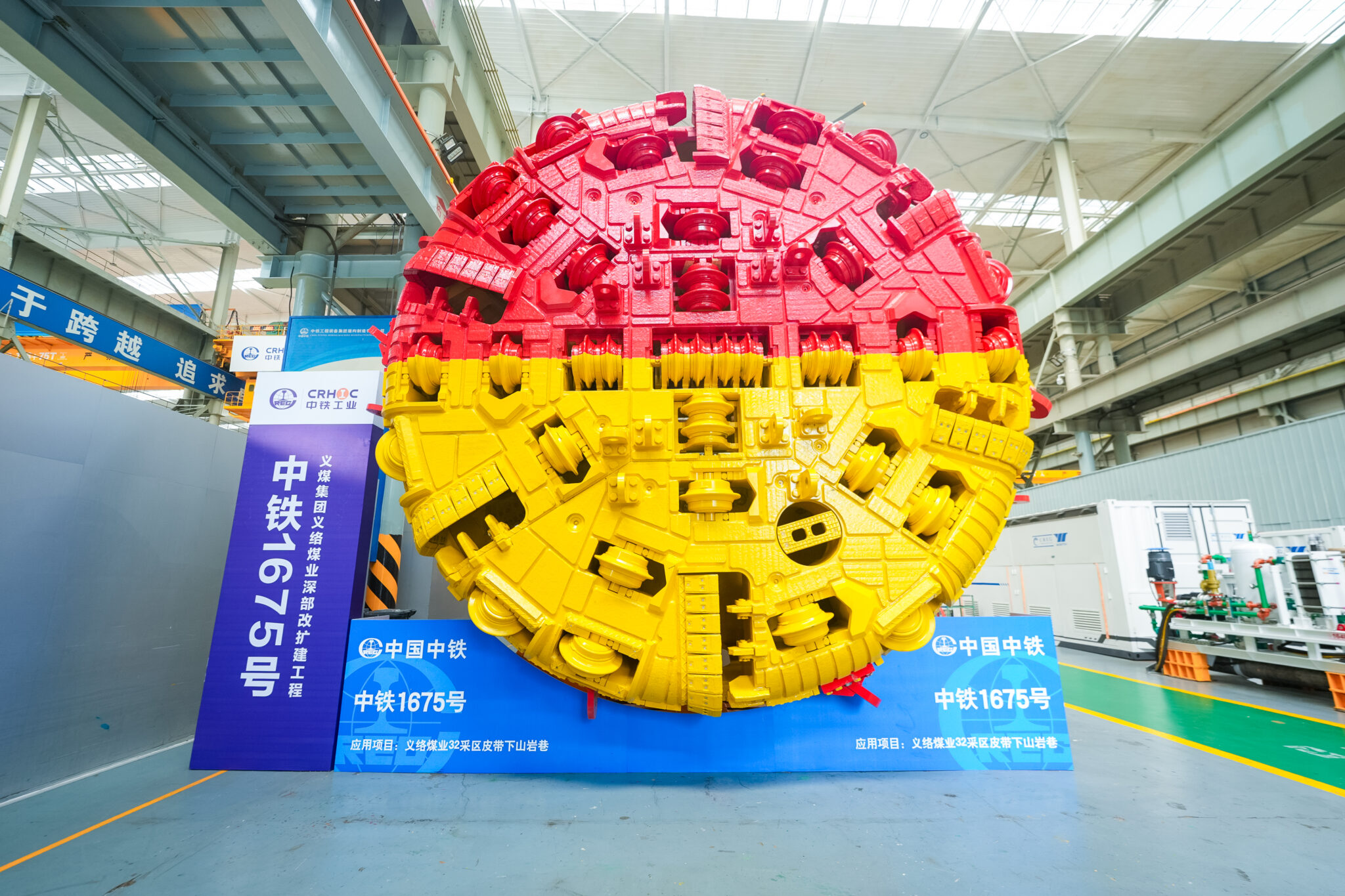
The project also marks the convergence of two independently constructed contracts using different excavation methods. On the Italian side, the H61 Mules 2–3 section was excavated to the border using tunnel boring machines (TBMs) Virginia and Flavia, while the Austrian H53 Pfons–Brenner section, delivered by the PORR-Marti joint venture, advanced using conventional drill-and-blast techniques. The milestone demonstrates the successful integration of two proven tunnelling methods beneath one of Europe’s most challenging mountain ranges.
Achieving the breakthrough required exceptional surveying accuracy. Measurements established during excavation of the exploratory tunnel from the Wolf and Mules access tunnels produced breakthrough deviations of only a few centimetres, providing the reference for excavation of the main tunnels, where the final alignment was even more precise.
Martin Gradnitzer and Umberto Lebruto, members of the BBT SE Executive Board, described the connection as a defining moment for the project.
“With the connection of the two main tunnels, our project has reached another major milestone. In the future, freight and passenger trains travelling between Austria and Italy will pass through here. This success is a remarkable demonstration of what can be achieved by working across borders towards a common goal.”
Michael Knapp, Project Manager for the H53 Pfons–Brenner contract, praised the workforce that completed the excavation.
“Tunnelling means facing new challenges every day. In this project, the mountain has constantly tested us by presenting us with unexpected tasks,” he said. “I would like to express my sincere gratitude to the ARGE H53 contractor consortium (PORR and Marti), as well as to the local site supervision team, for their exceptional dedication.”
Alessandro Marottoli, Project Manager for the H61 Mules contract, added: “Today marks another historic day for the project. The fact that three tunnels now connect Italy and Austria with the Brenner Base Tunnel is a source of great pride for the entire BBT team, who work tirelessly on both sides of the border towards a common goal.”
Project leaders also paid tribute to the hundreds of miners, drillers, blasters, TBM crews, surveyors, geologists, electricians, safety specialists and engineers whose work over many years made the cross-border connection possible.
Excavation is now entering its final phase. TBMs Wilma and Olga are continuing to drive the remaining sections of the main tunnels towards Innsbruck. Once these drives are completed, the entire railway tunnel system will be fully connected.
When the Brenner Base Tunnel enters service, passenger trains will be able to operate at speeds of up to 250km/h, reducing journey times between Fortezza and Innsbruck from around 80 minutes to approximately 25 minutes. The new railway is also designed to transfer significant volumes of passenger and freight traffic from road to rail, helping reduce emissions, congestion and noise across the Alpine region while strengthening one of Europe’s most important north-south transport corridors.