
Remember me





John Gibbons
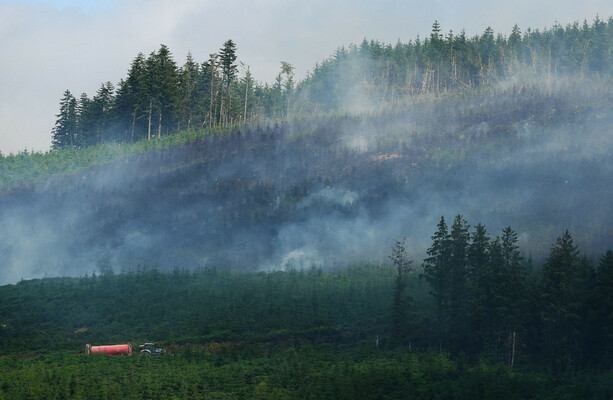
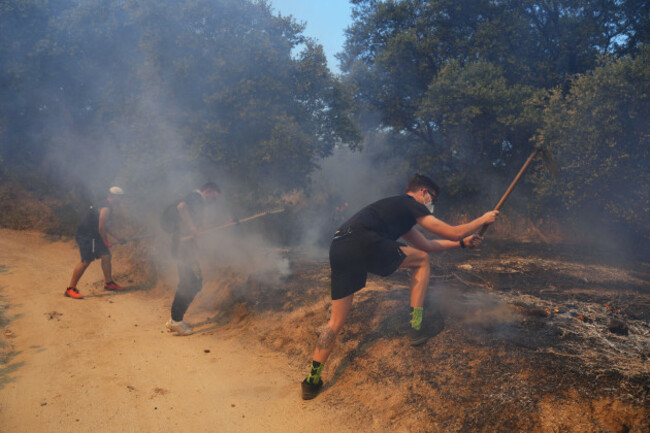
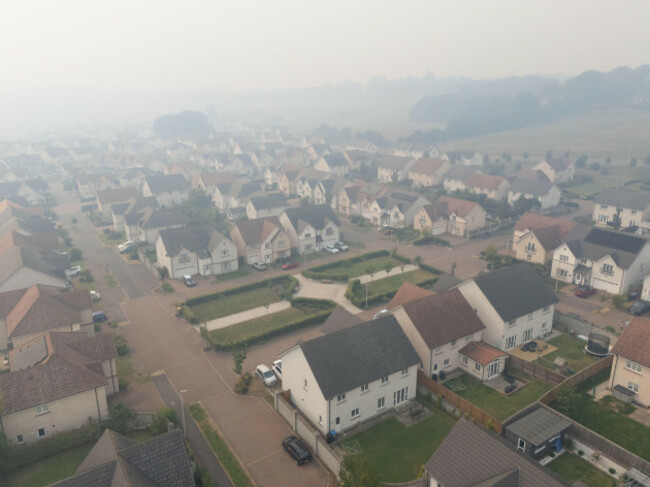
IT FELT LIKE the house was on fire. One night recently, the stench of smoke sent us scurrying around our home in Shankill, Dublin, checking to see if anything was burning or smouldering.
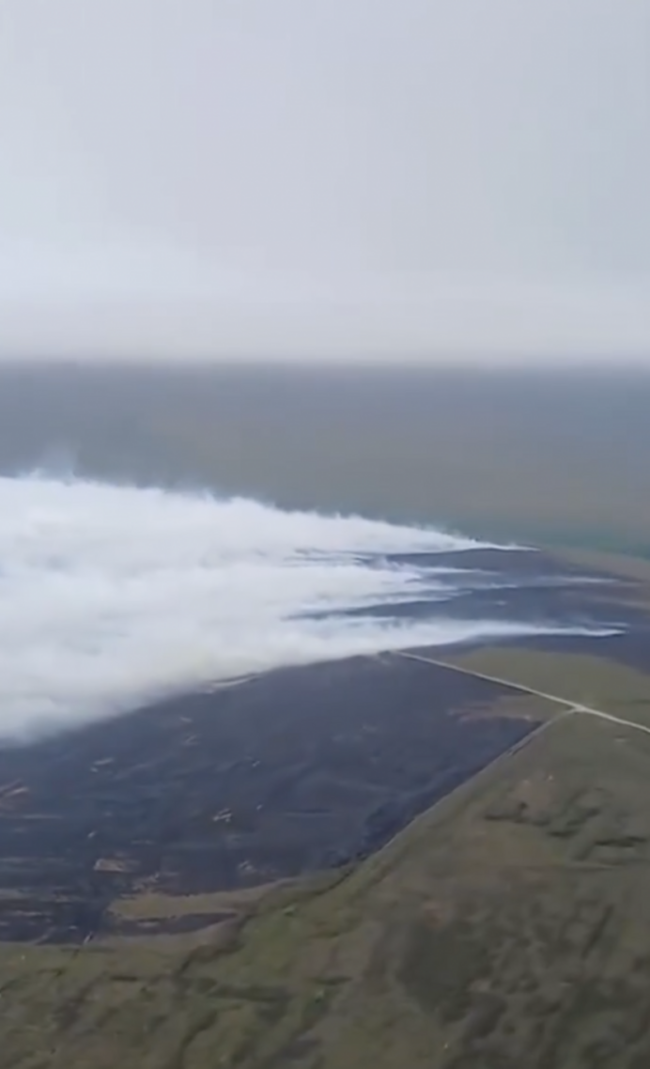
The source of the smoke, as we quickly figured out, was external, blowing in from the nearby Wicklow mountains. This smell – and taste – is something countless millions of people around the world are having to contend with regularly. If you could smell the future, it would be the acrid scent of burning landscapes.
While it’s still July, wildfires across Europe have already burned more land than the entire annual average of the last two decades.
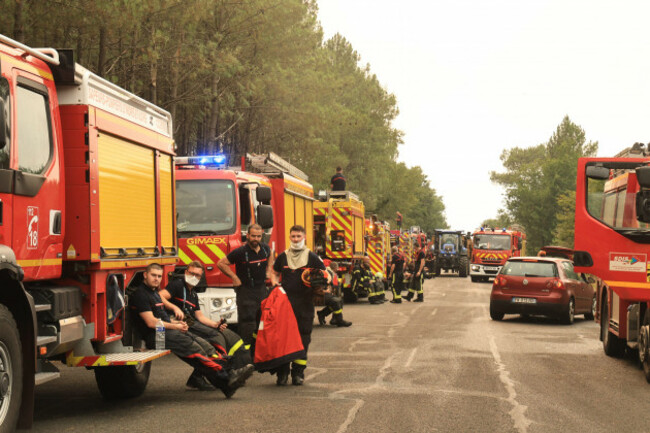
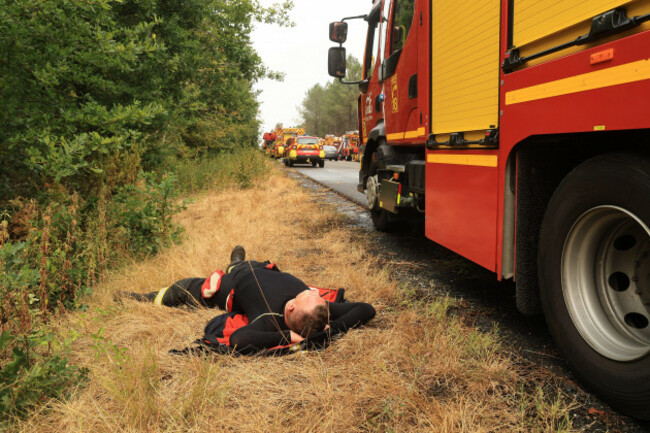
On Thursday, Spain declared a national emergency as wildfires rage in the region of its capital, Madrid, forcing 70,000 people to evacuate. Across France, nearly 200,000 people have had to flee, including many from the area around Bordeaux.
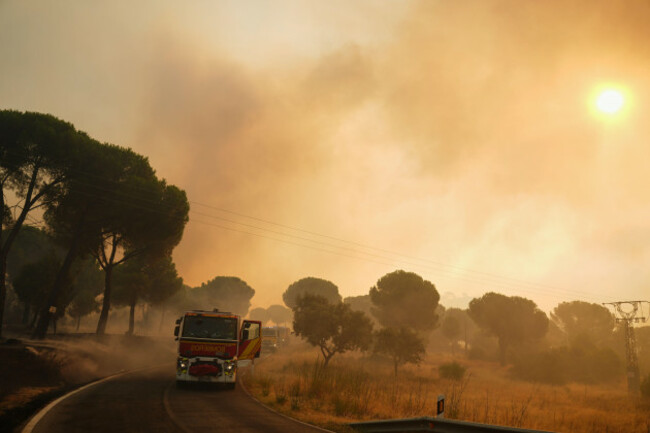
Spanish prime minister Pedro Sanchez set out the crisis in plain language: “Year after year we clearly see how climate change kills and destroys wealth in our communities. This isn’t politics. It is science, it’s about facts”.
The facts matterI well remember the 1995 European heatwave and am just about old enough to recall the previous major heatwave, two decades earlier, in 1976. These events were memorable precisely because they were so absolutely abnormal and vanishingly rare.
No longer. As a Met Éireann analysis confirmed, the 1976 heatwave was a strictly regional phenomenon, centred over Ireland and Britain, while mainland Europe was largely unaffected. On the other hand, last year’s multiple European heatwaves were beyond continental scale, as were the three heatwaves so far this summer.
What’s more, even though we experienced no heatwaves in Ireland last year, the average temperature for Ireland in the summer of 2025 was 16.2C, which is significantly warmer than the average 15.8C for what we remember as the scorching summer of 1976. The other marked shift has been towards warmer nights, one of the fingerprints of global warming.
Meanwhile, from the depths of the tropical Pacific Ocean, a powerful El Niño is building, leading scientists to fear that 2026 and into 2027 may see unprecedented temperature rises. While El Niños are part of a natural cycle of warming and cooling related to upwelling of ocean currents, these have become supercharged by the additional energy in the global climate system.
Next year, global average temperatures may breach 1.7C above pre-industrial, a simply mind-boggling scenario, given that as recently as 2015, the governments of the world signed up to the Paris Agreement on climate change, which stressed the need to keep temperature increases this century below the 1.5C danger line.
At the time, the common belief was that this threshold could not be breached before the 2030s, yet 2024 saw this line crumble as global temperatures reached 1.55C above pre-industrial. Around 90% of the excess heat absorbed by the Earth as result of global warming heats the ocean, not the land, which is the only reason that much of the Earth’s land surface is not already too hot for humans, wildlife, livestock or crops to survive.
Heating is now penetrating two kilometres into the ocean depths, and energy is building up there at a rate unprecedented since humans evolved.
Last year, the world’s oceans absorbed around 23 zettajoules of energy, which is the equivalent energy released in exploding 12 Hiroshima-sized nuclear bombs every second in 2025; that’s around 370 million Hiroshimas for the full year. The climate bomb is being primed.
Scientists have identified nine critical planetary boundaries which define the safe operating space for humanity. These include biosphere integrity, climate change, land-system change, nitrogen and phosphorus flows, ozone depletion and more.
Scaled to a human body, these critical systems are analogous to our vital organs – heart, lungs, kidneys, brain, etc. As of 2026, seven of these nine planetary boundaries have been breached. If planet Earth were a patient, this frankly would be a terminal diagnosis requiring drastic emergency intervention and even then, with no guarantee whatever of success.
The powerful deniersI’ve been tracking and reporting on the fast-emerging climate and biodiversity crisis for the last two decades. In the early years, many of the dire warnings from scientists were scoffed at as alarmist or improbable.
The reason that we have stumbled blindly into this dire situation is far from accidental. The global energy industry has been funnelling hundreds of millions of dollars into a disinformation campaign stretching back to the 1990s aimed at manufacturing doubt, undermining scientific authority and coordinating with think tanks and billionaire-owned media outlets to spread and amplify climate denial while denigrating and ridiculing scientists and activists who dared to speak out.
All this frenzy of denial has been orchestrated to defend the vast wealth of the trillion-dollar fossil fuel industry, to whom renewable energy poses not an opportunity but an existential threat.
The advent and proliferation of toxic social media outlets and the rise of anti-science populists like Donald Trump have given a new lease of life to climate denial and have further stymied vital efforts to accelerate towards net-zero.
And while it might be reassuring to think that this has little to do with Ireland, the facts suggest otherwise. We may be small, but when it comes to negative impacts, we punch way above our weight. In terms of carbon emissions, we are per capita the second worst in the EU. Our outsized emissions are largely due to Ireland’s huge livestock herd, which is the main reason why two fifths of our entire national emissions come from a sector that accounts for barely 4% of our economy and only 6.5% of total employment.
With Ireland now holding the presidency of the EU Council, it appears to be using the opportunity to push the ‘simplification’ agenda, ostensibly to lighten the regulatory burden on businesses, but in reality pursuing an agenda that risks serving the interests of industry lobbyists keen to protect highly polluting operations – in Ireland’s case, this is predominantly intensive industrial livestock production.
As a recent report by the investigative website DeSmog put it: “Ireland’s long record of lobbying the EU on behalf of its polluting agricultural sector raises alarm bells for the presidency among campaigners”.
Since the Greens were dumped from government at the end of 2024, the new administration led by Taoiseach Micheál Martin has lurched sharply to the right, as evidenced by its attempts to completely undermine climate action by exempting a raft of infrastructure projects from Section 15 of the 2021 Climate Act, which requires such projects to be compliant with the emissions-reduction objectives of the Act.
The politicians engaged in this drastic U-turn are, it should be pointed out, the same people who enthusiastically voted for the Climate Act just five years ago. This week, the government claimed that this was necessary because climate legislation had been “weaponised” by NGOs and other activists to stymie and stall major projects.
This is manifest nonsense. What NGOs, for example, can we deem responsible for the utter shambles that is the new National Children’s Hospital, a project that ran woefully over budget and time? Who is to blame for that?
Even before the latest moves by the government to financially penalise those challenging bad planning decisions in the public interest, senior EU officials in 2022 had noted with alarm the “increasingly aggressive stance being taken against environmental campaigners in Ireland”.
There is evidence “not only of increased use of Slapp (Strategic lawsuit against public participation) suits, but also negative reporting in mainstream media, and even from politicians – like threatening to cut off funding to certain NGOs.”
Senior European Commission official Aurel Ciobanu-Dordea added: “We believe radical change of behaviour is necessary, because it is highly unusual for an advanced society like Ireland to witness such conduct”.
Fines coming down the trackWhile clearly the moral imperative to act strongly to try to avert or at least lessen the coming climate tragedy cuts little ice with Irish politicians of almost any hue, their staggering lack of concern at looming EU fines for our chronic non-compliance with legally binding emissions targets remains a mystery.
According to the Irish Fiscal Advisory Council, the fines we face, ranging from €8-€26 billion, would, if invested in critical infrastructure, allow a €7 billion upgrade of our national energy grid while rapidly accelerating our transition to electric vehicles, with €1 billion left over for rewetting of peatlands. This is, IFAC noted, a “colossal missed opportunity”.
While similar sized EU states like Denmark and Holland race ahead in the green transition, revolutionising their energy and food systems, Ireland remains mired in the past. Our politicians seem more focused on engaging in populist follies like tearing up the rule book to facilitate chaotic rural one-off housing – a move supported by Sinn Féin – in the teeth of all the expert advice from planners.
As Europe and much of the world is already learning, the climate crisis is the greatest threat humanity has ever faced. The hundreds of thousands of people now forced to flee the flames in France and Spain are but a harbinger of an ever more dangerous near future of forced mass migration and chronic shortages of food and fresh water.
We are also witnessing the relentless rise of extremist politicians who, like their fascist counterparts in the 1930s, thrive amid chaos and fear. Ireland is not immune to these forces.
Our open, import-dependent economy ties us closely to the wider world, and it is foolish to think that the virus of geopolitical breakdown will not jump the Irish Sea and arrive on our shores as extreme weather begets extreme politics and we witness the chaotic unravelling of decades of globalisation and economic integration.
How will we cope? What steps have our politicians and economic planners taken to weatherise our society and to sharply increase, for example, our domestic food and energy resilience?
Sadly, our national strategy, insofar as we have one, seems to be to plough ahead and hope for the best. We’re going to have to do a whole lot better – and soon.
John Gibbons is an environmental journalist and author of ‘The Lie of the Land – The Truth About Farming, Climate & Power in Ireland’.