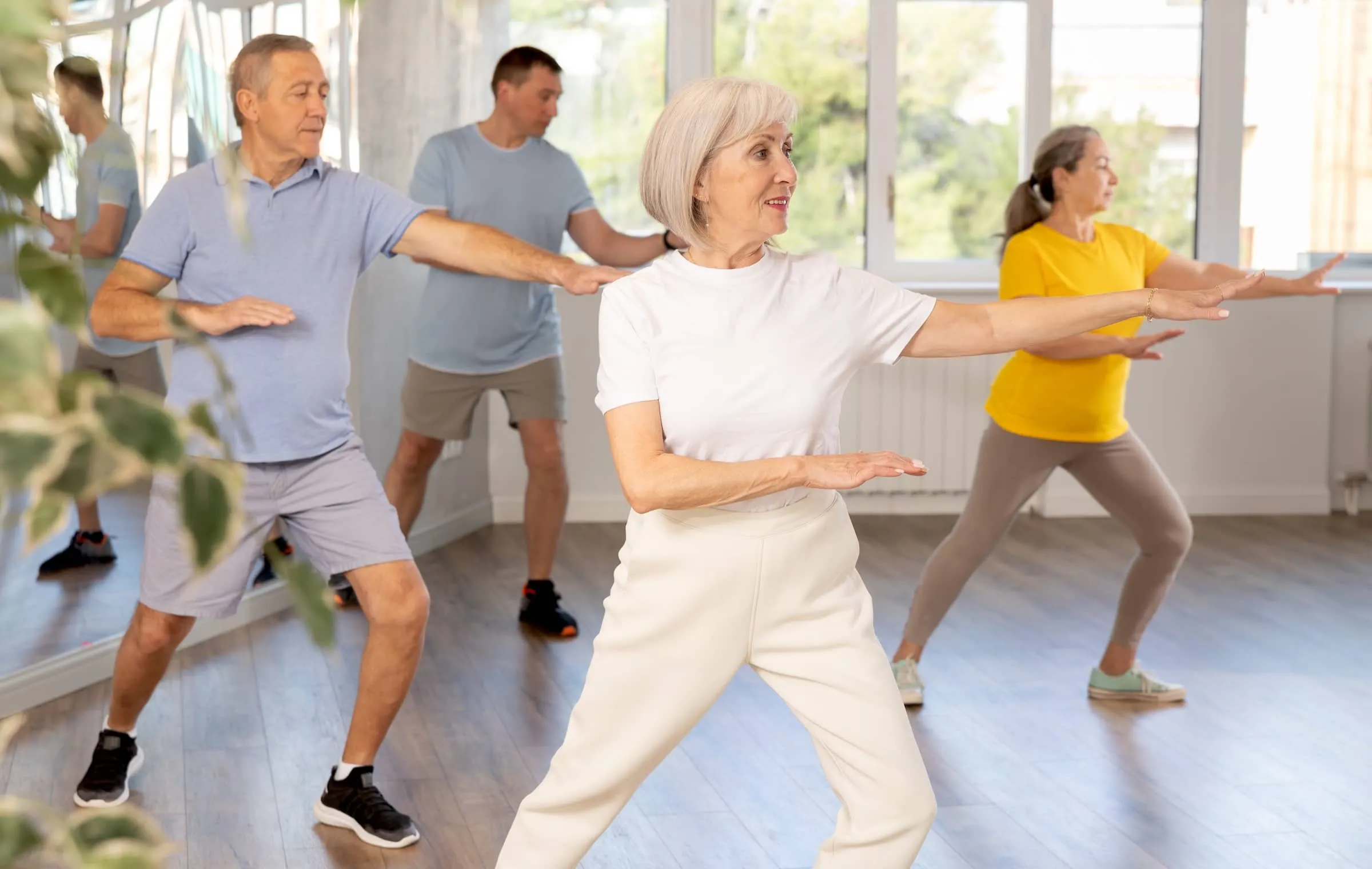
Tai Chi will not hand anyone immortality, but its slow, controlled movements may help preserve balance, lower-body function and confidence — qualities that matter greatly if the aim is to remain active and independent with age.
Bruno Pontes, an ACSM- and AFAA-certified personal trainer featured by Muscle Booster and its parent company Welltech, believes the ancient Chinese practice also deserves attention from runners, gym-goers and complete beginners.
That is quite a return for an exercise method often mistaken for genteel arm-waving in the park. Done properly, Tai Chi asks for concentration, posture, controlled weight transfer and patience — the last of which remains stubbornly unavailable as a wearable metric.
What is Tai Chi?
Tai Chi is a Chinese martial art and mind-body practice built around slow, gentle movements, physical postures, focused attention and controlled breathing. Modern health-focused forms are generally low impact and can be adapted to different ages and abilities, although the quality of teaching and suitability of individual movements still matter.
Pontes explains: “Tai Chi is a form of low-impact exercise that combines breathwork, mental focus and controlled movements.”
He adds: “Many people often dismiss it because it looks slow, but that’s exactly where its value lies. The controlled movements challenge your muscles, balance and coordination without placing unnecessary stress on your joints.”
The pace is not an absence of effort. It removes momentum and exposes the small negotiations involved in standing well: where the feet are, how the pelvis is positioned, whether the trunk is stable and whether one can move from one leg to the other without resembling a wardrobe being carried downstairs.
Pontes says: “With origins in ancient China, the trend is coming back and being praised for its accessibility for seniors looking to improve balance and mobility in later years.”
Muscle Booster also points to the rise of “Chinamaxxing”, a wider online trend involving the adoption — sincere, playful or otherwise — of Chinese habits and cultural practices. The company says its UK search analysis recorded average quarterly growth of 1,347 per cent for the term. No methodology was supplied with that figure, so it is best treated as a brand-reported trend indicator rather than audited market data. The broader trend has nevertheless been visible across social media and mainstream cultural coverage in 2026.
Ageing may be the obvious hook, but it is not the whole audience.
“Although it’s historically been associated with older adults, Tai Chi isn’t just for seniors. Runners, gym-goers and complete beginners can all benefit from improving balance, body awareness and movement quality.”
Can Tai Chi help you live longer?
There is no robust evidence that Tai Chi itself directly extends lifespan, so it should not be sold as a proven longevity treatment. Its more credible long-term value lies in supporting balance, physical function, mobility and regular activity. Those qualities can help people remain capable and independent, while Tai Chi’s low-impact format may make consistent practice easier.
That distinction matters. “Living longer” is an irresistible headline; living better is the more defensible proposition. Research summaries from the US National Center for Complementary and Integrative Health suggest Tai Chi may improve balance and reduce falls in older adults, while reviews also report possible benefits for pain, stiffness and physical function in some groups. The evidence varies by outcome, programme and population, and better-designed studies are still needed in several areas.
The health and fitness benefits of Tai Chi
Better balance and stability
Tai Chi repeatedly moves the body between narrow and wider bases of support, one leg and two, stable positions and controlled transitions. That makes balance a task rather than an afterthought.
Pontes says: “Tai Chi improves your core stability and balance through slow shifts in weight and controlled movements to engage a variety of muscle groups. This helps maintain independence later in life by improving stability, reducing the risk of falls and making everyday movement feel easier.”
This is the benefit with the strongest practical evidence. NCCIH’s review of research reports that Tai Chi may reduce both the rate of falls and the number of older people who fall, although other balance and functional exercises are effective too. More recent systematic reviews have also found improvements in balance among older adults.
Greater mobility and flexibility
“Unlike high-impact exercise, Tai Chi encourages your joints to move through comfortable ranges of motion. Regular practice can help reduce stiffness while improving overall mobility.”
The important phrase is “comfortable ranges”. Tai Chi is not a competition to see who can sink lowest or twist furthest. Its value comes from controlled, repeatable movement. Reviews have reported improvements in flexibility and aspects of physical fitness, but results depend on the style, duration, comparison group and health of participants.
Lower-body strength and postural control
“Holding controlled positions places your muscles under tension for longer than people often realise. Over time, this strengthens your legs, hips and core while improving posture and stability.”
Tai Chi is not a substitute for progressive resistance training if maximal strength or muscle gain is the goal. It can, however, provide a modest lower-body and postural challenge, particularly for beginners or people returning to activity. Meta-analyses have reported improvements in lower-limb strength and broader measures of physical fitness, while combined Tai Chi and resistance programmes may offer further benefits for adults over 50.
Stress, focus and wellbeing
Pontes says: “Through deep, controlled breathing, more oxygen flows to your brain, helping to reduce stress and promote overall wellbeing and increased mental focus.”
The relaxation effect is plausible, and systematic reviews have reported reductions in perceived stress and improvements in some measures of anxiety or psychological wellbeing. The explanation about increased oxygen flow to the brain, however, should be treated as a simplified coaching description rather than an established mechanism. Slow breathing, focused attention and rhythmic movement may all contribute, but research does not reduce the effect to one neat physiological switch.
Five beginner-friendly Tai Chi exercises to try at home
“One of the biggest advantages of Tai Chi is how accessible it is,” Bruno says. “You don’t need any equipment, and you can practise almost anywhere.”
These drills are useful introductions to Tai Chi-style movement, but they are not a complete traditional form. Work near a wall or sturdy chair if balance is uncertain, move within a pain-free range and stop if dizziness, sharp pain or unusual breathlessness occurs. People who are pregnant, have a chronic health condition or have a significant fall risk should seek appropriate clinical advice before starting. NCCIH also notes that instructor standards are not nationally uniform, so experience and teaching quality are worth checking.
1. Weight shifts
“Standing with your feet shoulder-width apart, slowly transfer your weight from one foot to the other while maintaining straight posture. Repeat this side-to-side transition 10 to 15 times, breathing rhythmically as you move.”
Keep both feet in contact with the floor at first. The goal is to feel the pressure move smoothly across the soles without the shoulders leaning ahead of the hips.
2. Cloud Hands
“This is a signature Tai Chi exercise. Stand with your feet shoulder-width apart and soften your knees to sink your hips into a grounded stance. Slowly move your arms from side to side in a smooth, circular motion while gently shifting your weight. Aim for a set of 10 repetitions from left to right in a fluid motion.”
Think less about drawing perfect circles and more about coordinating the hands, trunk and weight shift. Grace is welcome, but control gets the first invitation.
3. Arm circles
“Stand with your feet shoulder-width apart or sit upright on the edge of a chair with your spine aligned. Raise your arms up and out to chest height and gently circle them forwards and backwards. Perform 15-20 circular repetitions in a seamless movement.”
Use small circles initially and keep the ribs relaxed. Shoulder movement should feel smooth rather than forced.
4. Torso rotations
“Stand with your feet shoulder-width apart, knees slightly bent, and arms relaxed at your sides. Slowly rotate your upper body from side to side, allowing your arms to move naturally with you. Make sure to keep your head facing forward and your hips relatively stationary. A typical beginner routine involves 2 to 3 sets of 10 to 20 reps per side.”
Keep the movement modest. A gentle rotation through the upper body is more useful than wrenching the spine in pursuit of an impressive range.
5. Slow leg lifts
“Stand with your feet shoulder-width apart and your hands resting lightly at your sides. Using a wall or chair for support if needed, slowly lift one foot off the ground. Hold for a few seconds, keeping your torso upright and your core engaged before slowly lowering it. Beginners can start with 2 sets of 10 reps, focusing on slow, mindful breathing.”
A fingertip on a stable support is not cheating; it is sensible load management. Reduce the height of the lift before sacrificing posture.
How often should you practise Tai Chi?
Pontes concludes: “Like any form of exercise, consistency is key. Beginners often start with 2–3 sessions per week, but even 10–15 minutes a day can make a noticeable difference over time.”
“If you’re completely new to Tai Chi, don’t worry about memorising long routines. Start with simple movements, focus on controlled breathing, and build the habit first. Like any form of exercise, the benefits come from practising regularly rather than trying to do too much too soon.”
Research programmes vary widely, from short daily sessions to classes lasting 30 to 60 minutes several times a week, so there is no universally established dose. A realistic starting point is one that can be repeated without pain, excessive fatigue or a weekly diary that requires air-traffic control. Technique and adherence matter more than an heroic first fortnight.
Tai Chi should also sit inside a broader activity plan rather than carry the entire burden of fitness.
“For the best results, combine Tai Chi with strength training, cardio, and a balanced diet to form a fully fledged program.”
That advice broadly aligns with World Health Organisation guidance: adults should combine aerobic activity with muscle-strengthening work, while older adults should also include multicomponent activity that emphasises functional balance and strength.
Tai Chi’s real advantage may be less mystical and more useful: it is demanding enough to train balance and control, gentle enough for many people to practise regularly, and adaptable enough to remain relevant as the body changes. It may not be the secret to living forever. It is a persuasive way to keep moving well while one is here.