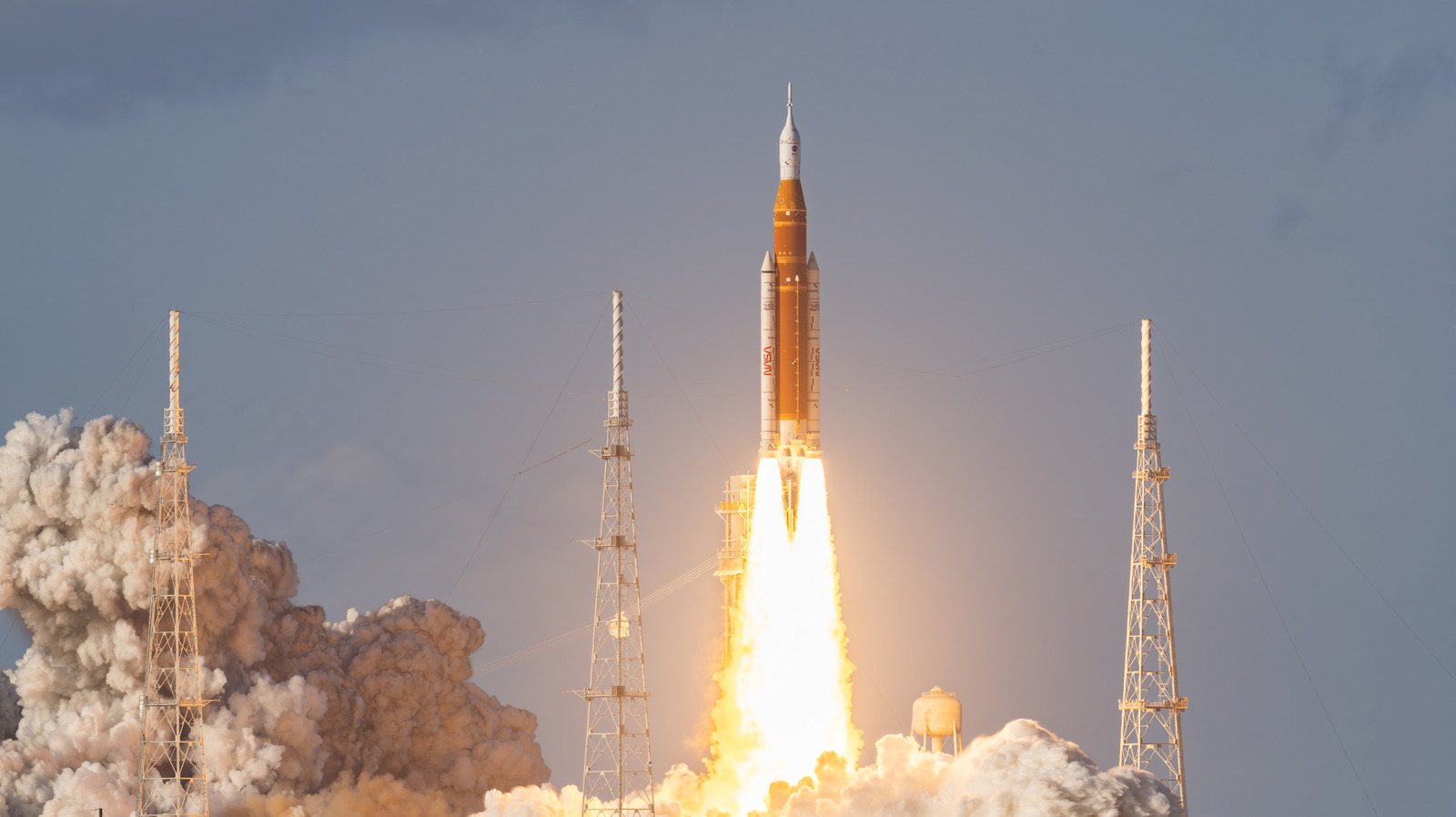
Following NASA's Artemis II mission, the U.S. space agency is planning to put astronauts back on the lunar surface by early 2028 with the Artemis IV mission. It's an exciting time for NASA and space fans alike, as no human has stepped foot on the moon since the final Apollo mission in 1972. While the Artemis IV astronauts are expected to stay on the lunar surface for about a week, longer-term plans include spending $20 billion to build a permanent moon base.
The Artemis Program is also laying the groundwork for the first crewed missions to Mars. As part of ongoing preparations, NASA announced the Moon and Mars Exploration Analog (MMEA), a one-year simulated deep-space mission at the Johnson Space Center in Texas. And it's looking for volunteers to participate. The Earth-based mission will start in August 2027 at the earliest and will involve four participants spending an entire year living and working in two specially designed environments.
The first is a transit habitat that will aim to simulate an extended spacecraft journey to and from another planet, while the second is a surface habitat designed to replicate living quarters on another planetary surface. NASA will use what it learns from the MMEA to better prepare for crewed missions to deep space, improving conditions and protocols for astronauts spending months at a time far from Earth.
Combining two habitats into a single mission
The four volunteers will begin their isolation period inside the Human Exploration Research Analog (HERA), a habitat NASA has already used numerous times since its first mission in 2014. The 650 square-foot facility is designed to simulate the experience inside a spacecraft, including staying on a tight schedule, equipment failures, and dealing with communication delays. They'll then transfer to the Crew Health and Performance Exploration Analog (CHAPEA), a larger, 1,700 square-foot habitat that NASA has used as a practice Mars base in the past.
It has living quarters and an "outdoor" section where crew members can practice using tools and walking as if they're on another planetary surface. The participants will also use a rover to simulate traveling beyond the habitat. The Moon and Mars Exploration Analog marks the first time NASA will combine HERA and CHAPEA into a single mission using the same volunteers. With a real flight to Mars taking around six months one way and NASA planning to put astronauts on the moon for extended periods, mission planners have to discover the best ways for astronauts to stay safe and healthy on these lengthy voyages.
The search for participants
The MMEA mission doesn't start until at least the summer of 2027, giving NASA time to select its four volunteers. The space agency is not looking for astronaut candidates, but people who are willing to live in long-term isolation with three others. To qualify, you have to be a U.S. citizen or green card holder between the ages of 30 and 55, and no more than 74 inches tall. English-language proficiency is required, and you have to pass NASA's physical and psychological assessments.
The agency is also looking for astronaut-level qualifications, such as a bachelor's degree in engineering, biological science, physical science, or math, and an advanced STEM-related degree, with military experience eligible as an equivalent for experience. Additionally, volunteers cannot have any history of sleepwalking or using sleeping aids, and dietary restrictions are not allowed. Living under strict conditions for a year might sound a bit extreme for some, but the four applicants who make the grade will secure a special place in the history of human space exploration. They'll perform vital work that will help NASA keep future crews healthy during long missions involving the moon and, eventually, Mars.