
Remember me
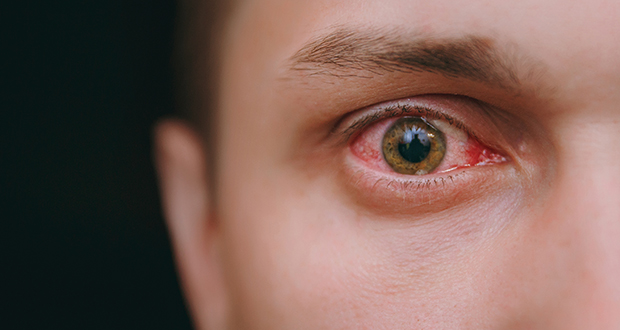








Dr Ray O’Connor continues his look at recent clinical papers on ophthalmology, particularly in relation to conjunctivitis – the commonest cause of red eye seen in general practice
Conjunctivitis is an inflammation or infection of the conjunctiva— the thin, transparent membrane that covers the eye and lines the inside of the eyelids. It is the commonest cause of red eye seen in general practice. Common causes include viral infections (most common; highly contagious), bacterial infections (also very contagious), allergic reactions (to pollen, dust, pet dander, etc.) and chemical or environmental irritants (such as smoke or chlorine). Typical symptoms include redness of the eye, itching or irritation, excessive tearing and an eye discharge that may be watery or thick and yellow/green.

Dr Ray O’Connor
The purpose for this first trial1 was to compare the efficacy and safety of one-time povidone-iodine (PovI) administration followed by a course of tobramycin-dexamethasone eye drops versus artificial tears in acute viral conjunctivitis (AVC). This was a single-centre, randomized controlled trial.
Patients with AVC were instilled with PovI (five per cent) after proparacaine and then divided into two groups using a computer-generated random number table. Group A received combination drops of tobramycin (0.3 per cent) and dexamethasone (0.5 per cent), and group B received carboxymethylcellulose (0.5 per cent) eyedrops.
Both groups administered one drop four times daily for at least three days and until complete symptom resolution. A symptom score (SS) encompassing the five symptoms (redness, lid swelling, foreign body sensation, pain, watering; max score 15) was calculated at baseline, day three, and day seven.
The study included 230 eyes (120 in group A, 110 in group B). There was a significant reduction in mean total SS at day three (2.16) and day seven (0.56) in all eyes compared to at presentation (8.33). At day seven, the proportion of eyes that were symptom-free was similar between groups (70.9 per cent, p = 0.881). The authors concluded that a course of tobramycin-dexamethasone combination eyedrops after PovI may lead to early symptomatic relief, but recovery was similar to artificial tears by day seven. No significant/sight-threatening complications were observed in any groups.
Allergic eye disease encompasses a spectrum of ocular surface disorders, including seasonal allergic conjunctivitis (SAC), perennial allergic conjunctivitis (PAC), and more severe forms such as vernal keratoconjunctivitis. The purpose of this systematic review and network meta-analysis2 was to evaluate and rank the comparative effectiveness of topical treatments for different types of ocular allergies. The authors conducted a systematic search of electronic databases identified between January 2000 and December 2024 looking for randomized controlled trials assessing topical treatments for ocular allergy, including antihistamines, corticosteroids, immunomodulators, and combination therapies.
Direct and indirect comparisons were evaluated using network meta-analysis. They also assessed relative efficacy. The main outcomes considered were reduction in ocular itching, redness, and inflammation.
The results were as follows. Olopatadine 0.1 per cent demonstrated highest efficacy in seasonal and perennial allergic conjunctivitis while Tacrolimus 0.1 per cent showed superior effectiveness in vernal and atopic keratoconjunctivitis. Overall treatment effect was significant (OR = 6.95) with moderate heterogeneity (I2 = 50.8 per cent). Subgroup analysis revealed consistent efficacy across different types of allergic conjunctivitis, with seasonal allergic conjunctivitis showing the highest cumulative ranking probability (89.0 per cent).
The authors concluded that their findings support condition-specific treatment approaches in ocular allergies. Newer antihistamines, particularly Olopatadine, are most effective for mild-moderate conditions, while immunomodulators, especially Tacrolimus, show superior efficacy in severe cases. The findings provide clear evidence-based hierarchies for clinical decision-making in the management of different types of allergic conjunctivitis.
Environmental exposures are increasingly recognized as important drivers of ocular surface inflammation, yet their combined contribution to the onset, exacerbation, and clinical burden of allergic conjunctivitis (AC) has not been comprehensively synthesized. This systematic review3 evaluated the evidence linking air pollutants, aeroallergens, and indoor or occupational exposures with allergic conjunctivitis. PubMed, Web of Science, and Scopus were searched from inception to September 18, 2025. Owing to substantial heterogeneity, findings were synthesized narratively. Twenty-nine studies were included, encompassing more than three million outpatient visits.
Consistent associations were observed between particulate matter, nitrogen oxides, sulphur dioxide, carbon monoxide and ozone with increased AC incidence and symptom severity. Variations by age, sex, and season were also found. Pollen and air pollutants frequently acted synergistically. Indoor exposures were associated with increased risk in children, while occupational settings demonstrated exposure–response relationships. Experimental studies identified mechanisms involving epithelial barrier disruption, and thymic stromal lymphopoietin signalling. The authors concluded that, overall, environmental exposures substantially contribute to allergic conjunctivitis and may inform improved prevention and personalized clinical management in the future.
 Ocular comorbidities of psoriasis have been proposed with growing evidence. Certain eye diseases require prompt diagnosis and appropriate interventions, otherwise irreversible blindness may occur. The authors of this systematic review4 searched PubMed, MEDLINE, Embase, Cochrane Central Register of Controlled Trials (CENTRAL) databases from their respective inception to August 15, 2025.
Observational studies providing data on risk estimates for eye diseases, such as cataract, uveitis, dry eye disease, glaucoma, retinal vein occlusion, conjunctivitis, meibomian gland dysfunction and blepharitis, between patients with psoriasis and without psoriasis were included. The primary outcomes were the risk estimates of ocular comorbidities in patients with psoriasis. The authors included 34 studies involving 10,045,036 subjects.
The findings were that patients with psoriasis showed increased risk of cataract (hazard ratio [HR] 1.78), uveitis (HR: 1.65 [cohort studies]; odds ratio [OR] 2.56 [case-control studies]), dry eye disease (OR: 5.01), glaucoma (HR: 1.40), retinal vein occlusion (HR: 1.58), conjunctivitis (OR: 3.76), meibomian gland dysfunction (OR: 4.45), and blepharitis (OR: 2.28). The conclusion was that current evidence reveals associations of psoriasis with cataract, uveitis, dry eye disease, glaucoma, retinal vein occlusion, conjunctivitis, meibomian gland dysfunction and blepharitis. It is recommended that ophthalmic consultation should be sought for psoriasis patients presenting ocular symptoms for prompt diagnosis and appropriate intervention. 
References:
Shah C et al. Comparison of Tobramycin-Dexamethasone Combination Eyedrop Versus Artificial Tear Eyedrop for the Management of Presumed Viral Epidemic Conjunctivitis: A Randomized Treatment Trial. Curr Eye Res 2025 Oct;50(10):994-1002. doi: 10.1080/02713683.2025.2515997. Krungkraipetch L et al. Ranking the efficacy of topical treatments for ocular allergy: A network meta-analysis of current evidence. The Ocular Surface 37 (2025) 273–282. https://doi.org/10.1016/j.jtos.2025.05.003. Martinez-Perez C et al. Air Pollution, Pollen, and Indoor Exposures in Allergic Conjunctivitis: A Systematic Review. Life, 2026, 16, 271. https://doi.org/10.3390/life16020271. Wang C-Y et al. Ocular Comorbidities of Psoriasis: A Systematic Review and Meta-analysis of Observational Studies. Am J Ophthalmol, 2025; 281, 181-200. doi: 10.1016/j.ajo.2025.09.020.