Inside CAA’s Secret AI “Vault,” Where Actors Can Live Forever—If They Want
What kind of opportunities? Digital alter-egos can be used for post-production fixes, so an actor doesn’t need to return to set for reshoots, and to speed up the original filming process. They can also be used for de-aging characters, creating performances in different languages, or preserving the voice or likeness of an actor whose health is deteriorating, as was the case with CAA client Eric Dane. Maybe you’re an in-demand athlete or musician with just a small amount of spare time between games or tours; you can send out your AI clones to do commercials for you.
Then there are more innovative possibilities “You now can have authors build a digital clone of themselves,” enthuses Liz Randall, a former Apple exec who is CAA’s head of business operations and strategic development. “You can ask them questions, like, ‘Hey, I'm on this page, what's going on here? Help me understand this character.’ It's coming, all this participatory media.” Shannon points to European football coach José Mourinho, who partnered with Snickers on an interactive campaign in which his AI avatar gives advice to fans in personalized videos. “A deal like that typically would be very specific: A talent shows up, and they have one piece of content that comes out of that,” she says. “Now, with this technology, there was zero in-person time, but you have hundreds of thousands of individual assets.”
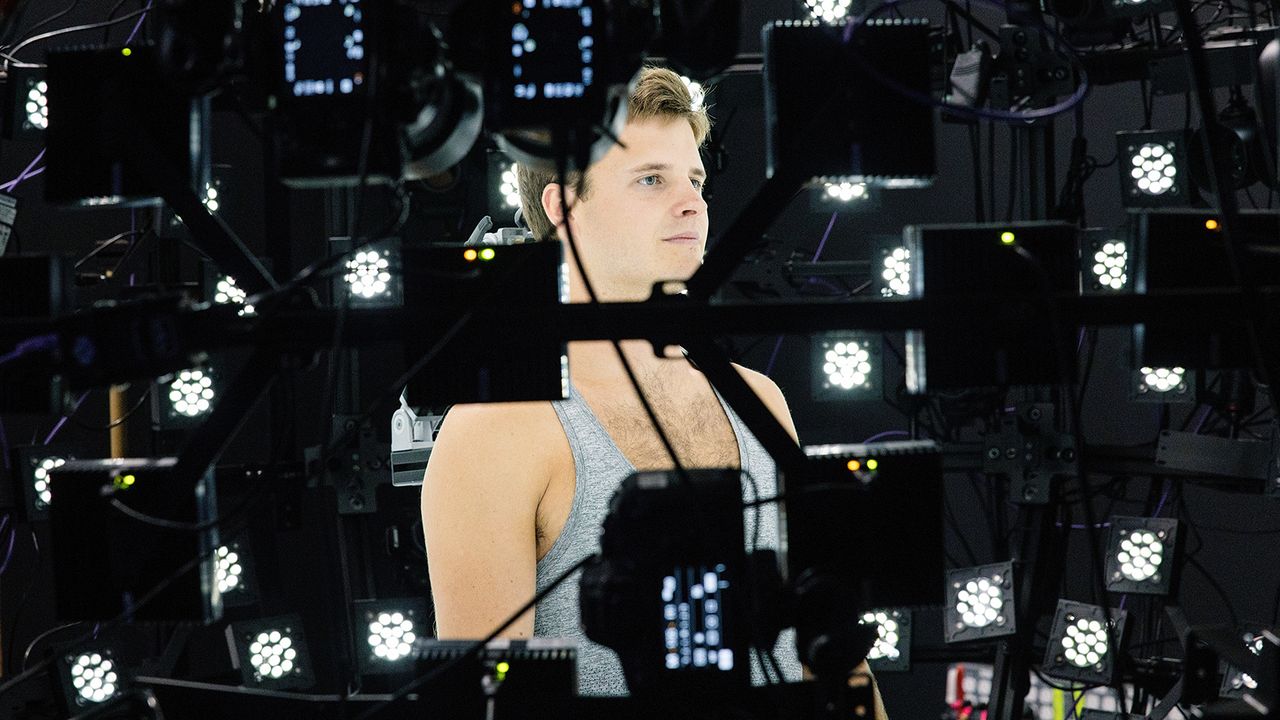
I was ready and willing to try out the scanning process myself—until I learned that the first step was to put on a skintight gray patterned bodysuit. CAA employee Joey Flanigan kindly volunteers to play digital guinea pig instead. Within minutes of my arrival, he’s standing inside the full body rig, a round metal arena covered with 204 cameras. Different flashes can preserve skin tones in a multitude of lighting scenarios, whether on a sun-bleached beach, a grungy subway train or a basic bluescreen. The rig even measures the shadows between fingers and other body parts, so they can be recreated with perfect accuracy. Flanigan's current position—arms and legs spread apart—is a key pose, according to Randall: “It can be used for gaming or for costumes, so that if he was in production as Spider-Man, we would have a model of him and could start working on his outfit.”
The second rig is a light-covered globe with spiralling lights that the crew has nicknamed Dorothy. (Because we are not in Kansas anymore.) It’s designed to focus on facial features, isolating every muscle. The data can be used for special effects work or as a reference for a video game artist creating a character around a performer. An iPad sits at the front of the machine, flashing facial expressions for Flanigan to imitate.