
Remember me

I have lived in six New York apartments in four years (don’t think too hard about that), and in each have been faced with the same predicament: How do I make this place feel three times its 300 square feet? I posed the question to a few interior designers who specialize in the small-space category, a favorite of ours at AD. And while some small spaces encourage you to live very simply (this Berlin studio has no bathroom door, for example), they all certainly excel at maximizing their space.
How did they think to paint the cabinets pink? Or turn every wall into a bookshelf without doubling down on the visual weight? I was seeing few signs of the typical myths for expanding the potential of your tiny space, and headed straight to the source for clarity. It turns out interior designers have either debunked or outright refuted the old standards for new approaches.

Harris Reed’s London retreat doesn't shy away from color even with a small footprint.
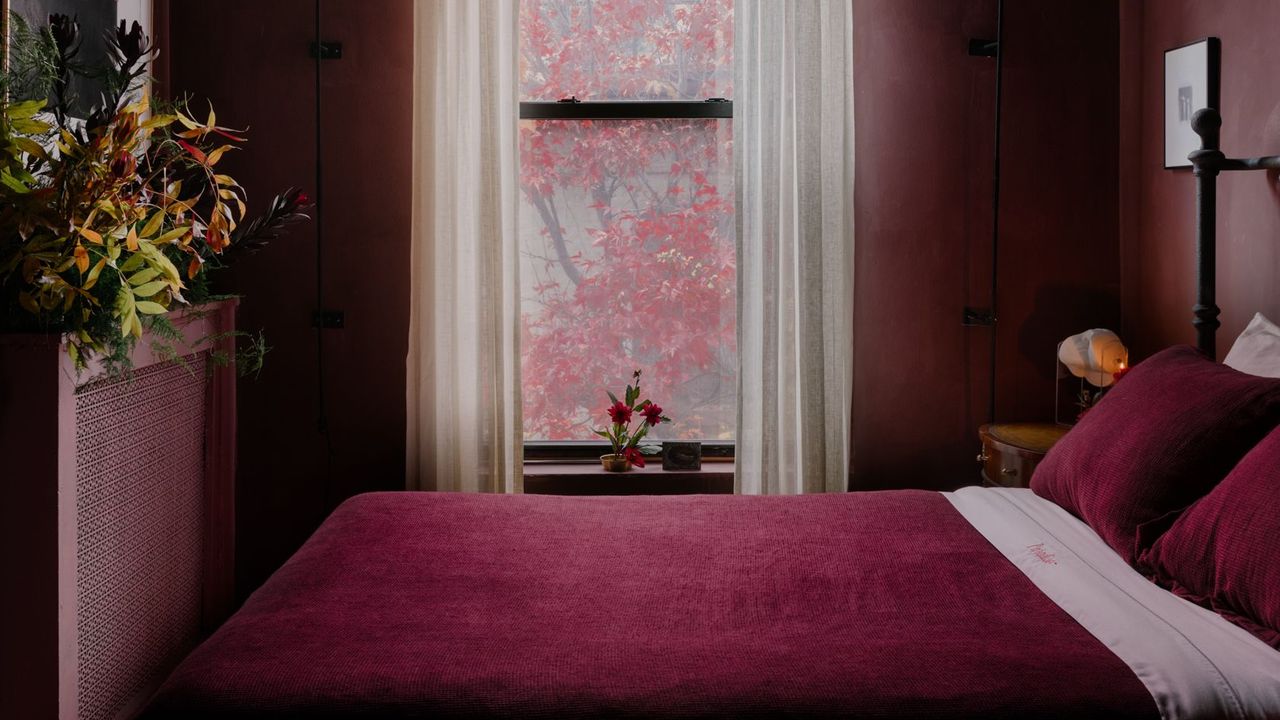
Photo: Miguel Flores-Vianna; Styling: Joan HecktermannThis is perhaps the most famous—or infamous, these designers might say—advice for small spaces of all time. Architect Sarah Jacoby puts it simply: “White doesn’t make things bigger, it just makes it white.” The effect can feel cold and impersonal, especially depending on the shade (blues hurt you in this case). Jacoby’s instincts run the other direction: toward warm, saturated tones that make a room feel cozy and inviting. Don’t fixate on what the room isn’t, she says, but what it is at its best.
Emily Frank of Frank & Co. Home draws a distinction that reframes the whole premise: “White reflects light, but brightness and spaciousness are not the same thing.” In an all-white room, she finds, every corner and edge is clearly defined, which actually makes the perimeter of a space more apparent, not less. Her preference is full envelopment: walls, millwork, and ceiling blanketed with the same saturated hue so the eye stops registering boundaries. “Color can create atmosphere, depth, and even a sense of mystery, qualities that often make a small room feel larger emotionally than it is physically.”