The FAA proposed a new rule that would unwind the current ban against supersonic flight over U.S. soil on Tuesday, replacing it instead with limits on the strength of sonic booms. The original rule was set all the way back in 1973, when any aircraft flying beyond the speed of sound would produce sonic booms powerful enough to affect people and buildings. Shattered glass, structural damage, and hearing loss are all pretty bad, so despite the obvious advantages of getting from Point A to Point B faster, the ban was set. What the FAA is saying now is that, hey, the speed of the plane isn't the problem; the sonic boom's power is. So why not regulate the latter instead of the former?
The reason to do this is because there is some exciting research being done right now to reduce the impact of sonic booms. If that can be mitigated enough, then there really shouldn't be any reason to slow a plane to subsonic speed. In fact, in such a world, the whole idea of a speed limit is kind of pointless: how fast is "safe" will change based on technological upgrades. Better just to set a cap on the boom's strength, and then let the planes fly as fast as they can without breaking that threshold.
After a thorough review involving the International Civil Aviation Organization, NASA, the private sector, and university researchers, the FAA has determined that that threshold is 0.11 pounds per square foot (psf) at ground level. The planemaker will have to prove to the FAA that its aircraft can beat that number, and even that will probably have to be established across a range of atmospheric conditions. But if it does so, then the plane will be certified to fly supersonic over the American continent.
Boom Supersonic is one of several aviation startups trying to break the sound barrier in a commercially viable way. In February of 2025, a prototype of its Overture airliner successfully flew at Mach 1.12 (with special permission from the FAA) without producing overwhelming booms. Or rather, it did, but it made clever use of something called Mach cutoff. Basically, the actual "speed of sound" varies depending on atmospheric conditions, like air density and temperature. So if the sonic boom is created at high enough altitude, the boom will actually curve (refract) as it travels down through thicker air. Done right, this means the boom will actually bounce away from the round long before it ever reaches it.
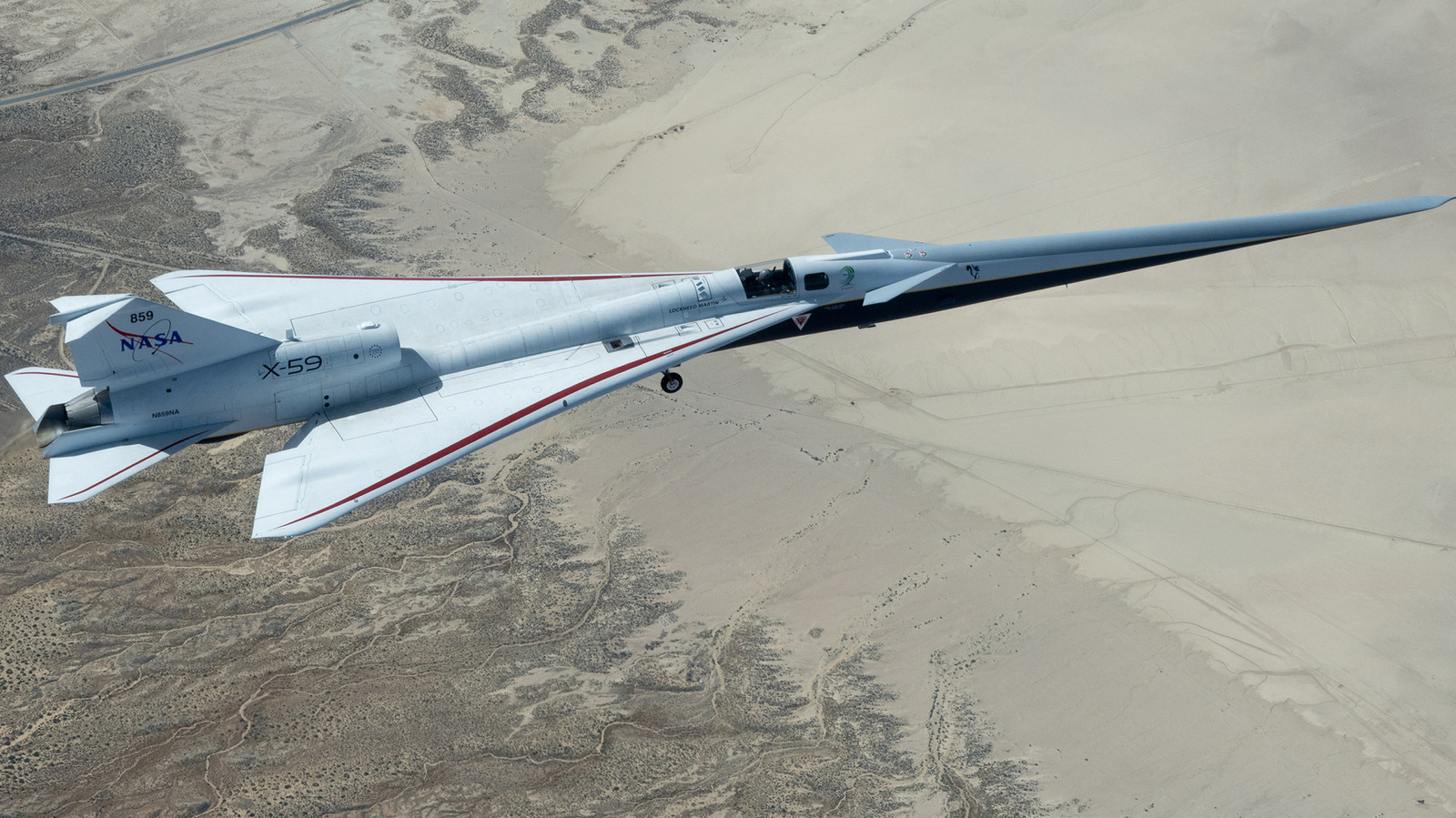
NASA has seen this trick and upped the ante. Its X-59 prototype doesn't want to bend its sonic booms, but just make gentler ones in the first place. The X-59 is just entering its testing phase now and should start flying over (forewarned) American towns soon. If that all goes well, future airliners may be able to go supersonic without resorting to clever atmospheric tricks.
Beyond the technology, what stood in the aviation industry's way was the speed limit regulation. With the FAA's proposed change, that shouldn't be an issue anymore. That said, the proposal needs to be approved, which is supposed to happen sometime in 2027. Even once that's done, it's only an interim rule; the FAA wants to see how things shake out before proposing a final rule down the road. Here's hoping it all works out, though. Flying coast to coast in three hours sure sounds nice to me.