Remember me
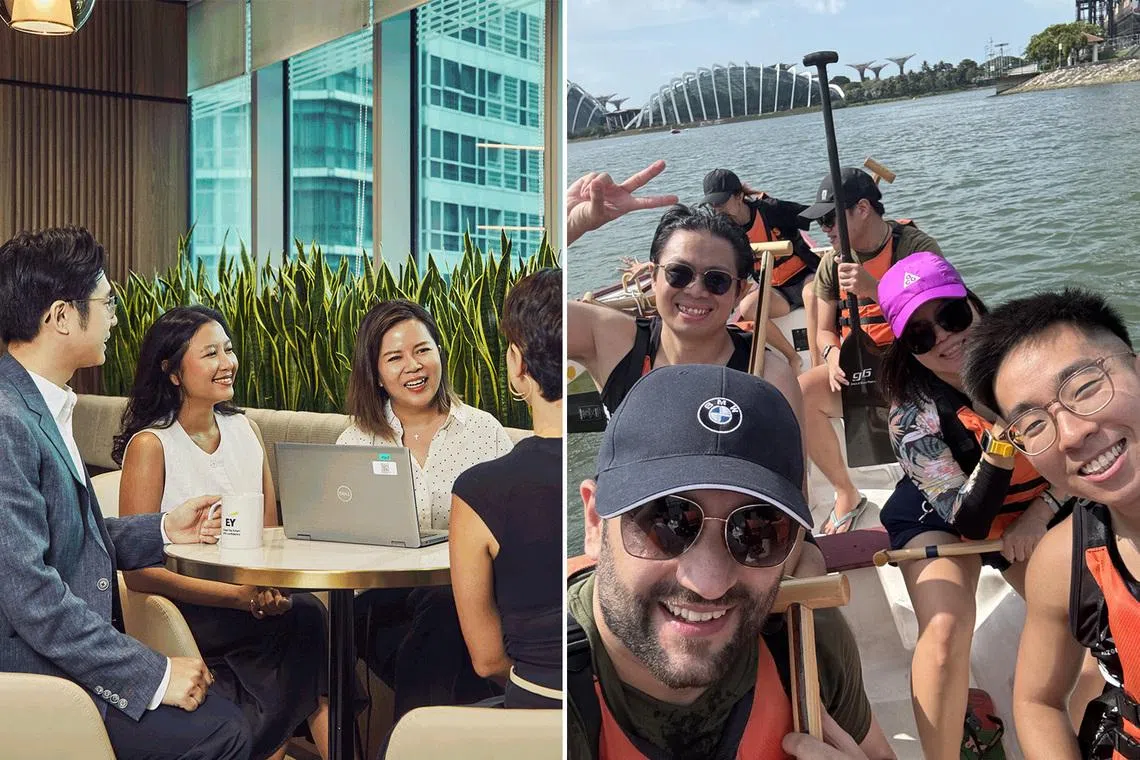
As her paddle cuts through the waters of the Kallang River, Sharon Lee moves in lockstep with her teammates, a world away from her weekday office at One Raffles Quay.
For this EY business consulting specialist, who was born in Taiwan and grew up in Auckland, dragon boating quickly became more than just a weekend hobby.
Lee, who is in her early 40s, says: “Dragon boating is a team event but it has a calmness when you are rowing. I feel like part of a bigger team and I enjoy the synergy that comes from moving in sync with different people.”
The dragon boat sessions – organised by her company’s Sports and Recreational Club – have become one of the ways she has built friendships and connected with local culture since her move to Singapore in 2023.
More importantly, it helped transform what began as an overseas posting for Lee into something more meaningful.
As Singapore positions itself as a global business hub, companies are attracting more foreign-born talents.
At EY’s Singapore office, 73 per cent of its 4,000 employees are Singapore citizens or permanent residents. They work alongside colleagues from more than 40 nationalities, including Indians, Indonesians, South Koreans and French nationals.
In such workplaces, integration is no longer just a social issue but a business one too. For multicultural teams to work cohesively, employees need opportunities to connect beyond their day-to-day work, says EY Singapore managing partner Liew Nam Soon.
“When people come together through shared activities – whether wellness, cultural or community-focused – it creates informal touchpoints that build trust and familiarity, especially across teams that may not interact regularly,” he says.
“These moments of connection help employees understand one another’s working styles and perspectives, which strengthens teamwork and reinforces a sense of belonging.”
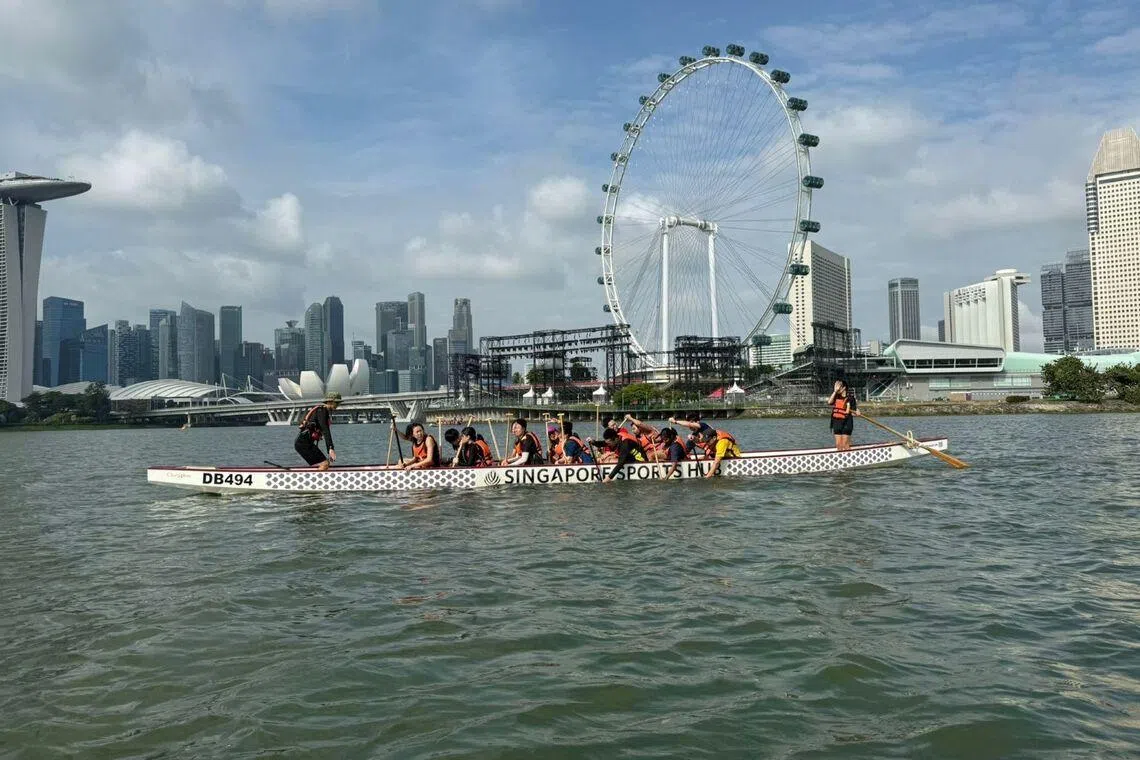
Through dragon boating, Lee has found a fun and meaningful way to connect with colleagues and embrace the local culture.
PHOTO: COURTESY OF SHARON LEE
EY’s company-led activities have helped smoothen the transition for Lee, who moved to Singapore with her husband and two young children, helping her see the country not just as a place to work, but somewhere her family could build a life.
“There was a strong onboarding culture and a collaborative environment from the start,” she recalls. “Colleagues from different countries openly shared relocation tips and practical advice, which made settling in much easier.”
Her positive experience has also motivated her to give back to the community.
Through EY Ripples, the firm’s corporate social responsibility programme, she has participated in several initiatives, including serving as a facilitator for a sustainability workshop at Nanyang Technological University in 2024.
“I like connecting with the younger generation and being a positive influence on them. At the same time, I get to learn from them and gain new perspectives because learning is always a two-way street,” she says.
Liew believes such initiatives matter because they help employees build relationships beyond their day-to-day work.
The 58-year-old, himself a fitness and sports enthusiast, says activities like football often break down workplace hierarchies in unexpected ways.
“In a football game, it’s fair game. A senior associate can tackle a partner to score a goal,” he says with a laugh. “It brings everything to a level that is not hierarchical. You bring out a different level of team engagement. It’s robust, but also fun.”
As workplaces become increasingly global, cultural fluency has also become an essential skill.
At EY, teams are often “porous”, says Liew. Employees not only work with colleagues from different nationalities, but are also frequently deployed overseas to meet clients or take part in multicultural projects across different markets.
“You might have the most logical solution to a problem but if it does not align with the local way of doing things, there will be resistance,” he says.
To support employees working across cultures, EY offers formal inclusion initiatives to its staff globally, including e-learning programmes and GlobeSmart, an e-learning platform that helps employees better understand different work styles and cultural norms.
Liew acknowledges that such programmes cannot fully prepare employees for every real-world situation.
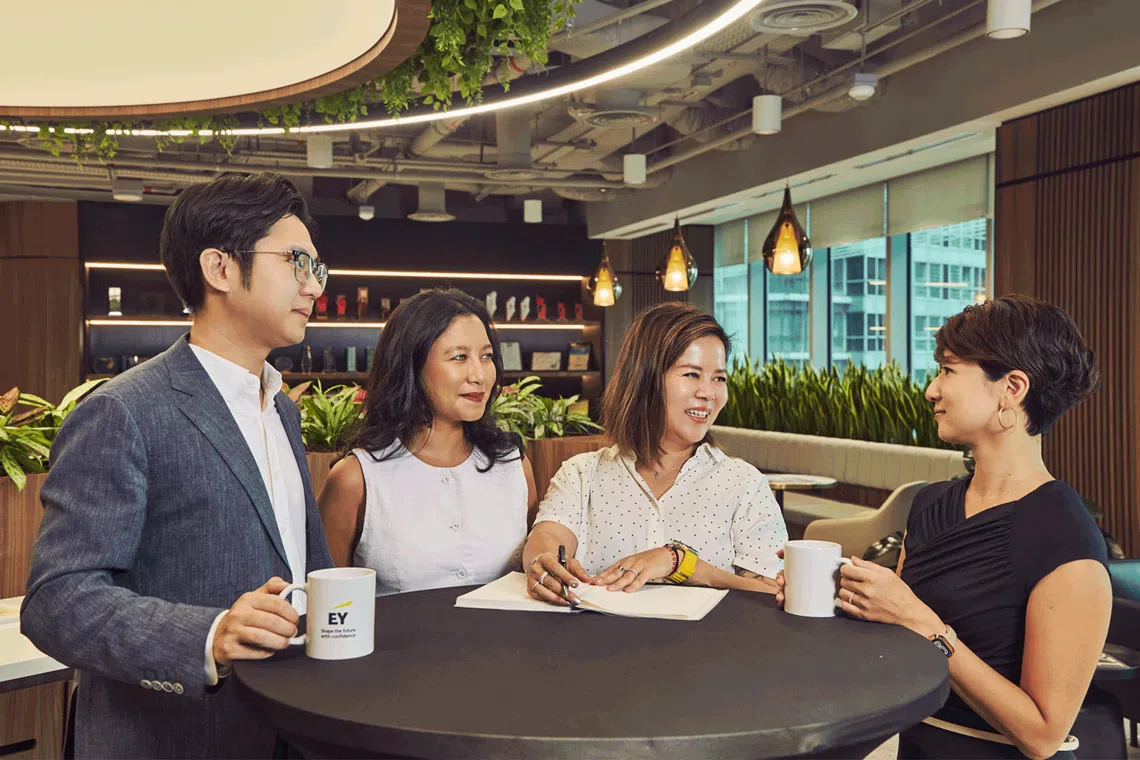
Curiosity, cultural understanding and a willingness to adapt have helped Lee build trust and stronger connections with her coworkers.
PHOTO: SPH MEDIA
“E-learning serves as the baseline, but our social integration and organisation-wide activities reinforce these learnings and help foster a strong sense of belonging at EY,” he says.
His own experience working across the US, UK and Asia during the first 15 years of his career taught him just how nuanced communication styles can be.
“Some cultures are more expressive and others are more conservative,” adds Liew.
Lee encountered similar experiences after arriving in Singapore. Coming from work environments where discussions tended to be more vocal and direct, she noticed that employees here were often more cautious about speaking up in large group settings.
Rather than forcing her own style onto her teams, she learnt to adapt.
“I make it safe for my teams to share ideas by acknowledging that their perspectives are valuable,” she says. “Then I slowly encourage them to drive projects with more empowerment and autonomy.”
Beyond work, she also makes an effort to understand the local culture, such as joining conversations about the PSLE. It has helped her build stronger relationships with local colleagues and reinforced an important lesson: that integration works best when both sides make the effort.
“When you are authentic, curious and in tune with local culture and conversations, you truly build trust,” she says.
Lee’s efforts have not gone unnoticed by her team.
Her colleague Samuel Wong, a business consulting senior associate at EY, says Lee’s international experience, combined with her willingness to understand local perspectives, has made her an effective leader and trusted teammate.
“Sharon taught me that real leadership is doing things well while still being kind to the people around you and building genuine relationships before you reach for influence,” he adds.
Outside work, Lee’s children, aged five and seven, have adapted quickly to life in Singapore. “They love the warm weather and how they can jump into the pool every day!” she says.
Her younger child, in particular, has already started picking up some Singlish. “I’m raising little Singaporeans,” jokes Lee.
Moments like these remind her how deeply her family has settled into daily life here. What began as a move overseas has gradually evolved into something more rooted.
For Lee, Singapore is no longer just a temporary stop. It is where her children are growing up, where she has built friendships and professional relationships, and where she hopes to continue contributing at work and in the wider community.
The Ministry of Culture, Community and Youth (MCCY) is a member of the Alliance for Action on Integration of Foreign Professionals (AfA-IFP). The AfA-IFP is co-convened by MCCY, the Singapore Business Federation (SBF), and the Singapore National Employers Federation (SNEF).