A nervous system reset at home is not about buying a beige sofa, whispering at your houseplants or pretending the laundry pile is a Scandinavian design feature. According to Dr Eleni Nicolaou, Art Therapist and Creative Wellness Expert at Davincified, it is about understanding how your surroundings — light, clutter, colour, noise and texture — can either keep your body on alert or help it come back down to earth.
Most of us judge a home by two fairly blunt measures: does it look good, and does it work? Fair enough. A kitchen that photographs well but cannot handle breakfast is just an expensive stage set. But there is a third question, and it may be the most interesting one: how does your home make you feel when nobody is watching?
In an age of burnout, overstimulation and the peculiar modern habit of relaxing beside four different screens, the idea of nervous system regulation has moved from therapy rooms into living rooms. The phrase may sound clinical, but the principle is pleasingly human. The body wants to know whether it is safe, settled and able to rest. Your home is either helping that conversation or heckling from the back row.
What Nervous System Regulation Means At Home
Nervous system regulation refers to the body’s ability to move between alertness and rest without getting stuck in either gear. When things are working well, you can focus, recover, sleep and respond to stress without feeling as if someone has dropped a cymbal inside your chest.
When they are not, you may feel wired but tired, anxious for no obvious reason, irritable in rooms that should soothe you, or unable to switch off even when the day has technically ended.
“Your nervous system is constantly scanning your environment for signals of safety or threat,” says Dr. Nicolaou. “A cluttered, noisy, or visually overwhelming space can keep the body in a low-level stress response without you ever realizing that’s what’s happening.”
That sentence should make anyone glance nervously at the kitchen counter. Not because clutter is a moral failing — it is not — but because visual chaos has a way of becoming mental background noise. The shoes by the door, the unpaid bill on the table, the blue-white glare overhead: individually small, collectively wearing.
Why The Room Has A Say In Your Mood
The brain does not clock off when you walk into your hallway. It continues to process light, sound, colour, texture and spatial layout, quietly deciding whether your surroundings feel calm or demanding.
“The visual and sensory qualities of a space communicate something to us emotionally,” Dr Nicolaou explains. “A room with harsh lighting, sharp angles, and no soft surfaces sends very different signals to the brain than one with warm light, natural materials, and a sense of order.”
This is where home design stops being merely decorative and starts becoming behavioural. A room can invite recovery or resistance. It can say, “sit down, breathe, you are finished for the day,” or it can flash like an airport departure board and wonder why you are still tense at 10.30 pm.
Start With Lighting, Because Your Ceiling May Be Shouting
Lighting is the simplest place to begin, largely because many homes are still operating as if someone is about to perform minor surgery in the sitting room.
Harsh overhead lighting keeps the body alert. Warm, layered lighting does the opposite, giving the brain a cue that the day is softening and rest is allowed. Natural light matters too, particularly during the day, when it supports mood and circadian rhythm.
A nervous system reset does not require theatrical dimming or a monastery vibe. It may be as simple as switching from one blazing overhead bulb to a few warmer lamps in the evening. The result is not dramatic in the reality-TV sense, which is precisely the point. The room stops barking orders.
Colour, Clutter And The Tyranny Of Every Surface
Colour is not neutral, even when the walls are. Muted, earthy tones tend to feel grounding, while very bright or heavily saturated colours can be more stimulating. That does not mean your home must be stripped of personality until it resembles porridge. It simply means bold colour works best when used with intent, not scattered about like confetti at a nervous wedding.
Then there is clutter: the great domestic tax on attention.
“Reducing visual noise matters too,” says Dr. Nicolaou. “When every surface is covered, the brain never fully gets to rest. Even small acts of clearing can lower the mental load a space creates.”
This is not an instruction to become a minimalist, nor to start folding T-shirts with the solemnity of a temple ritual. It is a reminder that the brain likes somewhere to land. Clear one surface. Create one visually quiet corner. Give everyday objects a home so they stop holding meetings on the dining table.
Small acts count. In fact, they may be the only ones that last.
Texture, Nature And The Case For Softer Edges
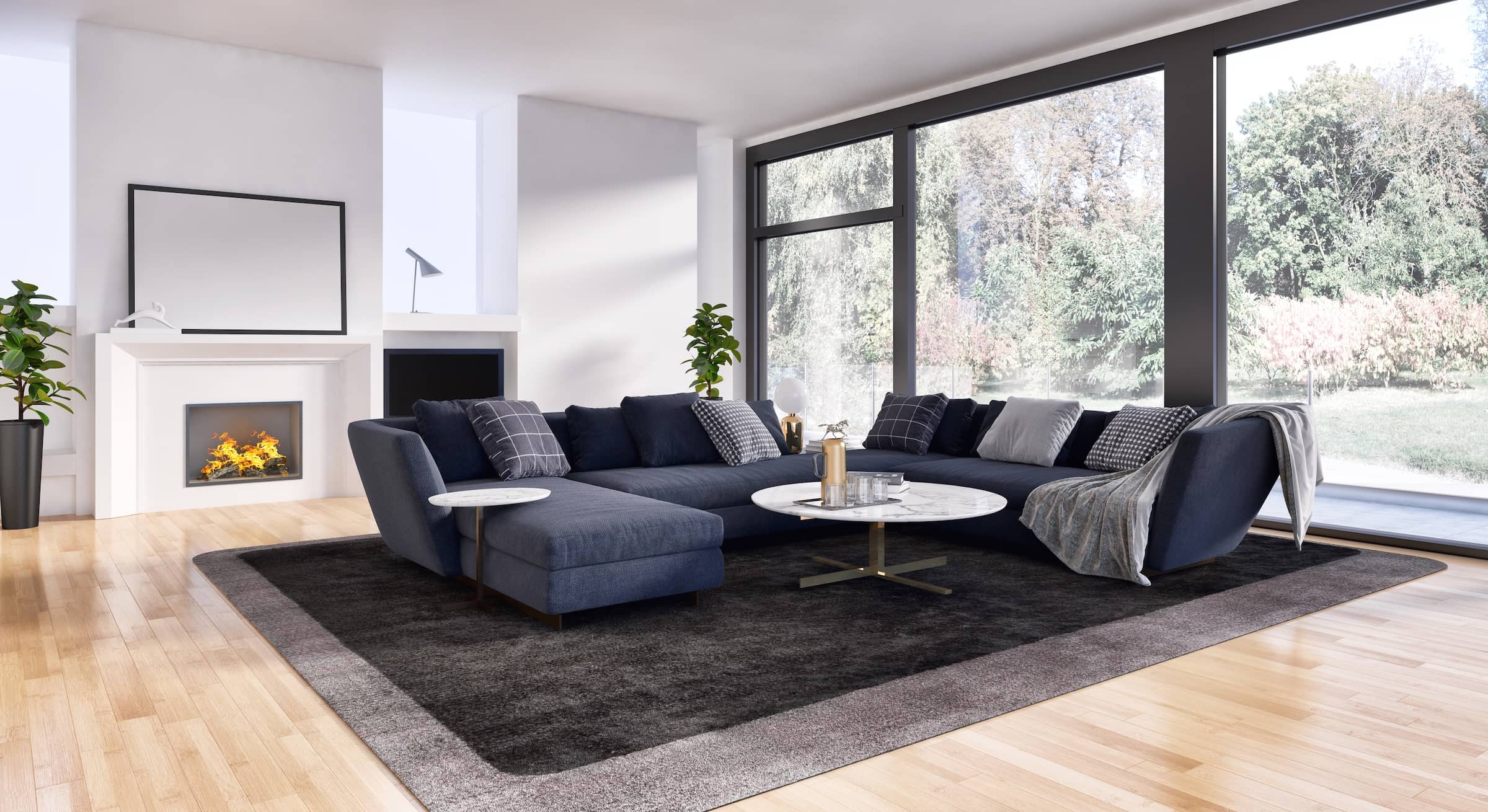
A home that helps with nervous system regulation often has some softness to it. Soft textures, natural materials, wood, stone and plant life all contribute to a calmer sensory experience.
There is something quietly persuasive about materials that feel connected to the natural world. They do not demand much. They simply give the eye and hand something steadier to register.
This is where the detail matters: a throw on a chair, a wooden table, a plant in the corner, curtains that soften the light, a rug that changes the acoustics of a room. None of this is revolutionary. Good. The nervous system is rarely impressed by revolution. It prefers consistency, predictability and somewhere decent to sit.
Sound: The Invisible Clutter
Noise is often the least visible source of stress at home, which makes it easy to ignore until you realise you have been clenching your jaw through three episodes of dishwasher percussion and neighbourly bass.
Unexpected or persistent noise can contribute to dysregulation. Quieter zones, soft furnishings, gentle music or white noise can help create a more settled atmosphere, especially in homes where silence is not readily available.
This is not about living in a vacuum. It is about giving the body contrast. If the outside world is loud, the home should not try to compete.
Create A Reset Point, Not A Wellness Shrine
One of Dr Nicolaou’s most useful ideas is the reset point: a small area of the home dedicated to recovery. Crucially, it does not need to be an entire room. Most people do not have a spare chamber waiting to become a sanctuary. They have a chair, a window, a corner, perhaps a lamp that has survived three house moves and knows too much.
A reset point might be a reading chair, a place to make tea without scrolling, a soft corner with a throw, or a space for a calming creative activity. Its purpose is simple: the body learns that this place is associated with slowing down.
“The act of engaging in something slow and absorbing, whether that’s reading, making tea, or working with your hands on something creative, helps the nervous system shift out of a state of alertness,” says Dr. Nicolaou. “Having a physical place associated with that kind of activity reinforces the habit.”
That last part matters. Habits are easier when the room helps. If your bed is also your cinema, office, snack station and inbox, do not be shocked when sleep treats it as a disputed territory.
The Home Habits That Work Against Rest
Some design choices and domestic habits quietly sabotage calm. Screens in every room are the obvious culprits, particularly in bedrooms. So is clutter with no system behind it — the sort of clutter that is not temporary, merely waiting for a decision nobody wants to make.
“Screens in every room, particularly in the bedroom, make it very hard for the nervous system to associate those spaces with rest. Clutter that has no home, things piled up because there is no system for them, creates ongoing low-level tension. And spaces that feel disconnected from nature, with no plants, no natural light, and no texture, can feel subtly draining over time.”
The good news is that none of this demands perfection. Perfection is usually just stress wearing better shoes. The aim is to remove unnecessary friction: fewer visual demands, softer light, more natural cues, calmer rituals.
A More Useful Way To Think About Home
Dr. Eleni Nicolaou’s view is not that your home should become a showroom or a retreat centre. It is that the spaces we inhabit are active participants in how we recover.
“Regulating your nervous system at home is about designing an environment where your body feels safe and supported. Small, intentional changes can make a genuine difference. Adjusting your lighting in the evening, reducing clutter in the spaces where you spend the most time, or carving out a quiet corner that is yours to decompress all help.
“From an art therapy perspective, the home becomes more than a backdrop to daily life. It becomes an active tool for regulation, recovery, and resilience. Engaging in slow, absorbing activities within that space, particularly creative ones, can deepen that effect considerably. The home has a real role to play in helping us feel more like ourselves again, especially during busy, challenging times.”
That is the real value of a nervous system reset: not a perfect home, not a fashionable one, and certainly not one that looks good only when nobody lives in it. A better home is one that gives something back at the end of the day. Ideally, before you have to ask twice.