
Remember me

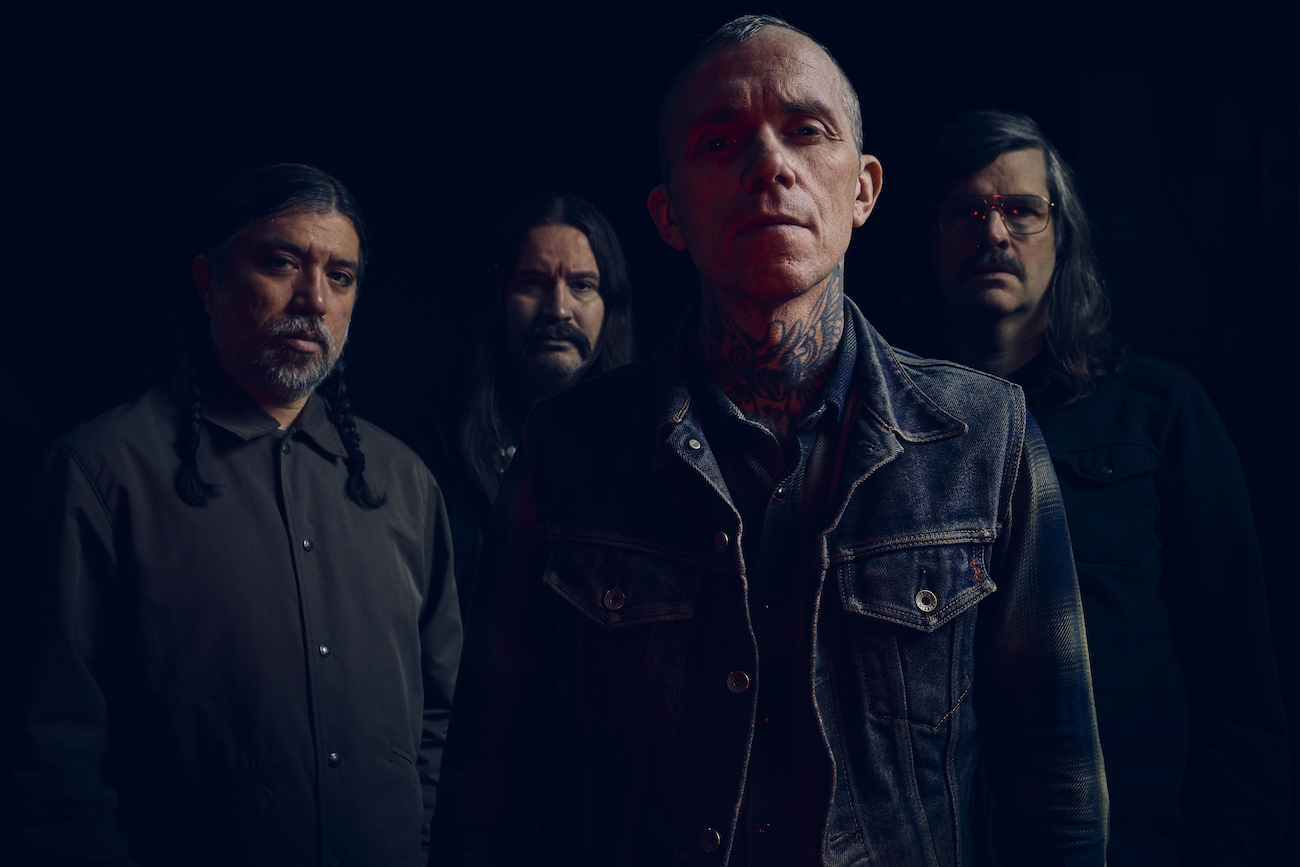
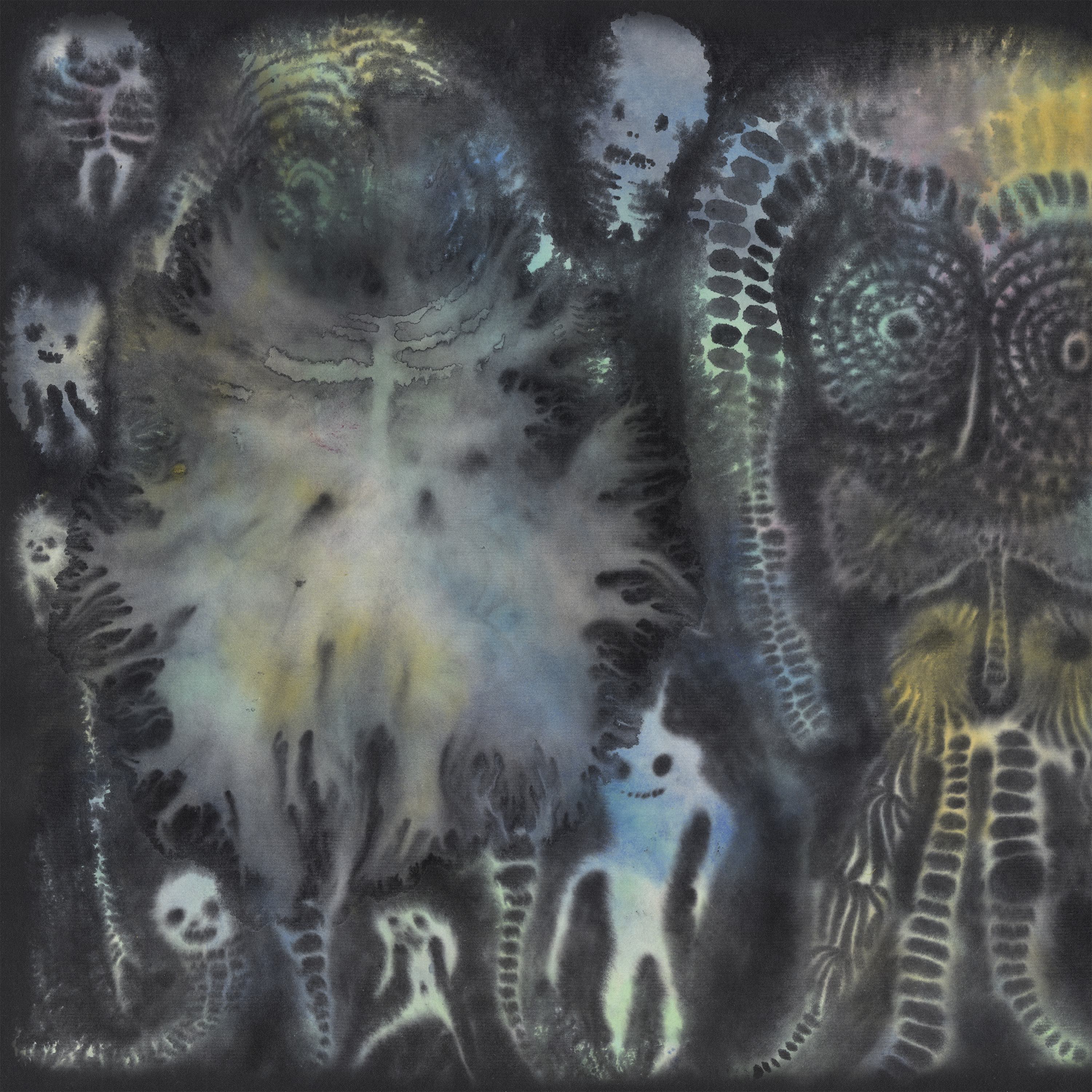
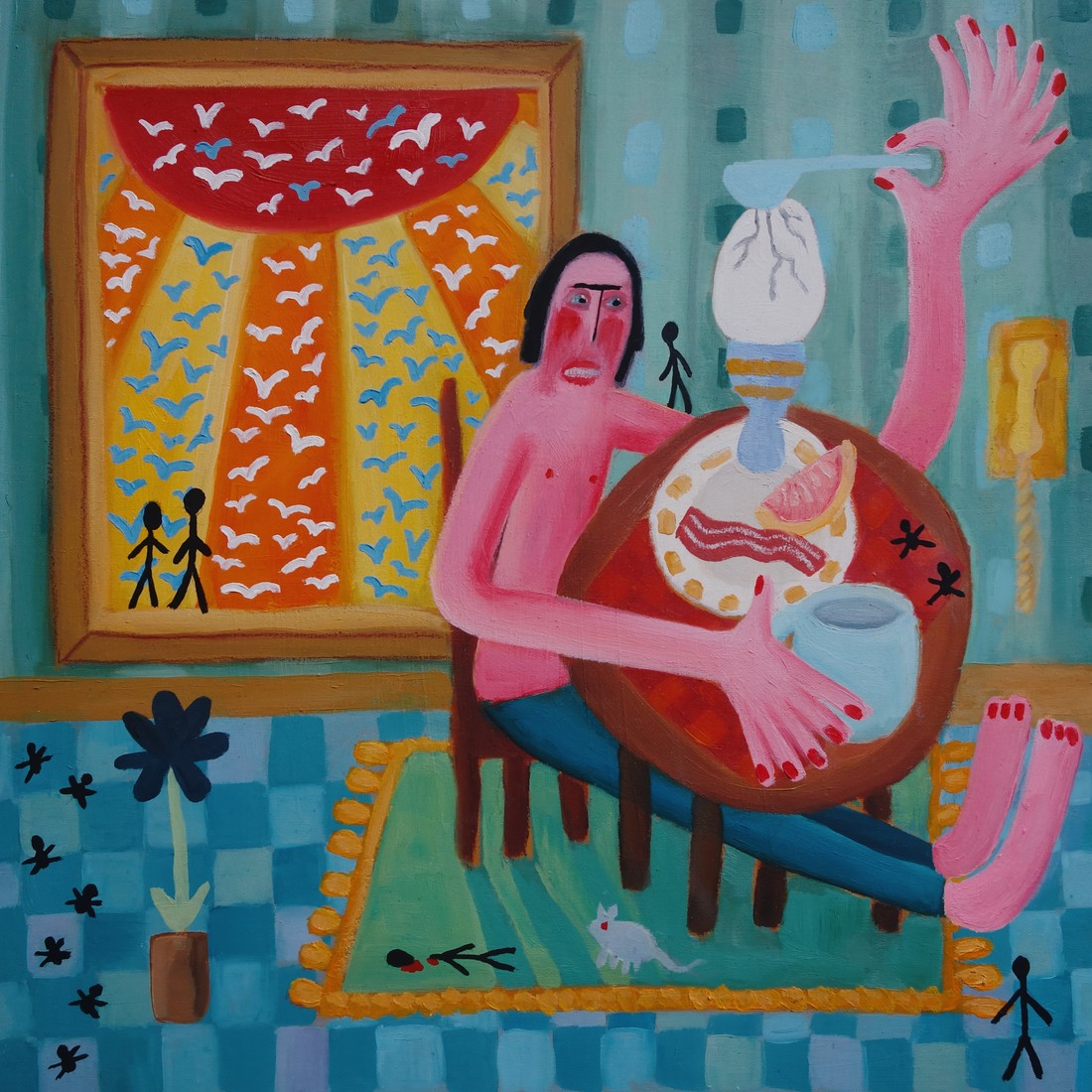
Converge got us good, didn’t they? On April 1, less than two months after the release of their long-awaited 10th studio album Love Is Not Enough, the Massachusetts metalcore heroes announced Hum Of Hurt, their second full-length of 2026. They got me good, anyway. I profiled Converge for the cover of Decibel back in February, and over the course of an hour-long interview with all four members of the band, no one let slip that there was another album coming on the heels of Love Is Not Enough. There were a few moments in that interview that I clocked as odd at the time, where one member would try to stop another from going down a particular conversational road, but I guess my journalistic instincts were rusty. I figured that was just how long-running bands handle their internal business, and I moved on. I got got!
I’m over it now, though, especially because Hum Of Hurt feels like yet another epochal slab of metallic hardcore from one of the best heavy bands to ever do it. Like Love Is Not Enough, it boasts a relatively lean runtime of just over half an hour, and both albums are unmistakably Converge, but the similarities mostly end there. Where Love hit like a battering ram, mostly eschewing the slow, contemplative pieces that have been a part of every Converge album since Petitioning The Empty Sky, Hum gives its songs a little more room to breathe. The six-minute “Dream Debris” is the cleanest illustration of this, with its extended, Botch-like bass intro, but even the shorter compositions have that stretched-out, skygazing quality that Converge’s off-speed stuff has long delivered. Frontman Jake Bannon said that initial idea for Hum Of Hurt was “Let’s make a noise rock album.” It dips into post-hardcore and doom metal just as often, but that makes a lot of sense. This isn’t Bloodmoon, the band’s full-length foray into moody post-metal with Chelsea Wolfe and Stephen Brodsky, but it’s not Love Is Not Enough, either.
Love and Hum work best as one another’s shadow selves. They came out of the same sessions, a fact that only serves to emphasize the Jekyll/Hyde quality of the two Converges who live within. They’re both extraordinarily heavy albums—maybe the two heaviest the foursome has ever made, pound for pound. But the divergent paths they take to achieve that heaviness is what makes Converge one of the greatest bands in the world. I suppose you could splice Love and Hum’s track lists together to make one extra-long Converge record, but the way this music has been bifurcated feels like a huge part of its effectiveness.
Thinking about how Converge have released two of the best albums of 2026 got me thinking about some of metal’s other great two-album years. There have been quite a few! In the ’70s, that was because bands’ draconian recording contracts demanded it. I’m sure Black Sabbath would have loved to take their time with Paranoid, but Vertigo wouldn’t allow that, so fans got it seven months after Black Sabbath. (“Paranoid,” one of the most universally beloved classic rock songs of all time, was famously written in 20 minutes as last-second album filler.) In later years, putting out two albums in a single year has usually been in service of making an artistic point, as with Converge’s yin-and-yang Love and Hum, or because an artist’s preferred workflow makes them especially productive. The barriers to entry for recording and releasing music are lower than ever, and plenty of artists have taken great advantage of that fact.
Because my brain, sadly, is wired this way, I’ve spent most of the past month working my way through dozens of metal bands’ two-album years, and in true blog boy fashion, I’ve decided to rank what I think are the 10 best—excluding Converge, to avoid recency bias. First, a few ground rules: I’m counting full-lengths only here, no EPs. Yes, some bands release EPs that are longer than other bands’ LPs. Tough luck to them. Also, I’m not including any years where a band released more than two albums. I feel like it violates the spirit of the exercise to reward Jute Gyte or Trhä or Boris or, heaven forbid, Buckethead for their prolificacy. That’s another listicle for another day. For now, let’s get into this one. Feel free to drop your own rankings in the comments.
10. The Ocean, 2010Heliocentric (April 14) and Anthropocentric (Nov. 9)
German prog metallers the Ocean, aka the Ocean Collective, released the thematically entwined Heliocentric and Anthropocentric in 2010. There’s a good mix of piano-driven post-rock ballads and twitchy, Tool-y stuff on both records, but Anthropocentric is by far the heavier outing. Both albums are built around philosophical and scientific critiques of Christianity, and they enlist the ideas of various scholars to make their points, including, Galileo, Nietzsche, and, uh, Richard Dawkins. I was an annoying college atheist in 2010, so unfortunately, that shit worked on me. Songs are still great, though!
9. Ulthar, 2023Anthronomicon (Feb. 17) and Helionomicon (Feb. 17)
Improbably, we’ve got another Anthro- / Helio- combo here, in the form of Ulthar’s 2023. The proggy death metal trio released Anthronomicon and Helionomicon on the same day, Use Your Illusion-style, and both albums had enough riffs to keep the heads busy all year. The way those riffs were arranged was the band’s ingenious wrinkle. Both albums are 40 minutes long, but Anthronomicon spreads that time over eight “normal” death metal songs, while Helionomicon comprises two side-long epics. Both albums sit in a similar stylistic zone, but the listening experiences are completely and illuminatingly distinct.
8. Summoning, 1995Lugburz (March 20) and Minas Morgul (Oct. 1)
Summoning unveiled the signature sound they’re still working with today on 1995’s Minas Morgul, so it can be easy to forget that just seven months earlier, the Austrians put out their actual debut record, the much rawer, less majestic Lugburz. Overlook Lugburz at your peril. It may not have the epic keyboard melodies and Tolkienian splendor of the Summoning we know and love today, but it’s still a bracing maelstrom of mid-’90s Euro black metal, and the vision for something bolder is clearly already forming at its margins. In less than a year’s time, Silenius and Protector would grasp it.
7. Blut Aus Nord, 2011777 - Sect(s) (April 18) and 777 – The Desanctification (Nov. 11)
This one feels a little bit like a cheat, since the third album in the 777 trilogy came out in 2012. But I’m honor-bound by the rules that I made up, so here we are. Blut Aus Nord’s industrial streak really started to come out on these records. I love the mechanized drumming and machinelike atonalism on Sect(s), and there are a few moments on The Desanctification that could easily pass for hip hop beats. Black metal bands flirting with those kinds of sounds can go either way, but it suits Blut Aus Nord, whose sole member Vindsval has always been a true adventurer.
6. Saxon, 1980Wheels Of Steel (April 3) and Strong Arm Of The Law (Nov. 7)
Now we’re getting into heady territory. Saxon put out two of the signature albums of the New Wave of British Heavy Metal in 1980, the same year Iron Maiden released their debut. Where the band’s 1979 self-titled LP was clearly rooted in boogie-woogie, Wheels Of Steel and Strong Arm Of The Law are metal incarnate. At the dawn of the decade that saw metal shape itself into a proper genre, separate from rock n’ roll, Saxon were central in creating its signature aesthetic.
5. Archagathus, 2011Coffee Grinder (May 1) and Canadian Horse (Aug. 20)
Somehow, in a discography with 73 splits but only four LPs, mincecore pioneers Archagathus put out two of them in 2011. They’re both really good, too. Of the two, Coffee Grinder is the raw, dirty punk album, while Canadian Horse is a little more musically developed, but they’re both fast, chaotic grindcore records with an ironic sense of humor and basically inscrutable left-wing politics. Canadian Horse’s “Hey Metallica” is the best song ever written about the experience of watching Some Kind Of Monster.
4. Motörhead, 1979Overkill (March 24) and Bomber (Oct. 27)
This is rarified air. Lemmy and the gang somehow wrote 20 classic songs in 1979, all while downing heroic amounts of Jack Daniel’s and amphetamines. The craziest part might be that this was all just preamble for Ace Of Spades, which would appear in 1980, barely a year after the release of Bomber. Anyway, you can go ahead and cue up the drum intro to “Overkill” and bang your head for the next 70 minutes uninterrupted, if you like. I certainly recommend it.
3. Enslaved, 1994Vikingligr Veldi (Feb. 28) and Frost (Nov. 26)
You can tell Enslaved cooked in 1994 because both Vikingligr Veldi and Frost have been the subject of full-album festival sets in recent years. The band essentially invented Viking metal and progressive black metal at the same time with these records, both of which are often unjustly overlooked in discussions of the ’90s Norwegian scene. Grutle Kjellson and Ivar Bjørnson may not have burned any churches or killed anybody, but they did more to establish black metal as an art form than just about anybody.
2. Black Sabbath, 1970Black Sabbath (Feb. 13) and Paranoid (Sept. 18)
If seeing Sabbath in the two slot makes you want to slam your computer shut and never read my work again, fair enough, but hear me out. I do believe that Black Sabbath and Paranoid is one of the greatest one-two punches in the history of music. It’s exceedingly rare to be able to point to a single record as the inventor of an entire sound, and that’s exactly what Black Sabbath’s Black Sabbath did. The fact that these four working-class Brits went and outdid themselves in the same calendar year beggars belief. If you can’t get onboard with Sabbath’s 1970 as a runner-up, I get it. But consider the below.
1. Judas Priest, 1978Stained Class (Feb. 10) and Killing Machine (Nov. 3)
Holy smokes! That’s a Yahtzee! Black Sabbath were only ever reluctant poster boys for metal, considering themselves to be a rock band to their dying breath. Their fellow Birmingham natives in Judas Priest had no such qualms. They embraced heavy metal from the beginning, and it embraced them right back. The year Priest really rounded into form as a gleaming, razor-sharp, ultra-modern metal band was 1978, when they managed to release perhaps the two best albums of their career. Stained Class is the brooding, complex elder sibling, Killing Machine the carefree little brother. They’re two equally essential sides of the coin of the realm, the ineffable heavy metal spirit that Priest still carries, five decades later. In 1978, before they even had any true peers in the genre, Judas Priest made two of the greatest metal albums of all time. Fall to your knees and repent if you please.
TEN NAILS THROUGH THE NECK10A.A. Williams - “Outlines”
Location: London, UK
Subgenre: alternative rock
The London singer-songwriter A.A. Williams is one of those artists, like Chelsea Wolfe or Emma Ruth Rundle, who has attracted a huge metalhead fanbase without ever quite making metal. Her fourth album since 2020 is Solstice, a collection of agreeably dark ballads centered on piano, guitar, and Williams’ immaculate voice. It shouldn’t be too hard to find what metal fans are hearing in her music. These songs are all crescendo and decrescendo, with raging emotional currents that swell and recede the way they might if this were doom or post-metal. (King Woman is another good analogue.) Williams is a master manipulator of those familiar dynamics, but it’s her singing that makes Solstice a true standout. She commands songs like “Outlines” with deep resonance and quiet confidence, never straining for a note, simply sending her affecting lyrics deep into the squishy part of every metalhead’s soul. [From Solstice, out now via Reigning Phoenix Music.]
9Masterplan - “The Call”
Location: Hamburg, Germany
Subgenre: power metal
Since 2001, former Helloween guitarist Roland Grapow has led Masterplan, a credibly Helloween-ish outfit that has occasionally managed to outshine its precursor band. The power metal scene has become irreparably fragmented over the past 25 years, and there aren’t as many ’80s-worshiping, Euro-style bands left as you might think. That makes Masterplan’s Metalmorphosis a precious commodity, as an increasingly rare new record built on the sturdy foundation of the genre’s early classics. Grapow wrote a lot of album-closing epics for Helloween, and his eight-minute “The Call” follows in that tradition. It’s a duet between Grapow and lead vocalist Rick Altzi, and it’s better than anything on Helloween’s sleepy 2025 album Giants & Monsters. [From Metalmorphosis, out now via Frontiers Records.]
8MAKE - “The Augur”
Location: Durham, North Carolina
Subgenre: post-metal
Only time will tell if the much-praised return of Neurosis will lead to a resurgence of interest in the so-called “Cult of Neur-Isis,” but MAKE are doing their part to keep that sludgy, proggy post-metal sound alive. Exegesis At The End Of Time is the North Carolina band’s fourth album (and first in a decade), and itwhips ass. Closing track “The Augur” moves like Russian Circles stuck at half-speed, at least until a load-bearing chord gives out at the song’s midpoint and turns it evil. Once Spencer Lee and Scott Endres start roaring about Sisyphus, “The Augur” is pure malevolence, seething and rocking on the balls of its feet right up to its abrupt conclusion. There’s plenty of contemplative, tastefully deployed negative space on Exegesis At The End Of Time, but those ultra-heavy parts are what get my blood pumping. [From Exegesis At The End Of Time, out now via Accident Prone Records.]
7Kuzu Knot - “Essential Organs Removed”
Location: Atlanta, Georgia
Subgenre: blackened grindcore
Here’s a nasty one! Kuzu Knot is the new one-man project of Atlanta native Wesley Berrien, and it darts convincingly between black metal, grind, crust, and modern metalcore on debut album Deceitful Above All Things. The writing is pretty complex at times, but Berrien has a knack for making it sound instinctive, like he’s exorcising demons from his guitar while his recording software just happens to be running. The vicious, off-kilter “Essential Organs Removed” is a highlight, a Converge-laced maelstrom of black metal malice that would tear the roof off live, if Berrien ever puts a full band together. [From Deceitful Above All Things, out now via Fiadh Productions.]
6Phantom - “Out Of The Mausoleum”
Location: Guadalajara, Mexico
Subgenre: speed/heavy metal
Speed metal savant JC Necrohex is just 20 years old, but he’s already got a hell of a discography under his belt with Phantom. Not Midnight Yet is the Guadalajara project’s third full-length since 2023, and it’s stuffed to bursting with riffs and solos that summon the spirit of Slayer circa 1983. Necrohex sounds most comfortable when he’s throwing heat, and “Out of the Mausoleum” is a goddamn prime Randy Johnson fastball. The song is an endless barrage of riffs that somehow find a way to be catchy despite their high-velocity violence, and it concludes with – and this is not a joke – a speed metal reworking of the Tetris theme song. The sheer audacity of that move is why we need more 20-year-olds making old-school metal. Necrohex has the gift, but more importantly, he has the swagger. [From Not Midnight Yet, out now via High Roller Records.]
5100 Demons - “Häxan Hammer”
Location: Wallingford, Connecticut
Subgenre: metallic hardcore
Embrace The Black Light is so heavy it got the famously metalcore-averse Encyclopaedia Metallum to accept the reunited 100 Demons into their archives. Proceed with serious caution. The metallic aspects of the band’s sound are much more pronounced here than on the first two 100 Demons records, both of which came out in the early 2000s, and that subtle transformation suits them well. “Häxan Hammer” sounds like a beatdown hardcore guy’s version of an Amon Amarth song, which doesn’t sound great on paper but works brilliantly because these dudes know exactly how to sell it. Fly your banner, swing the hammer, turn this shit up loud. [From Embrace The Black Light, out now via Closed Casket Activities.]
4Warning - “Teacher”
Location: Essex, UK
Subgenre: doom metal
As a somewhat reluctant part of the critical apparatus that’s been responsible for helping to elevate it, I have to admit I’m pleased to see Warning’s Watching From A Distance being rightly celebrated as one of the great metal albums of the 21st century. Patrick Walker just gave his first-ever on-camera interview on HardLore. HardLore! I didn’t even know Colin Young liked doom, but it seems there isn’t anybody these days who isn’t a Warning fan. 20 years after Watching, Walker and his bandmates have gifted us with Rituals Of Shame, an album that might be every bit its predecessor’s equal, provided we give it the chance to burrow into our hearts. Walker’s been active in the mostly acoustic 40 Watt Sun since 2009, and the way he’s learned to make his melodies and phrasing carry in those quieter songs has clearly penetrated Warning. It’s a slightly subtler album than Watching, though no less heavy or emotionally devastating. After my first couple of months with it, I’m partial to the nearly 13-minute title track and the more obviously 40 Watt Sun-burned “Teacher.” Ask me again in 20 years, when I’m hopefully writing about how it kickstarted a fruitful second act of Warning’s career. [From Rituals Of Shame, out now via Relapse Records.]
3Khemmis - “Beneath The Scythe”
Location: Denver, Colorado
Subgenre: doom metal
Khemmis arrived on the scene during the 2009-2014 American doom boom that I documented in April’s edition of Breaking The Oath, and apart from Pallbearer, they were the band of that cohort that scaled the highest critical and commercial peaks. Unlike Pallbearer, they’ve kept plugging away with their sculpted, classicist melodic doom style, only making minor alterations to mood and texture across five well-received albums. Their new self-titled LP is my favorite of theirs since 2016’s Hunted, and that’s probably because they wrote it specifically as a celebration of heavy metal. There’s a lot of Iron Maiden and Judas Priest in the mix here, and Khemmis have the songwriting chops to pull those references off — a rarity in a subgenre where too many bands get by on volume and vibes alone. Every song has at least one head-turning riff or vocal melody, but I’m partial to “Beneath The Scythe,” the one where David Small rips an extended bass solo that would make Steve Harris blush. [From Khemmis, out now via Nuclear Blast Records.]
2Converge – “Hum Of Hurt”
Location: Salem, Massachusetts
Subgenre: metallic hardcore
I think we’ve covered how much this band rules, and how insane it is that they just dropped two of the finest albums of their storied career in the same calendar year. The title track of Hum Of Hurt would be the best song in most metalcore bands’ whole discographies. I can only definitively say it’s one of the top five songs Converge have released since February. [From Hum Of Hurt, out now via Epitaph Records.]
1Thætas – “The End Of History”
Location: New York, New York
Subgenre: brutal/technical death metal
Too much so-called “brutal/technical death metal” leaves a lot to be desired in the “technical” department. Suffocation and Nile didn’t become gods by layering stop-start, rhythmic chugging under a vocalist who sounds like a toilet. They wrote insane riffs, ones that actually moved up and down the neck a little bit, and when they dropped an ignorant slam into the mix, it worked because it provided a needed contrast to the inventiveness of everything else they were doing. I like Thætas for the same reason I like those bands. The NYC band’s sophomore LP The Irredeemable Age is super cerebral, but it’s also uncompromisingly brutal. There’s a lot of dynamism in the riffs, and the mid-song tempo shifts always feel like they’re serving a purpose. There’s even a little bit of melody peppered in, but never so much that it turns into an Archspire record. “The End Of History” is Thætas at their absolute best — brutal and technical, in perfect equilibrium. [From The Irredeemable Age, out now via Profound Lore Records.]
JOURNEY TO THE WORLD BEYOND