Early adopters of China’s child-free lifestyle face regret in middle age
Li Junhua graduated with a bachelor's degree in economics from Fudan University and later worked at a bank in Hong Kong.She had devoted her younger years to her career, putting off motherhood because she feared losing her high-paying position and was hesitant about the responsibilities of raising a child. When she eventually decided to start a family, she fell ill. Years of hormone treatment forced her to wait six to seven years for the medication to leave her system before trying to conceive.
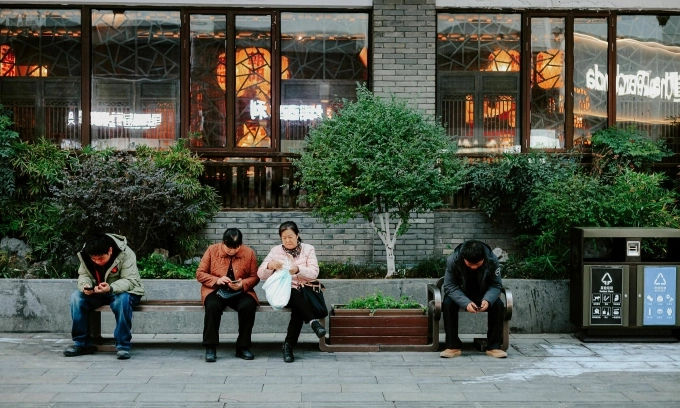
People sit on a bench in Nanjing City, China. Photo by Pexels
"By the time my body recovered, I was already over 40 and had missed the best time to become a mother," local media outlet Xianwei Wushi quoted Li as saying .Li is part of China's first generation of DINKs (Double Income, No Kids). In the 1980s and 1990s, when the concept first emerged in China, some young people broke away from the traditional belief that having more children brought greater happiness.According to its 2020 census, China had about 188 million dual-income households without children, accounting for 38% of all families and living primarily in major cities like Shanghai, Shenzhen, and Beijing, the Sixth Tone reported.But nearly three decades later, many early adopters of the DINK lifestyle say the reality has been different from what they expected.Dong Bo, 51, moved from Heilongjiang Province to Beijing to pursue career opportunities and chose not to have children so he could travel freely. At age 40, he suffered a stroke that paralyzed the left side of his body.After helping him complete hospital admission procedures, his wife did not visit him even once during the three months he spent in rehabilitation. When he was discharged and still unable to manage daily activities on his own, she asked for a divorce, according to QQ.He later underwent rehabilitation, remarried and abandoned the DINK lifestyle. He now has a daughter who is preparing to enter kindergarten. He says: "The foundation of a DINK family is having a reliable partner. If the person signing your medical consent forms is irresponsible, that relationship is bound to fall apart sooner or later."Li says caring for hospitalized relatives made her aware of the risks and loneliness that can come with aging without children."When illness strikes, having children by your side is a very practical form of support. Looking back now, I regret missing the opportunity to have children."Growing old with security and support remains a challenge for people who choose not to have children. Aware of the risks, many younger members of the child-free generation are making plans for later life. Li has quit corporate life and now spends her time studying tea culture, volunteering and exploring community-based arrangements for elder care.In 2018, Ka, a Beijing resident born in the 1980s, married Xiao Liu from Fujian Province. After four relatives died of cancer in succession, the couple decided not to have children because they feared passing on a genetic predisposition to the disease.Ka says they spend their time exploring new cuisines, surfing and swimming. They plan to consider moving into a nursing home when they reach their 70s. "I'm only 40 now and don't think I should worry about things that haven't happened yet."