Beyond The Hike: What Makes The Camino De Santiago So Transformative
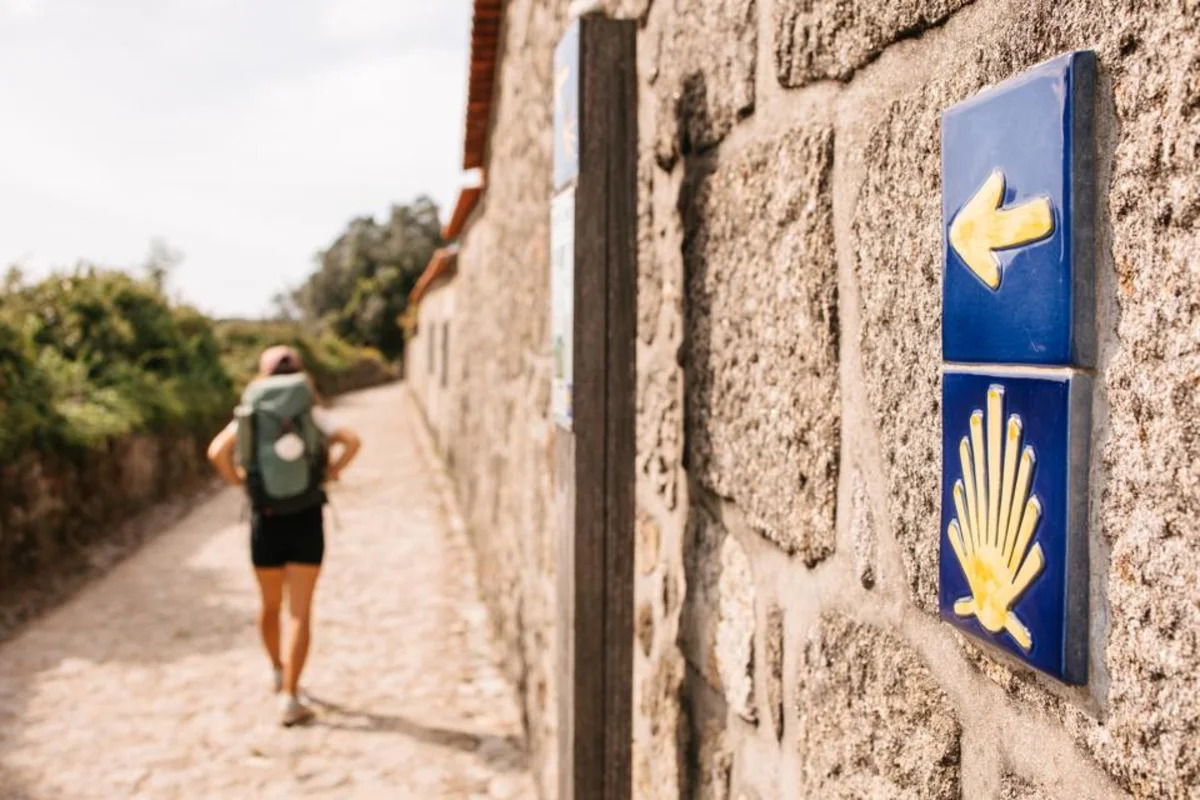
The Camino de Santiago has long since been a popular pilgrimage route, but today it's attracting an even broader clientele. In the beginning, it was mainly attracting spiritual seekers, but today's pilgrims include solo travelers looking to gain clarity and insight, retirees who want a meaningful, but still active adventure, and professionals eager to unplug. This centuries-old network of trails leading to Santiago de Compostela in northern Spain is experiencing a surge in popularity."Many people do a pilgrimage to experience a rebirth or a transformation. You're talking to other people, you're walking, you're thinking, you're reflecting," says Richard Rivera, a historian and tour guide in Santiago de Compostela in Spain. "What I find so interesting, is that I lead groups on different tours all over Spain and it's hard to satisfy everyone. Someone is going to be unhappy with something and complain, but after all these years of guiding groups on the Camino, I have never heard anyone saying that the experience was bad or that they wouldn't recommend it. Never. And that's something very rare and very special."Walking as a Form of Self Reflectiongetty"We as humans are designed to walk. On the Camino you are connected with yourself, you are connected with the land and you are connected with the people you meet," says Guillermo Aeregui, a local tour guide in the Asturias region of Spain. When you travel by plane, train, bus, and car you're not open to people in the same way as when you're walking and talking with them."He explains that if you want to be isolated you travel by car, but if you're mood is open, you walk—you meet people—you interact. When you walk the Camino, you are a part of the land, a part of a group of people, of pilgrims. You work in who you are and what you're thinking when you walk. In life you play so many different roles, but on the Camino, you drop that and just be. You don't have to be something—employee, mother, friend—you let everything go and just be your true self.Also, in your everyday life you're in groups that are similar to you—in age, socio economic background, political ideology, but on the Camino, you come across everything. Someone who's 30 years older or younger than you. Someone who thinks in a completely different way. Someone whose job is different. The Camino puts you all in the same situation, at the same level. People open up in a way they don't do at home in their everyday life.Being in the Moment"On many trips and vacations, people take so many photos, including selfies, to document the trip, to show other people. I was there, you are saying. The Camino is different. It's not for other people it's not to document, it's for you. You create every day, you can walk slow or fast, with other people or by yourself, you can stop and take breaks or go through. You're in touch with yourself and how you feel. It's all about you," adds Aeregui.Walking the Camino is like when you put your phone on airplane mode. There are not all these things coming at you, instead you are focused on what's right in front of you.The Secret Sauce of the Camino"What surprises people the most is the openness of the Camino," says Jaime Bacas, a tour director with EF Adventures. Even if they've been told before they arrive that they will meet so many people, have such an honest authentic experience, they are surprised how easy it is to do just that. "They are surprised by how an activity, walking, something they've been doing their whole lives, gives them the space and time they need to manage situations, put things in perspective, and space to think clearly. So many situations people face in everyday life, but walking the Camino gives them clarity.He adds that when you're surrounded by trees, by forests, by nice people, good mood, and you sleep after walking as never before, and you are eating very well, healthy, everything starts to work better in your life. It's a gradual change, but a big one. And when you notice it you start to think why I don't live my life like this every day.There are hiking trails and even pilgrimage routes all over the world. What makes the Camino special?"What is different is the connection, there are wonderful hikes all over Europe, but people you find on the Camino are not necessarily hikers," says Bacas. Some people can't even say what made them do the Camino, but something draws people to it. And then they make that connection. To themselves, to nature, to others on the trail. That's the secret sauce, what people take away from the Camino. The connection."Meeting People Outside Your BubblegettyMost of us live in a bubble, but on the Camino you cross paths with a whole range of people from across the spectrum—political, economic, financial—but the playing field is level, everyone is wearing sports shoes and a backpack. You can't tell the banker from the brick-layer. People you wouldn't normally meet or interact with come together on the Camino.You stop at a café to buy something to eat, to use the bathroom, and you start talking to the person sitting at the table next to you. Random questions can forge deep conversations and intimate connections. Maybe it's a connection for just a few seconds, or minutes, or sometimes you can walk with that person all day.Even if you've done part of the Camino before, each time is different. "Sometimes some stages of the Camino I don't remember the terrain, because I was so involved in a conversation I was having with a new friend," says Bacas who has walked the Camino numerous times. "Other days I walked in silence and I'm so awed by the scenery." You leave the Camino feeling renewed and revitalized. And you know you can always come back. When life gets difficult, when you need some time to think. Says Bacas: "That's one of the most surprising things: people who have done the Camino once, often come back again and again. It's a safe space to explore your feelings, clear your head."Going it Alone or with a Tour GroupEF Adventures For some, the romantic concept of hiking the Camino alone with a backpack and a sense of adventure is the appeal. That's not a bad idea but planning is definitely required for logistics, especially accommodations. Some places book up to a year in advance. Plus, navigating transportation before and after the walk as well as planning the transfer of luggage each night has to be arranged. Another logistic that should be considered ahead of time is picking the route. Most people are surprised to learn that there are multiple Camino paths. The Camino is not a single trail, but instead a network of trails which differ in scenery, hiking difficulty, and signage (the French Camino is the best marked, and the most used, pilgrimage trail)"Most people who want to do the Camino don't have a clear idea of what to do and how to do it," says Bacas. "We all need to disconnect, give our nervous systems a reset. By traveling in a group tour you're letting someone else plan the logistics—booking the lodging, figure out where to eat, transfer the luggage—so you can be free to focus on the walk, and the connections you make."EF Adventures EF Adventure's Camino de Santiago tour is a sampler of four different Caminos: Camino Francés, Camino del Norte, Camino Portugués and Camino Primitivo. "There are several Caminos and each is very different," says Bacas. "This tour is a good way to try different routes to get various perspectives on scenery, such as forest, coastal or rural, as well as different hiking elevation ranging from flat to steep mountains."Plus, having a guided group tour means removing the mental load of planning from the traveler, creating more space for reflection and connection.Guide groups also provide camaraderie. "While independent pilgrims often meet fellow walkers on the trail, organized tours create a built-in community from day one," says Bacas. "Shared meals, conversations on the trail, and group support can really enrich the experience, especially for solo travelers."EF Adventures Local guides add another layer of depth. In addition to the tour director that is with the group for the duration of the trip, EF has local guides each day providing historical context, cultural insights and local stories and background about the section of the Camino trail they are on.Plus, EF's tour offers more to do than just walking the trail. In Bilbao, there's a guided tour of the iconic Guggenheim Museum. In the picturesque town of Melide, known for its Romanesque churches and traditional Galician architecture, there's an option Galician wine tasting & dinner at a Michelin restaurant next to the ancient city wall. At the gateway to the Picos de Europa mountains, the group stays at the famous Parador de Cangas do Onis hotel, which is former Benedictine monastery originally built in the 8th century, and is now a national monument. At the end of the Camino, at the famous town of Santiago de Compostela, travelers stay at A Quinta da Auga Resort and Spa, a Relais & Châteaux property.Group tours strike a balance between structure and independence. Travelers, especially female solo travelers, enjoy the security of a guided experience while still be able to go off on their own—walking at their own pace, meeting other pilgrims from all over the world and exploring on their own.For those walking the Camino for the first time, the support and guidance of a group can be the safety net needed to actually do the trip. People often put off the trips that they want to go on, but the logistics or fear of the unknown seems to get in the way.More from Forbes TravelAre Wellness Retreats Actually Good For You—Or Just Marketing?How Travel Can Reduce Stress—Mental Health Experts ExplainDestination Wedding Gets Canceled? Here's What Guests Should Do NextHow Travel Can Make You More Adaptable And Emotionally FlexibleHow The Food You Eat When You Travel Affects Your Gut HealthThis article was originally published on Forbes.com