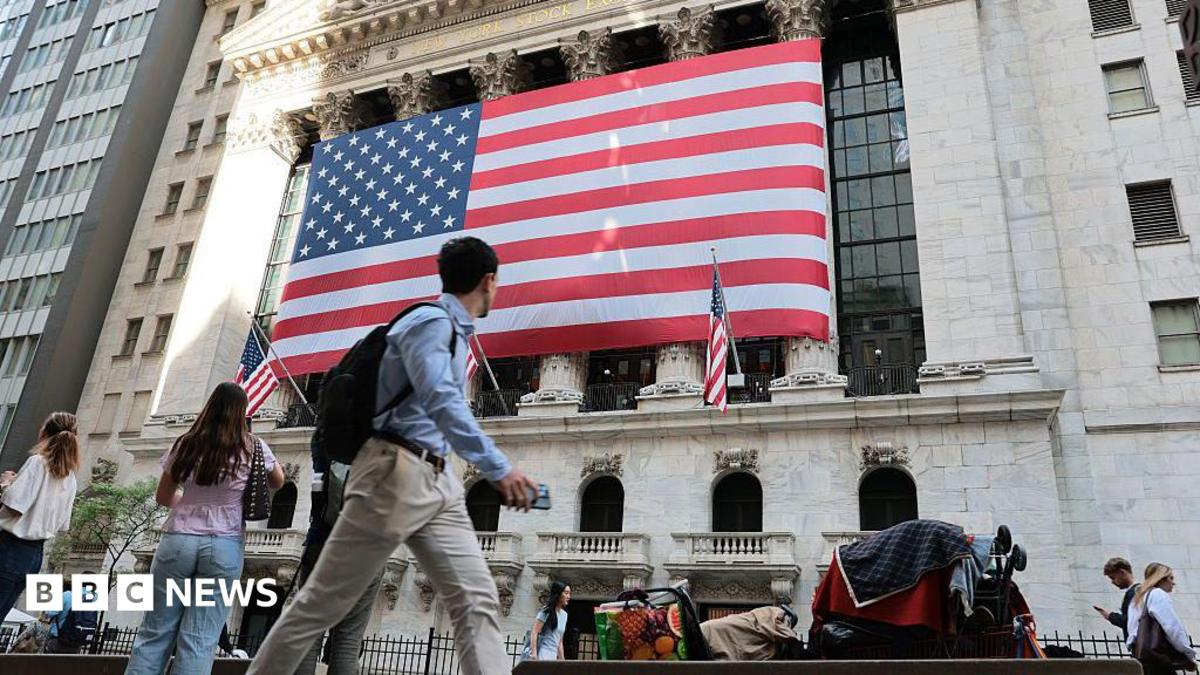
Why the US economy keeps defying the odds
Joe Brusuelas, chief economist at RSM, argues the trade war itself became the strongest proof of American resilience."The own goals that the Trump administration has imposed on the US with respect to trade and immigration are probably the single best example of the underlying dynamism of the American economy," he says.Faced with a sudden tax on foreign components, US corporations didn't accept lower margins, they invested harder."CapEx (capital expenditure) right now is 13.9% of US GDP," says Brusuelas. "That should be slowing, given the mix of supply and demand shocks the economy is absorbing, and it's not."Instead, much of that pressure has been offset by a notable rise in productivity. The broader US economy has continued to expand at an annualised rate of around 2%.Energy markets offer another explanation. The war in the Middle East has pushed oil prices higher, a development that historically would have posed a major threat to US growth. But the shale revolution fundamentally altered America's exposure to energy shocks. Over the past two decades, the US has become one of the world's largest oil and gas producers, while businesses have steadily reduced their reliance on petroleum."The development since the early 2000s of fracking in the United States, alongside the evolution of alternative fuels, has created the conditions where oil's contribution to GDP per unit has fallen by half over the past 50 years," says Brusuelas.