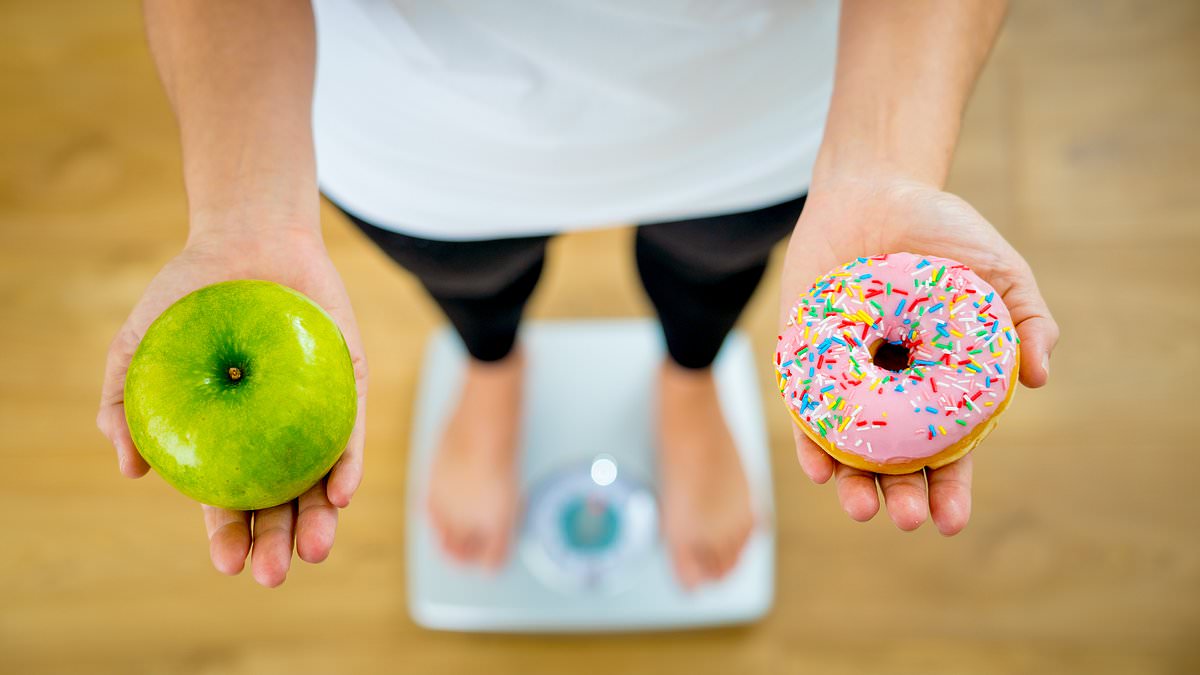
Should we really be cutting out sugar from our diets... or is it just a myth? As new study suggests avoiding it won't help you lose weight, and could even increase your risk of disease
Sugar may taste good and provide a quick sense of reward, but many of us consume far too much of it - potentially harming our health in the process.Unsurprisingly, it has been cast as a villain on social media, with influencers blaming it for expanding waistlines, high blood pressure and the growing type 2 diabetes crisis.But is sugar itself uniquely harmful, beyond supplying excess calories while offering little nutritional value?'It's a common myth that sugar is inherently bad for you,' says Dr Madusha Peiris, an expert in gut hormones and appetite regulation, a misconception that has resurfaced amid the current obsession with weight loss.Much of the confusion stems from people cutting back on sweet foods - whether that means an afternoon can of Coke or a cereal bar at breakfast - and subsequently feeling better.In reality, Dr Peiris says, they are often reducing their intake of ultra-processed foods as a whole, improving the overall quality of their diet and making more room for nutritious alternatives.While consuming large amounts of added sugar can contribute to weight gain and increase the risk of conditions including type 2 diabetes, fatty liver disease and heart disease, not all sources of sugar are inherently harmful.In fact, attempting to eliminate every form of sugar from your diet could mean unnecessarily cutting out nutritious foods such as fruit, vegetables and dairy products. Sugar often gets a bad rep as inherently harmful - but according to leading gut specialist Dr Madusha Peiris, not all sugars are created equal 'The key thing to remember is that not all sources of sugar are the same,' says Dr Peiris. 'Sugar occurs naturally in many different foods and also appears in numerous processed forms.'When people talk about 'good' and 'not-so-good' sugars, I would distinguish between sugars found naturally within foods such as fruit and those added in large quantities to highly processed products such as fizzy drinks.'From a gut-health perspective, foods containing naturally occurring sugars can form part of a healthy, balanced diet.'I would not generally recommend eliminating entire food groups. Doing so can unnecessarily remove fibre, vitamins and other nutrients that support normal gut function.'Intriguingly, a recent study led by researchers at the Dasman Diabetes Institute found that completely removing sucrose from a low-fat diet produced unexpected metabolic effects in mice. Dr Madusha Peiris co-founded the first supplement for gut health and appetite regulation, ElcellaThe researchers fed 12 mice either a sucrose-containing or sucrose-free low-fat diet for 16 weeks. Those receiving no sucrose developed poorer glucose tolerance, reduced insulin sensitivity and greater inflammation in the gut and liver.However, the researchers found no significant difference in body weight between the two groups.The findings do not mean that eating more added sugar is beneficial, nor can results from a small animal study automatically be applied to people. Instead, they suggest that the relationship between individual nutrients, the gut microbiome and metabolic health may be more complicated than simply labelling sugar as universally harmful.'Without enough carbohydrate, some people may feel tired and find it harder to concentrate,' says Dr Peiris. 'The important point is that sugar is not inherently harmful in every context. Its effects depend on the source, quantity and overall quality of the diet.'Weight-loss drugs such as Wegovy and Mounjaro work by mimicking the effects of hormones involved in appetite and blood-sugar control. Wegovy acts on the GLP-1 pathway, while Mounjaro targets both GLP-1 and another hormone called GIP.GLP-1 is naturally released by the gut after eating. It helps signal fullness to the brain, supports insulin release and slows the rate at which food leaves the stomach.'It is all about fullness signals,' says Dr Peiris. 'GLP-1 is a hormone produced in the gut that sends satiety signals to the brain, and its release can be stimulated by nutrients in food. Wegovy tablets have now been greenlit by health officials'So it's not necessarily about eliminating certain foods, but prioritising those rich in fibre and nutrients that stimulate these natural hormone responses.'And that's one of the biggest problems with ultra-processed foods - there is no strong gut brain signal.' So why does sugar have such a bad reputation?It's partly because foods high in sugar are often higher in calories - not to mention additives - which if you're eating more than your expending, can lead to increases in inflammatory markers. Dr Peiris added: 'The best way to lose weight is to gradually reduce your calorific intake - which can be done by cutting out a few snacks or alcoholic drinks - and to do that you need to feel full, so just cutting out sugar in a low fat diet may not make a difference.' Consistently high levels of blood sugar, as well as uncontrolled spikes and crashes - which occur when sugar is absorbed quickly into the bloodstream rather than being digested by the gut - can also increase the risk of diabetes. 'It's free sugars which cause a huge energy surge and then a crash - with some artificial sugars up to 200 times sweeter than actual sugar - which can cause harm, rather than simply eating a piece of fruit,' says Dr Peiris.However, as this example demonstrates, not all sugars are created equal. UK guidelines recommend adults eat no more than 30g of free sugars a day - those added to food and drinks such as biscuits, squash and even some savoury food - that are rapidly absorbed into the bloodstream. Sugars in whole fruit, vegetables, and honey, meanwhile, are much more well-tolerated by the body and are processed in the stomach before being converted into energy. 'That's why eliminating sugar from your diet probably doesn't make a lot of sense; we've evolved eating vegetables and a bit of fruit so our bodies have adapted to need sugar, in the form of glucose, to function.'Your gut is actually really smart and can influence the way you feel about certain foods, and you need to be eating a diet rich in a diverse range of nutrients, including fibre, protein and sugar to be able to fully optimise satiety signals.'