The New Generation of Pop Stars No Longer Wants to Be Perfect
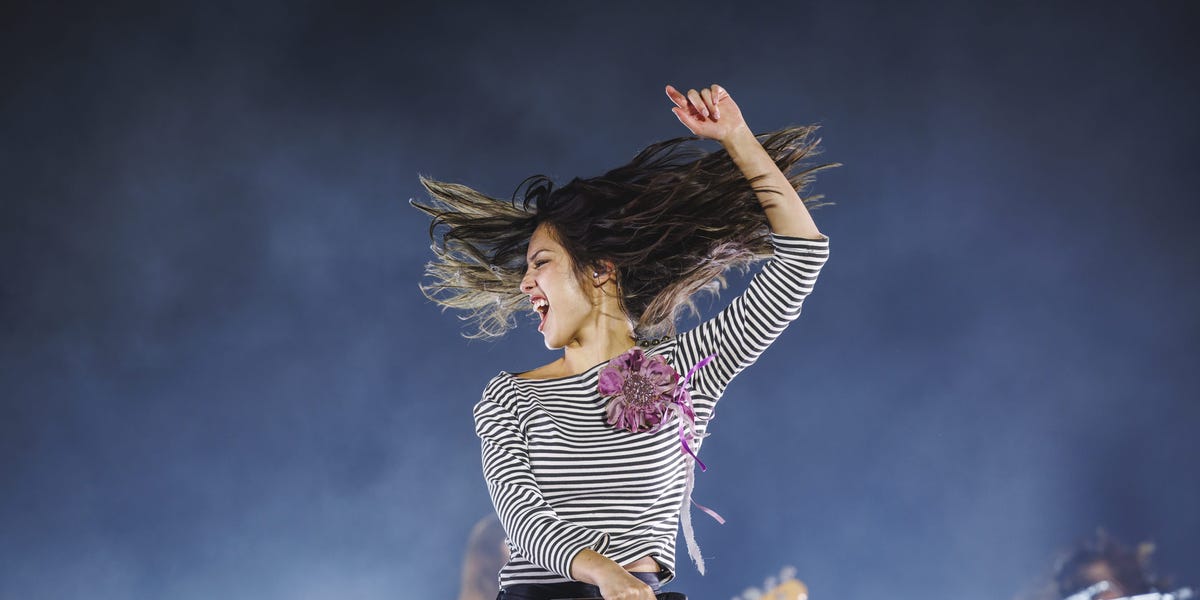
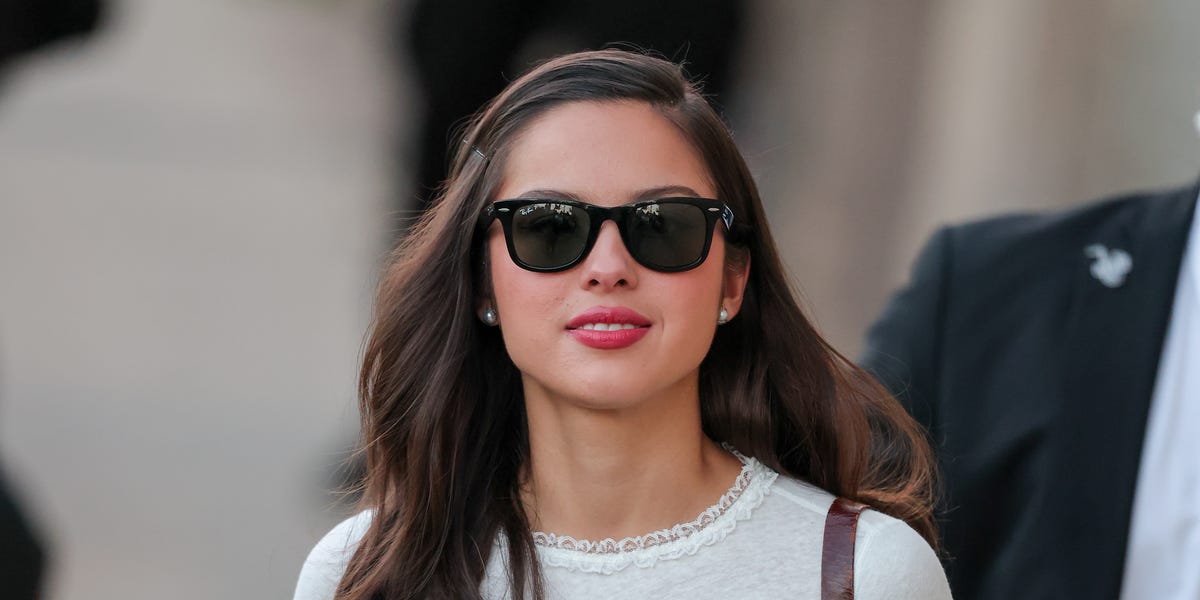
For years, female pop has been built on an almost immovable idea: being the perfect artist. Impeccable voices, seemingly orderly lives, and a carefully constructed distance between the person who takes the stage and the person behind it. However, something has changed. Today, vulnerability is no longer punished; it is shared, sung at the top of one's lungs, and, in many cases, celebrated. In that transformation, names such as Olivia Rodrigo, Chappell Roan, or Ariana Grande not only top the charts, but also represent a new way of understanding what it means to be a pop star.To understand this change, we spoke with Laura Ortiz Tadeo, a coach for musicians and artists with more than eight years in the field, and with Nerea Palomares, a PhD in Psychology specializing in artists and director of the Expert in Clinical Intervention in Psychology of the Music, Audiovisual and Performing Industries program at the Complutense University of Madrid. Both agree on an underlying idea: that vulnerability has ceased to be a risk and has become a form of connection. “We no longer admire only the perfect, unattainable artist. Vulnerability is no longer necessarily perceived as a flaw in an artist's image, but as a form of credibility,” says Ortiz Tadeo. For her part, Palomares sums it up in a similar idea: “We are beginning to stop idealizing artists and to see that behind all that public image there are flesh-and-blood people.”On this new map within the pop industry, the name of Olivia Rodrigo (who just released her new album, you seem pretty sad for a girl so in love) has become one of the most representative. Her music is grounded in emotions that were long considered unattractive for a pop star: anger, jealousy, insecurity, or constant comparison. Proof of this can be found in her songs “jealousy, jealousy,” where the singer gives shape to the feeling of constantly measuring herself against others, and “pretty isn't pretty,” in which she turns beauty pressure into an ongoing emotional narrative. According to psychologist Nerea Palomares, these kinds of emotions are not only inevitable, but also serve a key function: “Envy and comparison have a function of belonging (‘I want to belong to that group that has…’), so we still have a lot of psychoeducation to do, so that we can allow ourselves to feel any emotion. They are wonderful emotions that give us a great deal of information; it is important to feel them. We just have to be careful about what we do when we feel them.”We especially value artists who do not give us a closed-off, idealized answer.For Ortiz Tadeo, this kind of discourse connects because it is not about exceptional emotions, but about something deeply everyday in the digital age: “Today the stigma has been broken and we admit that imperfection does not have to be a sign of a fragile artistic identity; often it is precisely what makes it recognizable.” Likewise, Palomares explains that “when we hear someone else put into words exactly what is going through our mind and body, it brings great relief and we feel understood. That is why it has a positive impact on well-being.” However, Ortiz Tadeo emphasizes that the singer has a true distinguishing value that sets her apart from other artists: “Olivia Rodrigo does not try to soften or turn those emotions into something more acceptable, but rather integrates them into her narrative and her artistic identity.” That honesty, she adds, is key to connecting with the audience: “By naming feelings that many people experience but do not always dare to acknowledge, she creates a very deep sense of identification.”Although Olivia Rodrigo has become one of the most visible faces of this change, she is not an isolated case, as artists such as Chappell Roan or Ariana Grande have also incorporated complex, contradictory, and until now uncommon emotions into their music. In songs such as Roan's “Casual” or Grande's “don’t wanna break up again,” relationships are no longer presented as closed stories, but instead show something much more uncomfortable: emotional duality. For Ortiz Tadeo, that is precisely where the power of their lyrics lies: “Relationships also have gray areas, and we have all experienced that ambivalence. Today we especially value artists who do not give us a closed, idealized answer.”Getty ImagesGetty ImagesFor her part, Palomares interprets these two aforementioned songs from a more social perspective: “Women no longer buy into the discourse of dependence (emotional, economic, or any other kind), and we are also tired of having to assume that the responsibility for what happens in relationships is ours. Recognizing the pattern of submission or dependence and breaking it is a sign of change.” Thus, what once could be read as “too dramatic” or overly emotional is now perceived as a space for identification. The audience is no longer looking for narratives that have a closed beginning and ending, but rather emotional mirrors in which to recognize themselves, even in their contradictions.Authenticity is the foundation of an artistic identity and a solid career.In this new scenario, authenticity has become a central value for success, but not as a synonym for absolute transparency; rather, as narrative coherence between what an artist is, what they express, and what they decide to show. For Ortiz Tadeo, that balance is key: “Authenticity is the foundation of an artistic identity and a solid career.” However, she qualifies an important idea: “Being authentic does not mean exposing your whole life or showing yourself without any filter; rather, it means maintaining coherence between who you are, your values, what you create, and the way you present yourself to the public.”In this sense, the coach believes that the connection between the audience and the artist does not depend 100 percent on how a song is sung or performed: “Technique remains fundamental, but on its own it is not always enough to generate an emotional connection with the audience.” And she adds a key reflection on the current perception of perfection: “When someone constantly tries to appear perfect, they can end up provoking rejection, because we interpret it as unrealistic.” For her part, Palomares agrees that the change is not only aesthetic, but also structural. “The idea of the unreachable artist about whom nothing is known is over. That is why artists are increasingly authentic, both in how they present themselves and in their songs, because the inconsistency between the public persona and the private one is very difficult to sustain.”Getty ImagesPerhaps the real shift is not the disappearance of idealization itself, but how we use it, since we no longer idealize perfection, but vulnerability. Thus, Laura Ortiz Tadeo opens up a very interesting new horizon that connects more than ever with this process of transformation: “The new ideal is the artist who uses her experiences as a creative tool, sets her own boundaries, and actively participates in the artistic and business decisions of her career. She no longer needs to appear flawless: she needs to come across as authentic.” In the same way, Nerea Palomares speaks of the great unfinished task we have as a society to help this artistic normalization even further: “I think that is reflected in Olivia Rodrigo and in other artists who allow themselves to be themselves in interviews and on stage [...]. Even so, we have to foster respect within the music industry and other industries, but I truly feel that we are moving forward and that honesty and vulnerability are increasingly becoming part of the music we listen to.”With all of this, what we can understand is that the authenticity we now ask for as fans is not an absence of construction, but rather its most sophisticated form. Pop stars have not stopped being a narrative; rather, they have learned to narrate themselves from a crack, from a shared abyss that connects deeply with the most human universal emotions that we all know. Now, perfection no longer hides behind artifice, but within emotion itself.