Bentley to launch its first pure-electric car in September
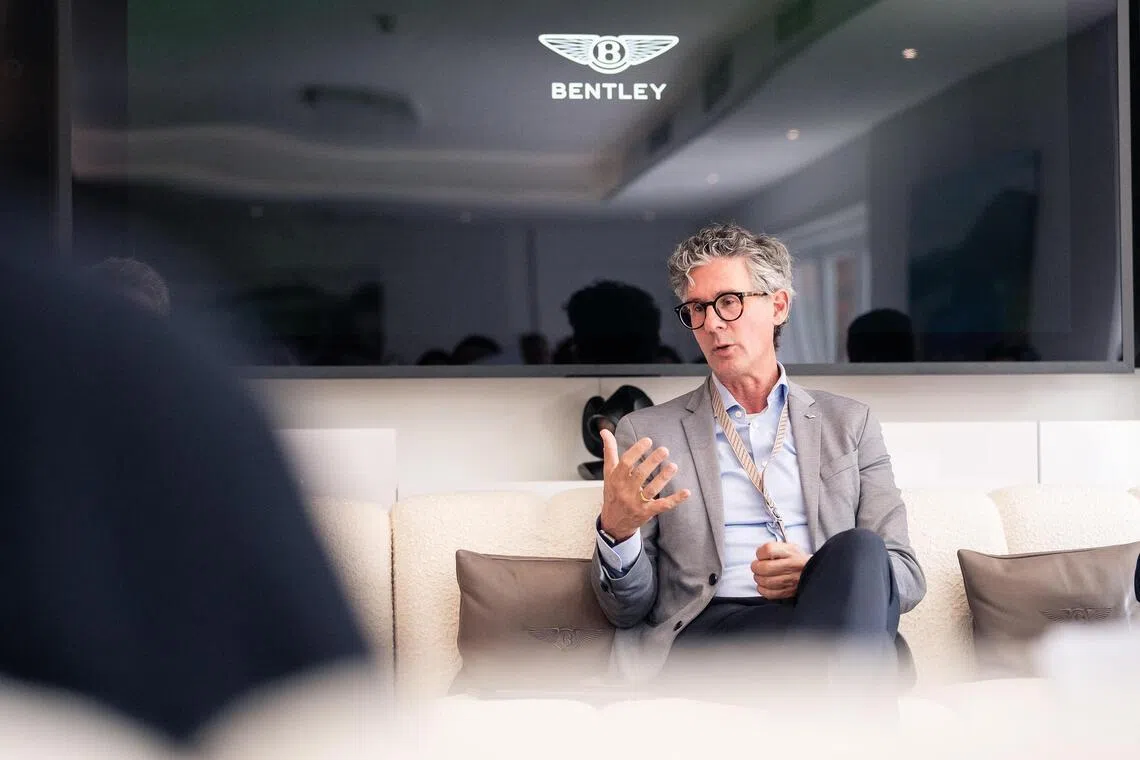
CREWE, England – The future looks green for Bentley. Well, greenish at least. By end-September, it will launch its first pure-electric production car, a new model entirely distinct from its existing Continental and Bentayga lines, both of which will remain hybrid petrol-powered for the foreseeable future.Hosting a select group of media in Crewe, Bentley’s long-time base in northern England, in May, its chief executive officer Frank-Steffen Walliser describes the new sport utility vehicle (SUV) as an “urban SUV”. It is shorter and more compact than the imposing Bentayga, but no less roomy, thanks to the better space utilisation that an electric vehicle (EV) layout allows.The affable, straight-talking Walliser calls the impending launch a “very important moment” and a “brand-defining moment” for the storied British brand, as the car will take Bentley into a new market segment and be “a big step in terms of technology and modernity”.Explaining Bentley’s decision for its first EV to be a new standalone model, Walliser, a long-time Porsche motor sports chief who took the helm at Bentley in July 2024, reveals that when an internal combustion engine (ICE) model line is replaced by a pure-electric one, the acceptance rate is only about 20 per cent, meaning the brand risks losing 80 per cent of existing customers for that line.While this can be mitigated by offering the EV as a variant of an ICE model, it is a hugely costly solution investment-wise, as the model would need to be developed from the ground up to accommodate two entirely different powertrains, presumably also being optimised for neither. Also, the ICE and EV variants would essentially be rivals in the same segment, instead of expanding the potential buyer pool for the brand.Hence, Walliser is confident that the standalone EV model will broaden Bentley’s customer base by offering something new and exciting, to appeal to a different generation and customer group. At the same time, it “will be very Bentley because it will be very powerful” and “will have a sound that fits the Bentley brand”, as aural sensation remains central to the Bentley driving experience.And while Bentley’s new EV employs radically new and more complex electronic architecture, its cabin will remain resolutely and unmistakably on-brand in craftsmanship and materials.“You will see leather, you will see wood, you will see hand-stitching. These will all stay. And I think that’s the balance we made – it’s a modern car, but you will still find everything that defines a Bentley,” he adds.It is good to see that Bentley, unlike some others, has not forgotten that in the luxury market, brand identity remains everything.On whether the brand’s line-up will go fully electric, Walliser notes that, while he expects EVs to dominate in the long term, Bentley’s strategy comprises both hybrid and pure-EV models.While it is necessary to offer electric models like Bentley’s rivals, and 20 per cent to 25 per cent of the luxury segment is already electric, it is crucial – for now – to still give customers a choice of drivetrain, without forcing them one way or the other, he adds.Bentley’s CEO says there is no viable market for limousine-like, ultra-luxe cars like the Mulsanne. PHOTO: BENTLEY MOTORCommenting on wider market trends, Walliser bluntly reveals that there is no longer a viable market for a true limousine-type, ultra-luxury model such as the Mulsanne, which was retired in 2020, as the tiny sales figures in this segment make the considerable investment to develop such a credible flagship limousine simply unjustifiable. He quips that while he is often asked about a Mulsanne successor, such inquiries are invariably from journalists and not customers.Conversely, he sees scope to further tap the top-end sports and supercar segments. He cites Bentley’s experience with the limited-edition Batur and Supersports as evidence of far more resilient demand and appetite for no-limit pricing in that league. The Batur coach-built grand tourer, limited to just 18 units, sold out in 2022 despite an eye-watering £1.65 million (S$2.85 million) price tag in Britain.