10 Most Banned Books Of the 2000s, Explained
These books were the Top 10 Most Challenged of the 2000s. These books proved controversial, at least for some readers, who tried, and sometimes succeeded, to get them taken off shelves. The list is a fascinating snapshot of the cultural landscape from the first decade of the 21st-century; both which books were successful, and which were divisive. Yes, Harry Potter is the list. Along with other titles readers will recognize. But there are also some deep cuts, books that haven't endured in pop culture as much, perhaps in some cases because of the censorial efforts against them in the 1990s and 2000s.
Some books that were in the Top 10 in the '90s, but didn't rank as high in the 2000s, include The Adventures of Huckleberry Finn, Bridge to Terabithia, and The Catcher in the Rye. Meanwhile, some titles that didn't make the Top 10 this decade, but later would: the Captain Underpants series, Toni Morrison's The Bluest Eye, and Thirteen Reasons Why, published late in the aughts, in 2007.
10
The Perks Of Being A Wallflower
Written By Stephen Chbosky; Published In 1999
The Perks of Being a Wallflower was published in early 1999, too late to make the American Library Association's list of most challenged books of the '90s. In the 25+ years since, though, it's been a hotly contested text. It's also an example of something we'll see throughout this list: there's a corrolary between controversy and success. But not that controversy makes a book more successful; rather, the other way around. Perks is about its eponymous "wallflower," a socially awkward kid named Charlie. The book doesn't shy away from difficult subjects from the jump: Charlie starts Perks of Being a Wallflower grieving the deaths of his best friend, who took his own life, and his aunt. Later, the book doubles down on serious subject matter by revealing Charlie's introverted, awkward nature stems from deeply repressed trauma, the result of the character being sexually abused by his recently deceased aunt. The novel gets heavy for any age group, and the same goes for the 2012 film adaptation. That is what made The Perks of Being a Wallflower a hit, and earned it a place in pop culture consciousness, but it is also what has caused parents to campaign to have the book kept out of schools and children's literature sections of libraries.
9
Internet Girls
Written By Lauren Myracle; Published Between 2004-2007
Internet Girls book cover, emojis with the acronym YOLO
Lauren Myracle's Internet Girls book series isn't as widely known as some of the other entries in the Top 10, but they were all bestsellers at the time of their release. Internet Girls' prominence in the ALA's Top 100 Most Challenged books of the 2000s is especially notably because the first one came out in 2004. Two subsequent volumes followed in '06 and '07, and their publication caused major controversy. The four Internet Girls books, ttyl, ttfn, l8r, g8r, and later 2014 entry yolo, are written entirely in the style of instant messages. The books are a coming-of-age story with a cast of high school-age characters through their online chat sessions. Like many teenagers, their behavior isn't age appropriate; they drink, and experiment with drugs, and have sex. That makes the books relatable and realistic for its target audience, but it is also what gets the Internet Girls routinely flagged by censors. L8r, g8r rounded out the decade as the #1 most challenged book of 2009. Overall, the series retained the #9 spot in the Top 10 for the 2010s, and the series continues to be routinely targeted for banning to this day.
8
His Dark Materials
Written By Phillip Pullman; Published Between 1995-2000
The Golden Compass book cover
The His Dark Materials books are an interesting case when it comes to censorship. Phillip Pullman's trilogy of novels were published between 1995 and 2000; they didn't make the ALA's Top 100 Most Challenged Books of the 1990s, and they didn't appear in the Top 100 of the 2010s either. But in the 2000s, the trilogy skyrocketed to #8 on the list.
Related
10 Fantasy Books Better Than Harry Potter
Harry Potter captured a generation, but there are other fantasy books with similar elements and settings that are even better than the 7-book series.
His Dark Materials are epic fantasy novels, and as such, one of the hallmarks of the franchise is its expansive worldbuilding. A key part of that includes "The Church," a fictional analog of real-world religious organizations. Which, naturally, made Pullman's novels a source of controversy for some of these organizations, and their members. At the same time, His Dark Materials courted its share of secular critics as well. The fervor around the series seems to have peaked with the 2007 release of the film adaptation of the first book, entitled The Golden Compass. Sequels never materialized, and despite subsequent, more successful adaptations, the three His Dark Materials books don't have the same divisive stature as they did 20 years ago.
7
Scary Stories To Tell In The Dark
Written By Alvin Schwartz; Published Between 1981-1991
Scary Stories To Tell in the Dark was actually the #1 most challenged book of the 1990s. In the 2000s, it dropped to the #7 spot, and in the decade after that, it would be out of the Top 10 entirely, barely making the Top 25. The horror anthology books, which first hit shelves in the 1980s, are beloved by '90s and aughts kids in particular, which reflects their downward trend in controversial status. Many people deemed the stories in Scary Stories too scary for schools and the kids' section of public libraries; a big part of that were artist Stephen Gammell's illustrations, which helped make the book unforgettable. However, generations of readers still learned about urban legends and become fascinated by the macabre via Scary Stories.
Related
10 Children's Horror Books That Gave '90s Kids Nightmares
The most memorable YA horror books of the era weren't all literary works of art, but the best shaped the nightmares of a generation of '90s kids.
In recent years, as those people have started to become teachers, libraries, and school board members, their fondness has seemingly led them to lighten up on the book. Alternatively, though, it can also be taken as a sign that censorial priorities have changed between the 1990s, the 2000s, and today.
6
I Know Why The Caged Bird Sings
Written By Maya Angelou; Published In 1969
Maya Angelou's autobiography also dropped from its 1990s position in the 2000s, but only by three spots. It went from the third most banned book of the '90s to the sixth in the following decade. By the 2010s, it plummeted to #88, showing that Angelou's status as a literary treasure became much more locked in during the final years of her life, up to and beyond her passing in 2014. I Know Why the Caged Bird Sings deals with childhood sexual assault, teenage pregnancy, and a range of deeply serious issues that Angelou confronts with honesty and literary grace. It's not an easy read, but Caged Bird is moving, because it is a story of overcoming and processing trauma. Unlike the rest of the books listed here, Angelou's work is a memoir. It's her life story. It doesn't flinch away from sensitive material, but it doesn't treat these topics as sensational, just grim realities. I Know Why the Caged Bird Sings is among the greatest literary nonfiction achievements of the 20th century, but being challenged is as unavoidable a part of its legacy as being celebrated.
5
Of Mice And Men
Written By John Steinbeck; Published In 1937
Of Mice and Men book cover, two figures walking through the woods
Of Mice and Men is one of two books here that gained a spot between the 1990s and 2000s. Steinbeck's Great Depression-era novel was the sixth most challenged book of the '90s, and ranked fifth in the aughts. In both decades, and to a lesser degree in the decades since, critics have argued that the book's outdated, offensive language, its portrayal of Lenny, and its violence make it unsuitable for younger readers. Of Mice and Men is the brief, tragic tale of itinerant workers Lenny and George. Like most of Steinbeck's work, it's lauded as a masterpiece. There have been four movie adaptations of the novella, two for TV and two theatrical, as well as a musical. Of Mice and Men is also consistently referenced in pop culture even 89 years after its publication.
But in the '90s, especially, its place in the American literary canon had its doubters. By the 2010s, Of Mice and Men still held a strong presence in the Top 100 at #28. In the 2020s, it seems to be even less of a concern for censors, and while it still elicits challenges, the book remains a staple of high school English curriculums.
4
And Tango Makes Three
Written By Peter Parnell & Justin Richardson; Published in 2005
And Tango Makes Three book cover
And Tango Makes Three is the 2000s successor to books like Daddy's Roommate and Heather Has Two Mommies, which both made the 1990s Top 10 but dropped out of the Top 100 entirely for the 2000s. It is a children's book featuring a queer love story, which makes it a lightning rod for conservative criticism. The 2005 book won multiple awards, but also garnered itself a long-term place on the Most Challenged list. The illustrated book follows Roy and Silo, two male penguins who fall in love and, eventually, hatch a chick named Tango. The completion of their family unit gives the book its title: And Tango Makes Three. Notably, the story, down to the penguins' names, was adapted by authors Peter Parnell and Justin Richardson from a New York Times article about penguins at the Central Park Zoo. In the 21 years since its publication, opponents of And Tango Makes Three have commonly tried to have it moved out of the picture book section of libraries, or taken off shelves entirely. The book did drop to #6 on the 2010s Most Challenged list, and while its exact 2020s ranking is TBD, it should be expected to still be high.
3
The Chocolate War
Written By Robert Cormier; Published In 1974
Chocolate War book cover, empty school desk
The Chocolate War rose from the #4 spot in the 1990s to the third most challenged book of the 2000s. Curiously, though, it dropped off the Top 100 in the 2010s, and pretty much fell off the cultural radar at the same time. The novel was among those that spearheaded the wave of more mature YA fiction in the 1970s, but its legacy has diminished over the second half of its 50+ year history.
The Chocolate War is about a student at an all-boys Catholic school who dares to stand out, and suffers for it. It's also about the way institutions compromise their integrity in order to maintain power and influence, because they're made up of people willing to do so. It's also about a fundraiser that gets out of hand. It's a complex book that does border on adult literature, which censors have seized on to try to keep it from younger readers. The novel isn't widely known today, and as such, it's not as frequently challenged. There was a low-budget movie adaptation in 1988, which flopped in theaters, also contributing to The Chocolate War's decline in popularity, since the film didn't help perpetuate the story for another generation. Until a modern adaptation changes things, the book's obscurity will keep it safe from being widely contested.
2
Alice
Written By Phyllis Reynolds Naylor; Published 1985-2013
The Agony of Alice book cover, illustration of a girl sitting with a composition notebook
The Alice series of Young Adult novels is a bit of a surprise at the #2 spot for the 2000s. The books were ranked 14th in the '90s, and a decade later fell to #21 in the Top 100. Yet there's actually a unique reason for that: the 25-book series follows the eponymous Alice from 5th grade up through college, and then in its final installment, over the course of her adult life up to age 60. So, the early Alice novels were innocuous enough, but as the series' protagonist matured, the books' subject matter necessarily followed suit. The 2000s coincided with Alice graduating 8th grade and entering high school, which meant the installments from this decade chronicled Alice going through puberty and starting to deal with more mature issues. Which meant the number of challenges to Phyllis Naylor's novels skyrocketed. As Alice neared legal adulthood in the series' final volumes, objections to the books quieted back down, even as they continued to deal with increasingly serious themes. Today, the Alice series still has its fans, and its critics, but it is less frequently challenged than at its peak 20 years ago; and once again, the lack of a hit screen adaptation hasn't helped the franchise's staying power.
1
Harry Potter
Written By J.K. Rowling; Published Between 1997-2007
Custom Image by Yailin Chacon
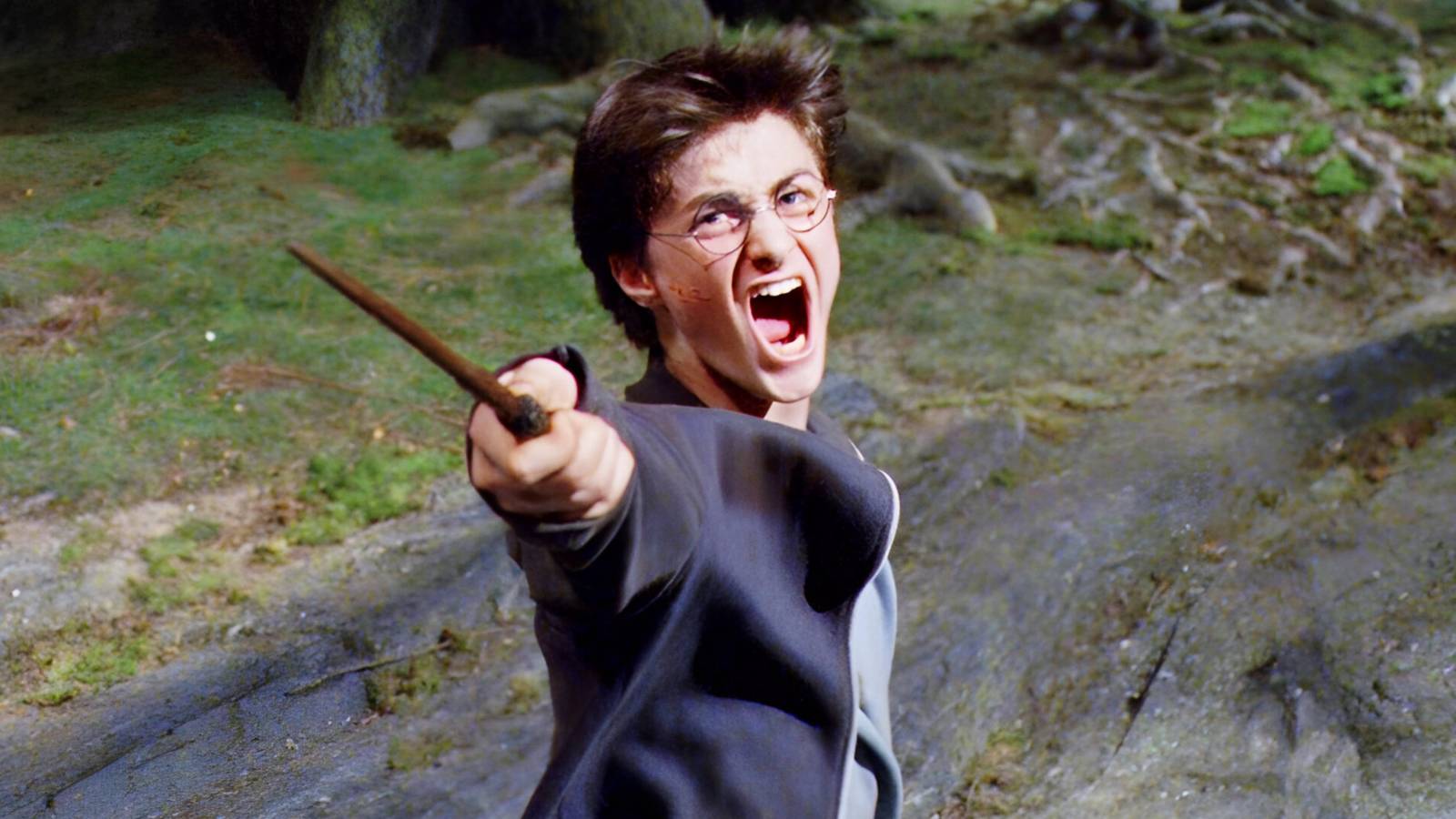
Yes, the most challenged books of the 2000s are also, by far, the most famous and successful: the Harry Potter series. The 2000s were the era of Potter, which brings us back to the nexus of attention and censorship: J.K. Rowling's novels about a boy wizard were a phenomenon, which magnified the backlash against them from people who objected to the books' content. The first three Potter novels, published between 1997-1999, were enough to crack the Top 50 Most Challenged Books. As the final four books were published throughout the 2000s, and the film franchise became its own cultural juggernaut, the books became the focal point of objects to their inclusion in schools and children's lit sections. It seems outrageous now, given Potter's cultural ubiquity, but there was a huge pushback against in some spheres. Harry Potter won that cultural tug-of-war in the end. It's one of the highest grossing franchises of all time, in both book and film. And in the 2010s, the series dropped off the Top 100 Most Challenged Books list entirely. In this case, it's fair to say that it's because the franchise has become uncontainable and unavoidable, but as the books were coming out, its critics certainly, vocally tried.