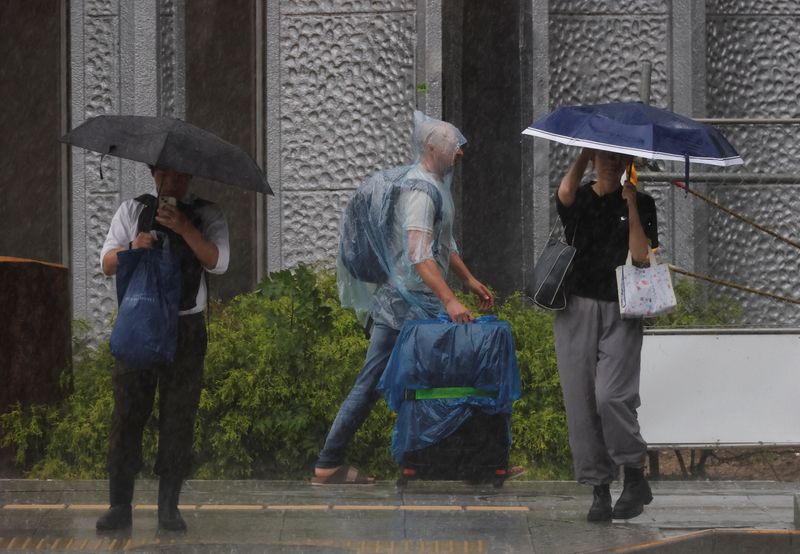
Tropical storm Jangmi batters Japan, cuts power to 60,000 homes
TOKYO, June 3 (Reuters) - Severe tropical storm Jangmi ripped across Japan on Wednesday, with fierce winds and torrential rain disrupting transport and businesses, and knocking out power for tens of thousands of homes.The storm's centre lay about 150 kilometres (93.2 miles) south of Tokyo as of early Wednesday afternoon, moving northeast with maximum sustained winds of up to 25 metres (82 feet) per second, Japan's Meteorological Agency said. The storm is set to pass very close to the Pacific side of eastern Japan and heightened vigilance is needed, the agency added.At least 15 people have sustained minor injuries, according to authorities.The storm, with a central pressure of 985 hPa, has cut power to nearly 60,000 households so far, and authorities have been receiving reports of flooding, fallen trees and debris, and landslides across a wide stretch of regions, government spokesperson Minoru Kihara said during a regular press briefing."If you sense any danger, please do not hesitate to take early action to protect your lives," Kihara said.Evacuation advisories were issued to hundreds of thousands of residents in eight prefectures across southwestern, central and eastern Japan. Social media posts showed flooded roads and subway stations, with storm-related words such as "evacuation order" and "soaked wet" trending on X posts.Airlines including Japan Airlines and All Nippon Airways had cancelled nearly 900 international and domestic services on Wednesday, affecting nearly 90,000 passengers.Some bullet train services in Kyushu, in the southwest, and areas of western Japan were delayed, while East Japan Railway said that some rail services in the Tokyo area were suspended and more could be affected over the course of the day.Toyota Motor suspended operations at 13 domestic plants on Wednesday morning before announcing plans to resume production from the evening. Suzuki Motor also plans to resume operations from later in the day after halting work at all five plants in Shizuoka Prefecture, west of Tokyo, in the morning.(Reporting by Mariko Katsumura; Additional reporting by Kaori Kaneko and Kantaro Komiya; Editing by Kevin Buckland)