Have YOU seen a ghost? Scientist reveals the three key factors that make paranormal experiences more likely - including having 'schizotypy'
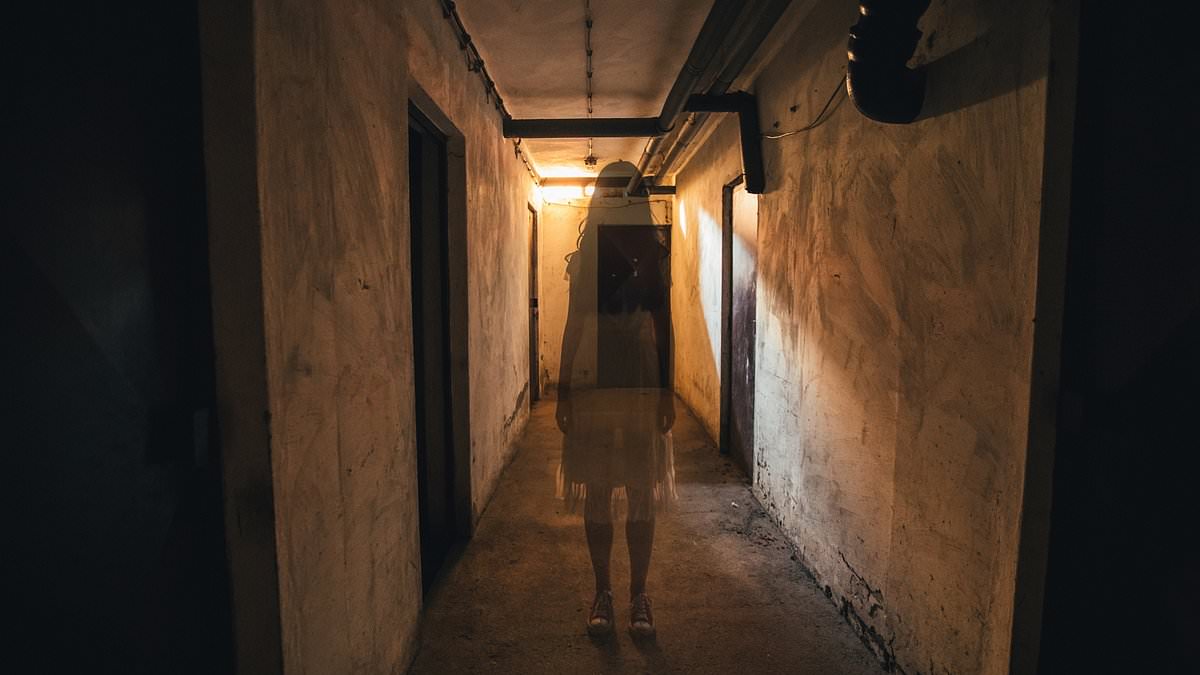
A third of people in England believe in ghosts, figures suggest – and now an expert has revealed the key factors that make your odds of seeing one more likely.Professor Melissa Maffeo, from Wake Forest University in North Carolina, argues some people are more susceptible to paranormal experiences.This can be driven by environmental stimuli, neurological mix–ups and certain personality traits, she explained.And when they combine, the human brain 'creates an experience of the supernatural' by misinterpreting the world.'As a psychology professor, I often think about the subjectivity people use when interpreting experiences,' Professor Maffeo wrote on The Conversation.'I wonder, then, if there are perfectly ordinary explanations for seemingly extraordinary experiences.'Maybe a perfect storm of everyday factors can converge and trigger the sensation of a paranormal experience.'Here, she explains the main factors that might trick your brain into seeing a ghost. Professor Melissa Maffeo, from Wake Forest University in North Carolina, argues some people are more susceptible to paranormal experiences (file image)1. Environmental stimuliAnyone who has watched ghost hunting shows will have seen the use of a device which measures electromagnetic fields (EMFs).These are invisible areas of energy created by electrically charged particles.In previous studies – which took place in the vaults underneath Edinburgh and in Hampton Court Palace in England – EMFs were found to fluctuate more in areas with a history of haunted happenings.Professor Maffeo said it's possible that some people are feeling these natural electromagnetic changes and attributing them to paranormal activity.'People might unknowingly be detecting changes in environmental stimuli, like electromagnetic fields,' Professor Maffeo said. 'The question then becomes: Did the ghost cause the EMF, or did the EMF cause the ghost?'To date, only one research group has attempted to experimentally measure this by creating a 'haunted room' with varying EMF frequencies.Participants did report many peculiarities, ranging from feeling dizzy to feeling like they were detached from their bodies and even sensing a presence – but these experiences didn't correspond to how the researchers varied environmental conditions, like EMF intensity. To date, only one research group has attempted to experimentally measure how 'in–tune' people are by creating a 'haunted room' with varying EMF frequencies2. Neurological mix–upsProfessor Maffeo explained that an area of the brain, called the temporoparietal junction, likely plays a crucial role in the feeling of embodiment – that you inhabit your own body. What makes you more likely to see a ghost? Believing in ghosts Environmental stimuli, such as electromagnetic fieldsNeurological mix–ups, like having sleep paralysisPersonality traits, for example having 'schizotypy' See more Daily Mail on Google - save us as a Preferred Source 'Sometimes, misinterpretation of sensations from the body can happen during sleep, when your brain shuts out the external world,' she said.'During rapid eye movement, or REM, sleep, when most vivid dreams occur, the brain sends messages that prevent movement of skeletal muscles. This inhibition causes complete paralysis during REM sleep.'It is a neurological safeguard; without it, you would be likely to act out your dreams.'Some people, however, wake up during this part of sleep and find that they cannot move. At the same time, they may experience rich hallucinations which are the remnants of their dream.In that moment of sleep paralysis, there is a mismatch of feedback from the body to the brain.'Most people respond to the missing sensory information with fear, which makes them more likely to experience the sights and sounds from their dreams as reality,' Professor Maffeo said. The temporoparietal junction is on each side of the brain and helps you feel that you are within your own body3. Personality traits'There's a growing body of research that suggests people with certain personality traits are more likely to believe in the paranormal,' Professor Maffeo explained.For instance, some people are hyper aware of 'presences', experience distorted thoughts and tend to have magical beliefs – a set of traits commonly referred to as schizotypy.People with high levels of schizotypy are more likely to believe in the paranormal, she said, and are also more likely to experience disembodiment.When haunted factors add up'Consider a person who believes in paranormal phenomena who experiences a natural change in electromagnetic fields or an episode of sleep paralysis,' Professor Maffeo said.'Those experiences induce unusual sensations that this person cannot explain.'Searching for meaning in ambiguity, this person distorts their distinction between internally and externally generated sensations.'She added: 'They settle on the only explanation that makes sense to them – that this strange feeling they experienced was a ghost. My guess is that belief in the paranormal is the glue that holds the haunted factors together to create the (mis)perception of a ghost.'While belief alone might not create a ghost, belief combined with at least one 'haunted factor' – environmental stimuli, neurological hiccups or psychological conditions – might be enough to make a ghost seem real, she concluded.A study, published earlier this year, claimed that paranormal activity can be explained by infrasonic vibrations in aging pipes.Infrasound is a very low–frequency sound that can come from old buildings.While humans can't typically hear it, even a brief exposure may shift mood and raise cortisol levels, according to researchers from MacEwan University in Edmonton, Alberta.Professor Rodney Schmaltz, senior author of the study, said: 'Consider visiting a supposedly haunted building. Your mood shifts, you feel agitated, but you can't see or hear anything unusual.'In an old building, there is a good chance that infrasound is present, particularly in basements where aging pipes and ventilation systems produce low–frequency vibrations.'If you were told the building was haunted, you might attribute that agitation to something supernatural. In reality, you may simply have been exposed to infrasound.'Is this Britain's most haunted house? The Cage in Essex that was once a prison for witches The Cage, which was formally a medieval prison, played a role in one of England's most famous witch hunts, in which eight women died.Located in St Osyth village in Essex, it served as a prison for those convicted of witchcraft in the Elizabethan era.Fourteen women were imprisoned while awaiting trial, including Ursula Kemp who was executed in 1582. The Cage, which was formally a medieval prison, played a role in one of England's most famous witch hunts, in which eight women diedShe was reportedly the most powerful and notorious of all the women, making her living as a midwife and a healer.She had a reputation for removing spells from locals who thought they were being attacked by black magic and many would go to her for medicines.The building was still being used as a jail right up until the early 20th century. One recent previous owner was Vanessa Mitchell.The 37-year-old moved out in 2012 amid claims she had encountered 12 ghosts at the two-bedroom cottage.She said the ghosts tried to hit her from behind, pull her hair and tried to shove visitors down the stairs.Ms Mitchell said she also spotted a shadowy figure lurking over the cot of her infant son, Jesse.However, the final nail in the coffin came for her when a CCTV camera picked up the image of what she claims was a satanic goat roaming the premises.