Astounding tragedy: Update on the Longview papermill disaster
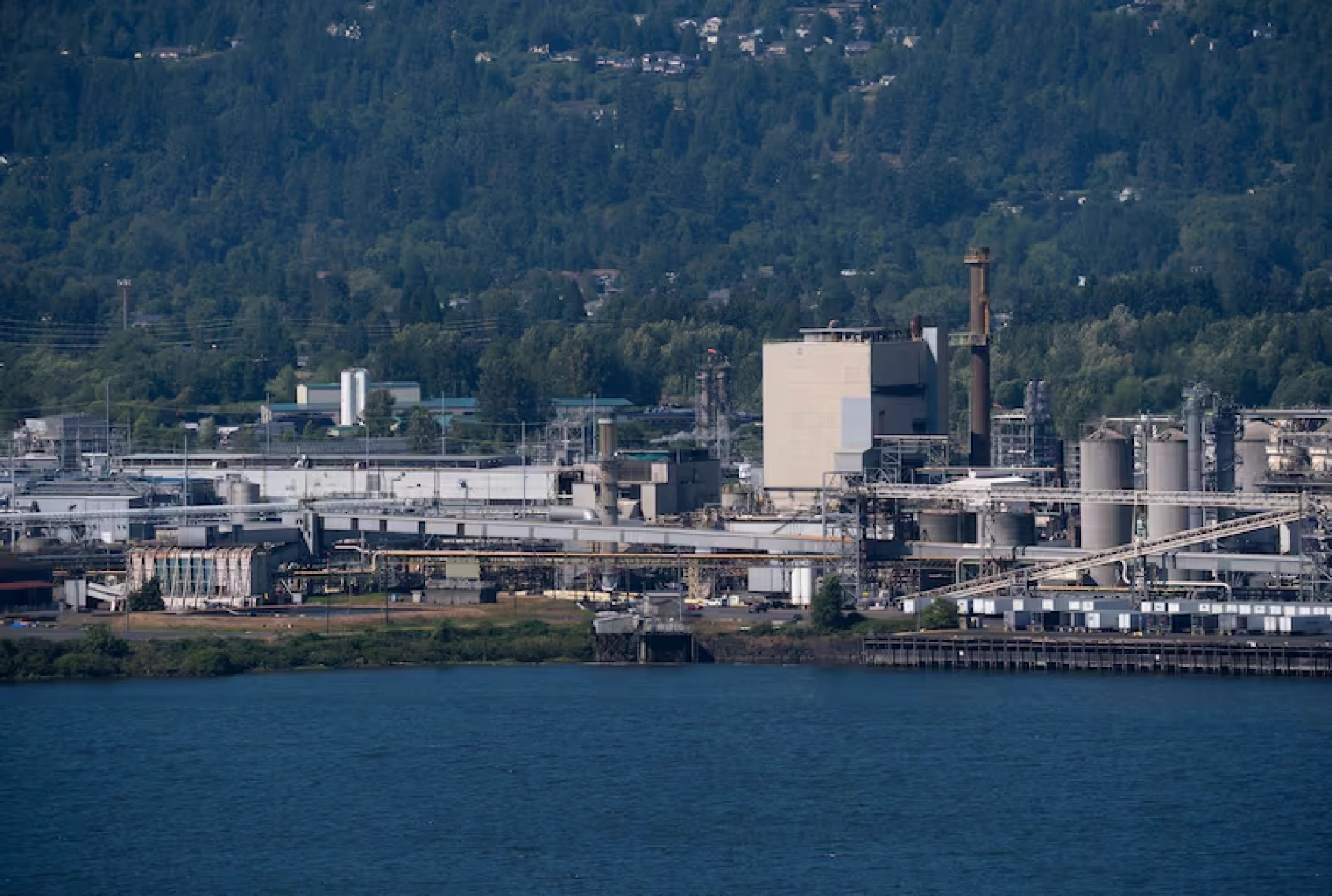
The following transcript was generated using automated transcription software for the accessibility and convenience of our audience. While we strive for accuracy, the automated process may introduce errors, omissions, or misinterpretations. This transcript is intended as a helpful companion to the original audio and should not be considered a verbatim record. For the most accurate representation, please refer to the audio recording.Michael Dunne: I'm Michael Dunne. It's being described as one of the worst industrial disasters in Washington state history. An implosion at a paper mill in Longview has already cost the lives of 11 people. Further, it could also become an economic disaster, as this large employer could be shut down for a long time due to a large-scale investigation, repairs, and environmental cleanup, including at sensitive waterways. Today on the show, you'll hear from my colleague at OPB about this unfolding tragedy and what comes next. The questions about causes and safety concerns are only beginning. Then, at the end of the show, we'll talk about some good news, as a KLCC reporter will detail how the Eugene airport is getting more funds for more upgrades. Erik Neumann, the Southwest Washington bureau chief for OPB. Erik, always great to talk to you. Thanks so much for coming on.Erik Neumann: Yeah, good morning.Dunne: So let's just start from the top. Maybe take us through what happened at the Longview paper mill.Neumann: Sure. On Tuesday morning, there was an accident at the Nippon Dynawave Packaging Company, which is a pulp and paper mill in Longview, Washington, about an hour north of Portland. There was an implosion at a large chemical tank on the paper mill's property. Basically, this chemical holding tank, which had a 900,000-gallon capacity, ruptured in some way and spilled chemicals on the facility. On Saturday, investigators confirmed they had accounted for all of the missing individuals. Nine staff members were recovered at the site. A total of 11 people were killed in the accident. Another seven were injured. As of now, investigators are beginning the larger investigation into why this accident occurred.Dunne: OK, is there any danger in the surrounding environment right now? Have they been able to contain the off-gassing or chemical spread from the spill?Neumann: There does not appear to be any danger at this time, according to a press conference held on Saturday. Officials from the city of Longview, as well as emergency managers working on this incident, talked about several different concerns. The chemical involved in this accident was a very caustic substance referred to as white liquor, which is used to break down wood to make paper and cardboard. The descriptions I've read liken it to highly concentrated bleach. It's a pretty nasty chemical. There was, I believe I said 900,000 gallons before. That was the capacity of the container. The last estimate I heard was that about 500,000 gallons of the chemical actually spilled. A big concern has been where it went and what it did to local water, whether that's drinking water in Longview or the Columbia River, since the paper mill sits on the river's banks. The biggest immediate concern appears to be in some ditch and causeway areas around the paper mill near neighborhoods in Longview. There's been a lot of fish that have died in those little channels. The city has been flushing out all its water systems and says there's no risk to drinking water at this point. There was also a lot of concern about the Columbia River, but it sounds like the chemical was pretty much contained on the paper mill's property before it could reach the river. There was initially an elevated pH level identified in the river, but it appears very little of the chemical got in, and investigators have said there's no actual concern for the Columbia.Dunne: OK. And, as best you can, describe the safety record of this plant. Have they ever experienced anything even remotely like this before?Neumann: There's definitely a lot of scrutiny on this company, again named Nippon Dynawave Packaging Company. It's part of a conglomeration of pulp, paper, and lumber facilities in the same area. There's a Weyerhaeuser mill right next to the Nippon one, and another similar entity called Norpac next to that. Nippon is owned by a Japanese company. There have been several fines in recent years from Labor and Industries in Washington, but none of those fines really resemble anything like what happened last week. There have been some minor penalties, such as a lack of guardrails, or employees not wearing masks during COVID. There are also two open inspections at the facility right now, one related to a sinkhole on the property and another related to a valve on a separate tank. Nothing really seems to be on the scale of or closely resembling the accident that happened on Tuesday.Dunne: Obviously, the main concern is the victims and those who were injured, but I imagine this was also a significant employer. Is this total destruction requiring a complete rebuild, or is it something that can be repaired and brought back online in the near future?Neumann: There's definitely concern within the community about what this could mean for the paper mill specifically, and I think that relates more to litigation and what could happen to this company because of the 11 fatalities and the seven injuries that employees suffered. Paper mills have been disappearing throughout the Pacific Northwest. This is a large employer in Longview, and so there's a lot of concern about what this will mean for the company. I was in Longview on Saturday. There was a fundraiser for the families of the victims, and I was talking to people there. I've also spoken with a number of people over the past week, including union members. It's a unionized facility, and there are lots of trade unions in Longview. People don't want the company to go away. It's a pretty big anchor for the economy of Longview, and there's a real sense that losing it would compound an already terrible situation.Dunne: You were there at the fundraiser this weekend. Is there anything you can tell us about the victims?Neumann: We haven't heard a lot from the victims' families. The pulp and paper union has largely shielded them from the media, for understandable reasons. People are experiencing a lot of grief right now. There was a memorial on Sunday for one of the victims. We're mostly just hearing statements from family members talking about their loved ones and how much of a tragedy this is. I don't have any specific details that come to mind. I've reached out to a number of families, but I haven't heard back from anyone at this point. I think everyone's still processing the accident.Dunne: From the coverage your team has put together, this appears to be perhaps one of the deadliest industrial disasters in the state of Washington in quite some time.Neumann: That's what Gov. Bob Ferguson said when he visited the paper mill for a press conference, I believe on Wednesday. He described it as possibly the deadliest industrial accident in recent memory in Washington state. There are a lot of qualifying words in there, but people in Longview have talked about how this is the worst accident they've experienced since the eruption of Mount St. Helens. However you look at it, it's a pretty devastating accident in Washington state, and particularly in this relatively small community.Dunne: We talked about the environment around the mill. Is it safe enough now that the physical investigation into the cause can begin?Neumann: That's really what's happening now. There was certainly some level of investigation ongoing in recent days, but the priority was removing the victims from the site, and that process continued through Saturday. I think that really did slow down the full investigation. A federal agency called the U.S. Chemical Safety and Hazard Investigation Board arrived on site, I believe on Wednesday. They're looking into the specific cause of this accident. At the Saturday press conference, emergency responders indicated that now that the victims have been recovered, they can focus fully on the investigation.Dunne: I know it's very early, but has anyone said what they think the cause was, or is it a blank slate right now?Neumann: I haven't heard anything from any official source positing any theories.Dunne: You mentioned that union members want the plant to stay. Were there other community members expressing concerns about safety and living so close to a facility that, in the worst conditions, could become a deadly site?Neumann: I brought that up when talking to community members there, some of whom worked in logging or the trades in the area, including operations next to the Nippon Dynawave facility. I think people are pragmatic about the risks of working in the trades and say they take safety very seriously. The most immediate concerns I heard were about how this could affect drinking water quality in the area. But nobody really said this had dramatically changed how they feel about safety at the paper mill, at least among the people I spoke to.Dunne: What about elected officials, regulators, and others in leadership positions? Has anyone spoken to their concerns?Neumann: They've mostly focused on wanting to support the investigation. That was the tone Gov. Ferguson struck when he was there. One of the local representatives, Rep. Marie Gluesenkamp Perez, has been in Longview for a couple of days. She did express concerns about the Chemical Safety and Hazard Investigation Board's budget being affected under the current administration and how that could potentially hamper investigations into this accident, but I haven't heard specific details beyond those concerns.Dunne: You were there alongside your team from the very beginning. Without making a journalist part of the story, what was it like covering something like this?Neumann: It's just a sad story. You get a real sense for how closely linked everyone is in the Longview-Kelso community to this mill. That was the main takeaway for me. I spoke to the mayor of Longview, community members at the barbecue fundraiser on Saturday. It really seems like everybody in the community is one or two degrees removed from someone who was affected by this accident. The paper mill itself is a large private company, so it was pretty hard to get a closer look at what the accident scene looked like. We're also dealing with extremely dangerous chemicals, so they were not exactly giving tours of the site. There was a large group of reporters from national and local outlets gathered around the gate of the facility, where the press conferences were being held. And yeah, from everyone I talked to in the community, there was just a real sense of sadness about this accident.Dunne: My last question, and maybe it's hard to answer: You mentioned concerns about water contamination. Is there a point in the future where officials can say that if chemical levels remain clear in the Columbia and other areas, they're confident they're out of the woods? Or is there still a sense that environmental impacts could still materialize?Neumann: That's a good question. Public works officials with the city of Longview talked about ways to resolve the contamination. I'd have to go back and listen to those specific conversations to give you details, but they didn't express serious concern about flushing out the contaminated water in the area, even with roughly 2,000 dead fish identified in some of the city's waterways. Officials speaking about the Columbia said the contamination from the facility was largely contained on the paper mill's lot fairly quickly before it could reach the river. They talked about seeing two peaks in pH levels in the river on the day of the accident, one around the time of the incident at about 7:15 a.m. and another a bit later that day. The fact that those peaks subsided and that there's been sustained focus in the area seems to indicate the situation is pretty well under control. But the cleanup is obviously still ongoing, so we'll have to keep following it to see if that changes.Dunne: Yeah, maybe a little bit of good news in all this tragedy. He's Erik Neumann, Southwest Washington bureau chief for OPB. Erik, always great to talk to you. Thanks so much for your insight on this terrible tragedy.Neumann: Sure, thank you.Dunne: Now let's hear how Eugene's airport is getting yet another upgrade. KLCC's Zac Ziegler. Zac, always appreciate you joining. Thanks for coming in.Zac Ziegler: Yeah, no problem.Dunne: You've been covering what's going on at EUG, the Eugene airport. What's the latest?Ziegler: Yeah, so they recently received a federal grant, a little earlier this month, and it helped them get over the top on the funding they need to start one of the projects that is part of the big expansion out there. This one relates to the baggage system and getting bags to and from the planes.Dunne: Well, that's good news for most travelers. I know baggage claim is an underreported misery sometimes. Talk about how this fits into the overall plan, because Eugene airport is getting busier and has some significant plans.Ziegler: Yeah, the big goal they're working toward is adding what they call Concourse C, another stretch where planes can pull up and deplane and board passengers, so they can accommodate more flights. As anyone who's been there knows, it's a pretty busy place, whether you're catching a 5 a.m. flight or getting off one at 11 p.m. So they really want to add these extra gates, and getting the baggage system ready is one of the things they have to tackle first. They also have to get ticket counters ready and add more check-in options. Those kinds of projects all tie together.Dunne: Any idea of timing on when this project might be completed?Ziegler: So the hope is that this one will go out to bid this summer, with construction hopefully starting next year. For the most part, we won't notice it while it's happening. The big piece involves setting up a conveyor belt system in the back that helps with baggage screening, creating one continuous, smooth flow as bags are screened coming in and out. It's something we as travelers won't necessarily see, but it'll be significant for people working on the operations side. We will see some changes to baggage claim, so the pardon-our-dust signs will probably come out.Dunne: I know you've talked to the airport director several times. She must be thrilled with the utilization numbers. Is Eugene really cutting into PDX traffic? Are people who used to drive up I-5 now staying put and flying out of EUG?Ziegler: That's kind of the hope. Especially given how rough that drive up can be. I actually have a day coming up where I need to take my daughter to Portland for her first solo flight this summer, because you can't have connecting flights when a minor is flying alone. I'm taking a whole day off of work just to make that happen and get back, because the traffic can be so rough. So EUG really does offer itself as an alternative: don't fight that drive, don't fight the big airport. Come here instead. And the fact that most flights are at capacity, and most of the time the gates are full, shows the need for that other option to PDX.Dunne: Well, that's very exciting. Zac Ziegler, reporter for KLCC, talking about the expansion plans at EUG. Zac, always appreciate your time. Thanks so much.Ziegler: Sure thing.Dunne: That's the show for today. All episodes of Oregon On The Record are available as a podcast at KLCC.org. What started as a group of friends in a kind of book club has now blossomed into a published anthology of local writers and poets, and we'll talk to the founders tomorrow. I'm Michael Dunne, host of Oregon On The Record. Thanks for listening.