GEORGINA HEFFERNAN: Manosphere's septic influence - and the two words in particular I heard this week - that make me thank my lucky stars I don't have a teenage son in this toxic age of vicious misogyny
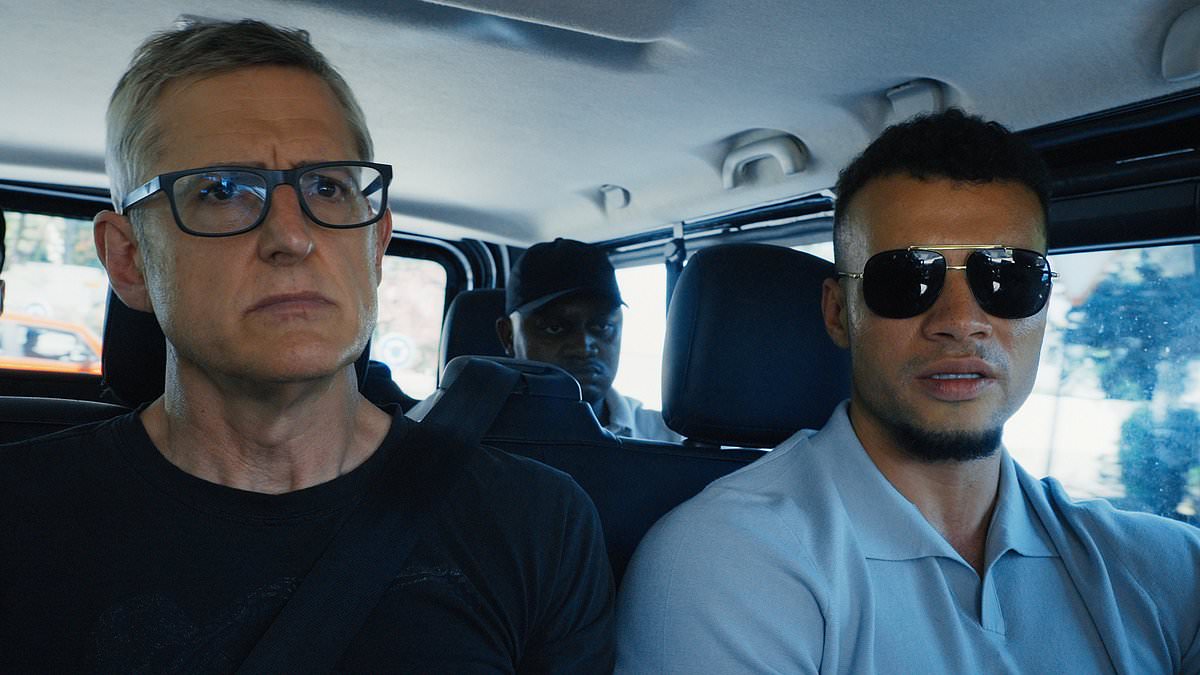
‘Dish pig’Two words that stopped me cold this week. A child supported by Sonas – Ireland’s largest domestic violence charity – had taken to calling his mother that. Not just the word. The objects came with it, thrown across the kitchen when dinner didn’t suit him. A small boy. His mother. Her own home.He learned it somewhere. And after the conversation this country had last month when Louis Theroux’s Inside The Manosphere landed on Netflix, we have a very clear idea of where.If you missed it, the short version is this: men with vast audiences sitting in front of cameras, calmly and at length explaining that women are inferior, shouldn’t vote, need to be led and exist primarily to serve.Not on some obscure forum. On the exact platforms your child uses to watch football clips and GAA highlights. Most of us sat there, tea going cold, saying ‘oh my God’ out loud to nobody in particular.I had one slightly shameful thought: thank God I don’t have a teenage boy. Not cruelty – just the sudden understanding of what some parents are up against. Because this isn’t staying online. Sonas is telling us it’s coming through Irish front doors.I laughed at one point during the Theroux documentary – a man outlining his theory of ‘one-way monogamy’, caught out by his girlfriend on camera and telling her to clean the room. Andrew Tate poses giving a thumbs up upon arriving with his brother Tristan, right, at the Court of Appeals building in Bucharest, RomaniaThen I stopped laughing. Because some 15-year-old in Limerick or Letterkenny watched that clip and took notes – not on the humiliation, but on the idea.The manosphere doesn’t recruit, exactly. It seeps in. A boy doesn’t go looking for this content. He watches a match clip. The algorithm serves him a gym video. Then something about discipline. Then something about women. A 2025 survey by Common Sense Media found that two in three boys receiving this content did not seek it out. The algorithm found them. The likes of Andrew Tate - and his toxic brand of 'masculinity' - had landed in their feeds.And once found, it keeps going – each video more extreme, the platforms entirely indifferent to how old the boy watching actually is. Louis Theroux, Harrison Sullivan (HS Tikky Tokky), in Louis Theroux: Inside the ManosphereAnd here is where I want you to notice something. Have you looked at teenage boys lately – really looked? Walk down any street in any Irish town and there they are. Same haircut, short at the sides and longer on top. Same black or grey sportswear. Same spotless runners. No colour, no questionable phases, no visible attempt at individuality. It is as if a template was quietly issued and universally accepted.I don’t mean this as a fashion complaint. I mean it as evidence. Because when you understand how the manosphere works – the relentless messaging about what a real man looks like, trains like, dresses like, thinks like – that uniformity stops looking like coincidence. Ellie Nutall, Harrison Sullivan (HS Tikky Tokky), in Louis Theroux: Inside the ManosphereThese boys are not all independently arriving at the same aesthetic. They are being told, constantly and from every direction, what masculinity is supposed to look like. The clothes are just the most visible layer. The attitudes go deeper.Sonas chief Fiona O’Malley issued a warning this week that should stop every parent and policy-maker in their tracks. ‘When children grow up in homes affected by domestic abuse, they are already vulnerable to normalising harmful behaviour,’ she said. ‘But when those messages are reinforced online by misogynistic influencers telling boys that women are inferior, manipulative or deserving of contempt, the consequences can be devastating.’Frontline staff are now seeing children repeat specific language and attitudes strikingly similar, O’Malley says, to content associated with figures like Andrew Tate. Frontline domestic violence workers. Saying this. Out loud. In Ireland. This week.That is what Sonas frontline workers are now seeing. Not abstract attitudinal drift. Specific language. Specific behaviour. In specific Irish homes. Parents cannot carry this alone. You can limit screen time without knowing what fills it. You can monitor one account until a second appears – and most of them do. You can try to talk, if you’ve built the kind of relationship where they’ll actually tell you the truth, and that is not something you can manufacture the week you start worrying.The onus belongs on the platforms. And the power to act sits with Coimisiún na Meán, Ireland’s media regulator, which has so far treated this as someone else’s problem. Sonas is now formally calling on it to require platforms to restrict, de-amplify, and age-gate misogynistic influencer content – specifically material that promotes coercive control or contempt for women. This is not a call to shut down conversations about masculinity. It is a call for a regulator to use powers it already has, under a framework that already exists, to stop the most extreme content being automatically piped into children’s phones.O’Malley puts it plainly: ‘Algorithms do not simply reflect behaviour; they reinforce it.’I keep coming back to that child. The one who learned the words. The one who threw the objects. His mother, in her own kitchen.That is not an internet story. That is an Irish story, happening right now, in Irish homes. And the people with the power to do something about it are running out of excuses for looking the other way.