Treasury yields slide after Memorial Day break as traders weigh Iran peace prospects
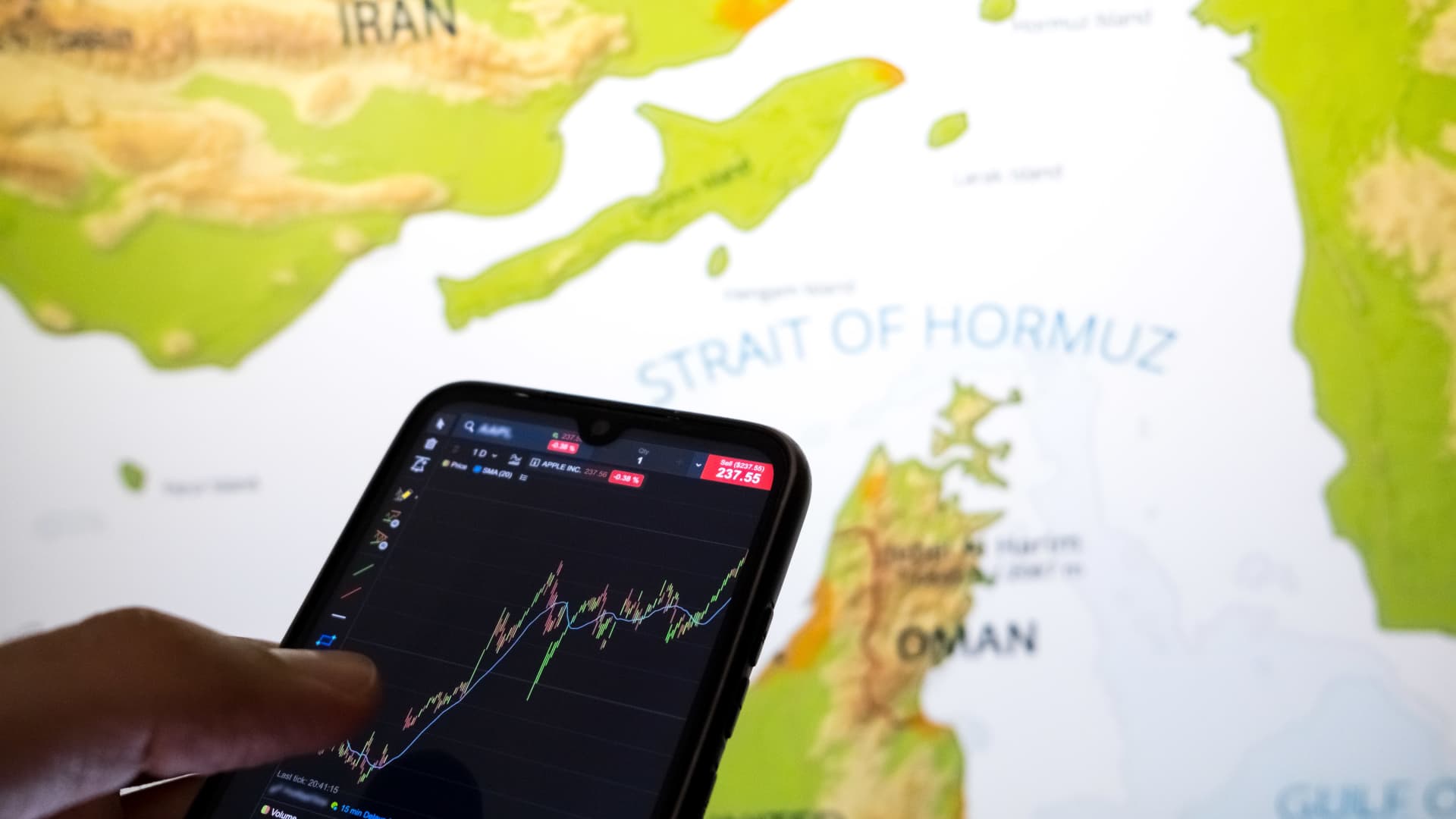
A stock exchange curve appears on a smartphone screen, and a map shows the Strait of Hormuz on a laptop computer screen in this photo illustration taken in Athens, Greece, on March 3, 2026.Nurphoto | Nurphoto | Getty ImagesTreasury yields fell on Tuesday as bond markets returned from a Memorial Day break to bolstered hopes of a Middle East peace deal, even as the U.S. military conducted fresh strikes on Iran. The yield on the 10-year U.S. Treasury note — the key benchmark for U.S. government borrowing — moved lower by more than 8 basis points to 4.489%.The 2-year Treasury note yield, which more closely tracks short-term Federal Reserve interest rate policy, dropped more than 8 basis points to 4.04%. The longer-dated 30-year Treasury bond yield also declined more than 5 basis points to 5.024%. One basis point is equal to 0.01%, and yields and prices move in opposite directions.Yields fell across the board, catching up with large declines seen in European sovereign yields on Monday.This comes after U.S. forces carried out what Central Command described as "self defense" strikes in southern Iran early Tuesday. Secretary of State Marco Rubio, who is in India, said that the Strait of Hormuz will ultimately have to be opened "one way or the other."Iran's Islamic Revolutionary Guard Corps on Tuesday said it would retaliate against violations of the ongoing ceasefire after it identified and engaged U.S. drones and an F-35 jet fighter that entered the country's airspace.The apparent flare-up in hostilities came despite President Donald Trump earlier indicating in a Truth Social post that a peace agreement could be in sight, with negotiations "proceeding nicely."Looking ahead, investors will be monitoring a slew of economic data released later this week, including April's reading of the personal consumption expenditures price index — the Fed's preferred measure of inflation.Economists polled by Dow Jones are expecting a 0.5% increase from March and a 3.8% increase in headline PCE year-on-year.U.S. consumer confidence fell in May as inflationary impacts stemming from the Middle East conflict "intensified," according to The Conference Board.— CNBC's Lim Hui Jie and Hugh Leask also contributed to this report.