QBTC Volatility Skew: Bitcoin Sentiment Signal
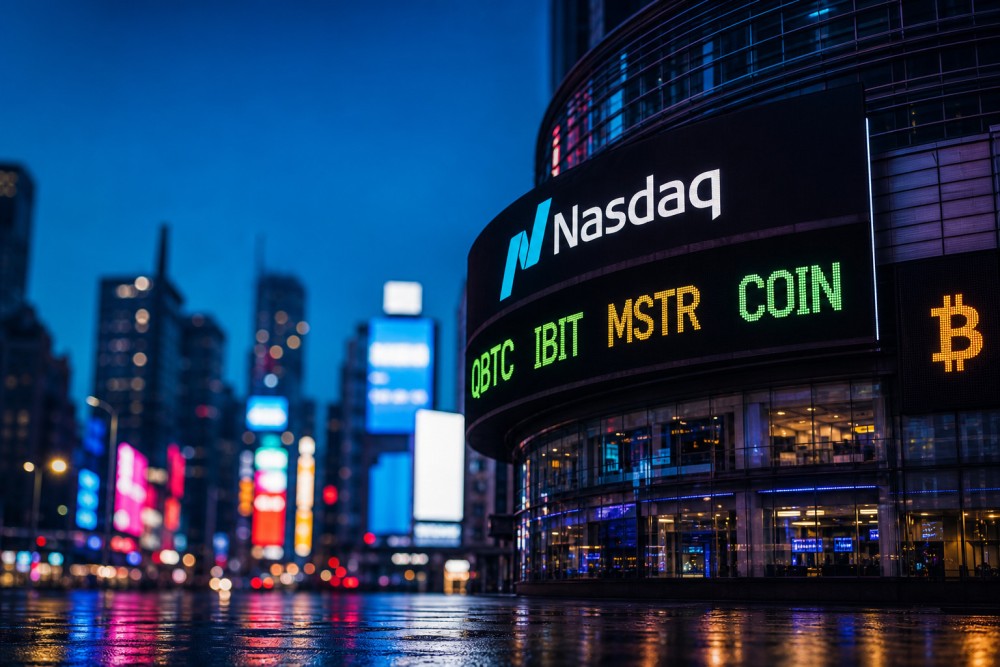
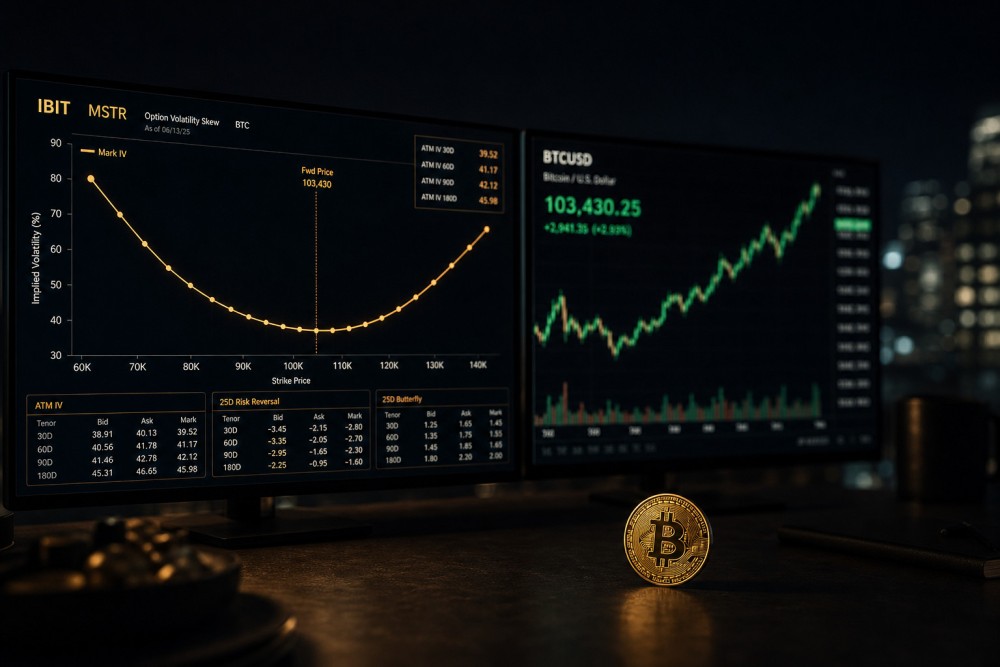
The SEC has approved Nasdaq's filing to list QBTC, a cash-settled, European-style Bitcoin index options product. Once it begins trading, the QBTC volatility skew will become a public window into how institutions are positioning around Bitcoin.For the foundational concept, the existing breakdown of volatility skew covers the equity-index baseline.What follows is QBTC-specific. How the skew should differ from SPY or QQQ. What put-skew and call-skew will signal. And how to translate that read into IBIT, MSTR, or COIN positioning on Gotrade.Why QBTC Skew Is a Different SignalQBTC tracks a Bitcoin index, settles in cash, and uses European-style exercise. There is no early assignment and no coin to deliver. That structure attracts mandate-driven institutions that cannot custody Bitcoin directly.Equity index options on SPY and QQQ are dominated by pension funds and asset managers who structurally buy downside puts. Their hedging demand bids up out-of-the-money put implied vol relative to calls.According to Investopedia, this asymmetry is why equity skew almost always tilts to the put side. Bitcoin's distribution has been more symmetric, with violent upside tails as well as downside crashes, so QBTC skew should price closer to two-sided risk.How to Read Put-Skew on QBTCPut-skew shows up when out-of-the-money puts trade at higher implied vol than equidistant calls. On QBTC, that pattern means institutions are paying up for downside hedges on Bitcoin specifically.If you see persistent steep put-skew while spot Bitcoin grinds higher, that is a hedging tell, not a directional short. Professionals are long Bitcoin somewhere and protecting it.Cross-check the spot ETF complex. If IBIT and FBTC see net creations while QBTC puts richen, the pattern is consistent with allocators getting long under protection.How to Read Call-Skew on QBTCCall-skew is the opposite footprint. Out-of-the-money calls trade richer than equidistant puts, and the vol surface tilts up toward upside strikes. On equity indexes this is rare and short-lived.Bitcoin has a history of producing it. Cboe notes that crypto-linked vol surfaces have priced fatter right tails than equity indices.If QBTC opens with call-skew, treat it as a speculation tell. Institutions are reaching for convex upside exposure. That is when operating-leverage names like MSTR tend to outperform spot ETFs on a percentage basis.Start options trading on Gotrade so the QBTC skew read translates into a defined-risk option leg on MSTR, COIN, or IBIT. Open Gotrade to act on this idea.How QBTC Differs From Existing Bitcoin OptionsQBTC will not be the only Bitcoin options market, just the most institutionally clean one. Two existing venues are worth contrasting.CME Bitcoin futures optionsThese settle into a futures contract, not cash. Skew there tracks futures basis closely, so the signal blends positioning with carry.IBIT listed optionsIBIT options are physically deliverable into the spot ETF. The skew there is shaped by retail and ETF-overlay flow, not pure macro hedging.QBTC is cash-settled on a Bitcoin index. There is no basis residual, no tracking error, and no early exercise. The skew is closer to a pure read on directional risk pricing, which makes it the cleanest sentiment gauge.Turning the Skew Read Into a Stock DecisionThe skew is a signal. Gotrade users act on it through spot ETFs and proxy stocks.Steep put-skew with rising spot Bitcoin suggests a hedged-long institutional posture. The cleanest expression is incremental IBIT sizing, since you ride the same flow without taking on operating risk. Tracking implied volatility on IBIT options helps confirm the read.Call-skew with momentum points the other way. MSTR carries Bitcoin on the balance sheet and historically moves 1.5 to 2 times spot. COIN offers exchange-volume beta that lags spot but amplifies it during sustained rallies.Flat skew is itself information. Institutions are neither hedging nor stretching for upside. Sizing down or holding existing exposure is usually the right response.What to Watch on Day OneWhen QBTC begins trading, three observations will set the baseline. First, the 25-delta risk reversal: puts minus calls at the same delta. A positive number means put-skew, a negative means call-skew.Second, the term structure of skew. If skew is steeper in front-month than back-month, the market is pricing event risk near term. If long-dated skew is steeper, the concern is structural.Third, the relationship to SPY and QQQ skew. If QBTC skew moves independently of equity skew, Bitcoin is being treated as its own asset class. If it co-moves, institutions are treating it as a risk-on proxy.ConclusionQBTC will not just add another Bitcoin options venue. It will add a clean, public sentiment gauge that retail observers can finally read alongside professionals.The put versus call shape, term structure, and correlation with equity skew will together describe how institutions are sitting in Bitcoin at any moment. That read is the actionable layer, not the QBTC contract itself.Start options trading on Gotrade to act on the QBTC skew signal with a sized option leg across MSTR, COIN, or IBIT.FAQWhat is QBTC volatility skew?It is the difference in implied volatility between out-of-the-money puts and calls on QBTC Bitcoin index options.How does QBTC skew differ from SPY skew?SPY skew is structurally put-heavy from pension hedging, while QBTC skew should be more two-sided because Bitcoin has historical upside tails.When does put-skew signal institutional hedging?When out-of-the-money puts trade at materially higher implied vol than calls, especially while spot Bitcoin is rising.How can retail investors act on QBTC skew?By repositioning between IBIT, MSTR, and COIN on Gotrade based on whether the skew leans defensive or speculative.





Comments (0)