Trump’s AI about-face
Global power is in flux. Your daily guide to what comes next.
By RIYA MISRA
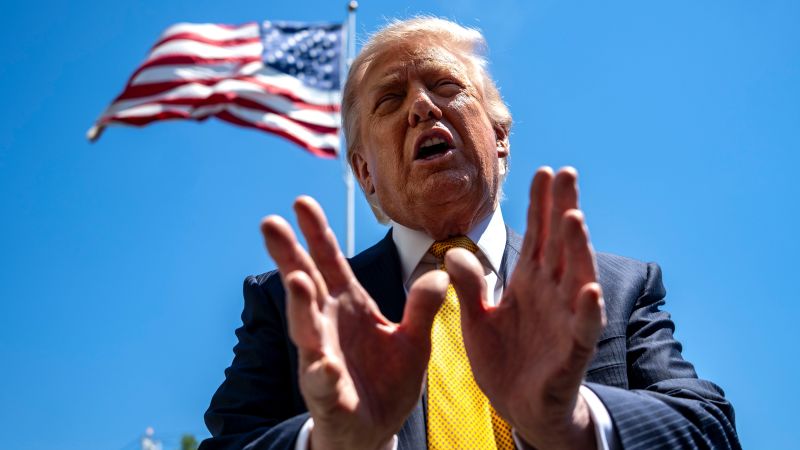
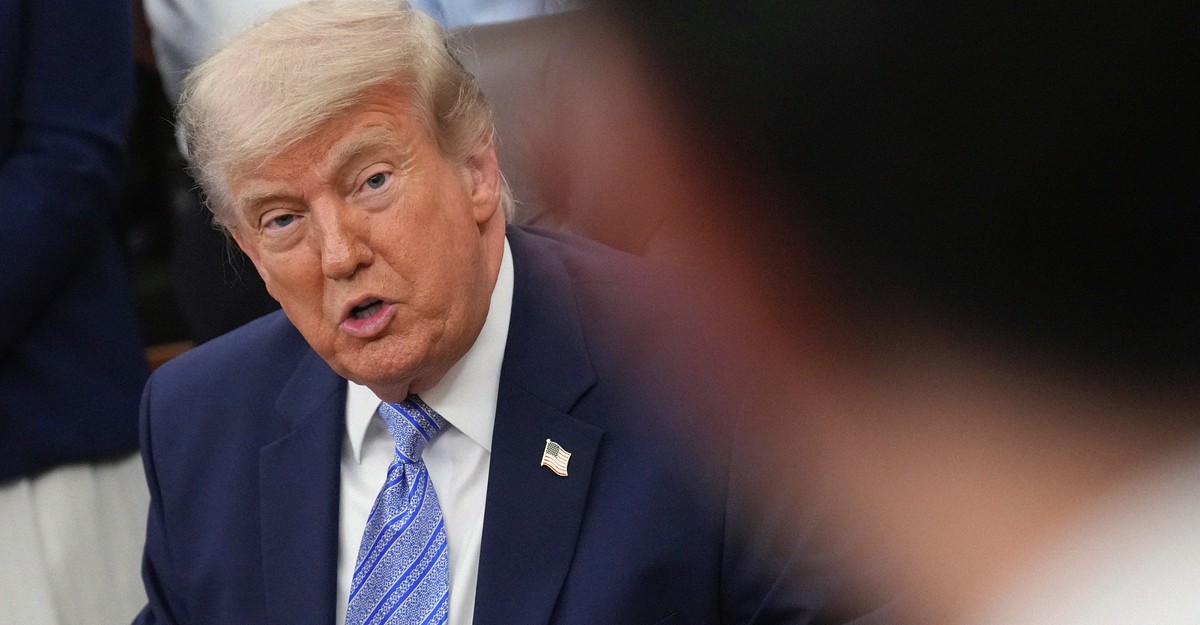
President Donald Trump displays a signed executive order in the Oval Office of the White House on Dec. 11, 2025. | Alex Wong/Getty Images
President Donald Trump seemed on the verge of signing an executive order granting the government far more oversight of cutting-edge AI models. Industry officials had been briefed on details of the directive; top tech executives had been invited to the signing ceremony — some were even midair, en route to Washington.
Then, hours before the signing, the White House abruptly reversed course, postponing the executive order.
“I didn’t like certain aspects of it,” Trump told reporters on Thursday. “I postponed it. I think it gets in the way.”
It’s unclear when or if the rescheduled signing will happen, and the White House didn’t elaborate on what the precise sticking points were. Four sources familiar with the planning told POLITICO that the delay was, in part, due to attendance issues with leading tech executives.
Trump was reportedly annoyed that some well-known CEOs were unable to attend.
The hasty postponement, and the lack of clarity surrounding the details of the delay, underscored just how divided — and spooked — Washington has become over AI, and in particular, the idea of government authority to evaluate cutting-edge AI models before release.
Last month, Anthropic unveiled Mythos, a new AI model capable of identifying and exploiting software flaws. Soon thereafter, Treasury Secretary Scott Bessent and Federal Reserve Chair Jerome Powell convened an urgent meeting with heads of major U.S. banks, briefing them on the cybersecurity risks posed by the mode. Two weeks later, the White House huddled with tech leaders to discuss concerns about the model’s advanced hacking capabilities.
Until then, Trump had maintained a hands-off policy toward AI, giving Silicon Valley a wide berth to roll out powerful AI models. The impending executive order would have marked a shift in that approach by granting the government early access to cutting-edge models, vetting them before their release.
The prospective executive order was born out of growing fears that AI may be a security risk for the U.S., jumpstarting a formal oversight process to keep the tools in check. The draft guidance would have asked AI developers to opt into a voluntary review framework, granting federal agencies a 90-day window to assess “covered frontier models” before going public — some industry leaders took issue with the timeframe, pushing for a 14-day review period instead.
Within the administration, there are “competing factions” tussling over the best way to approach AI. A formal oversight process would test AI models in advance, identifying and patching up any cybersecurity flaws uncovered by the models. But such a system could slow down AI development and innovation — and potentially hurt the U.S.’s footing in its race against China.
“We’re leading China,” Trump said on Thursday. “We’re leading everybody, and I don’t want to do anything that’s going to get in the way of that.”
Welcome to POLITICO Forecast. Reach out with news, tips and ideas at [email protected]. Or contact tonight’s authors at [email protected] or on X (formerly known as Twitter) @riymisr.
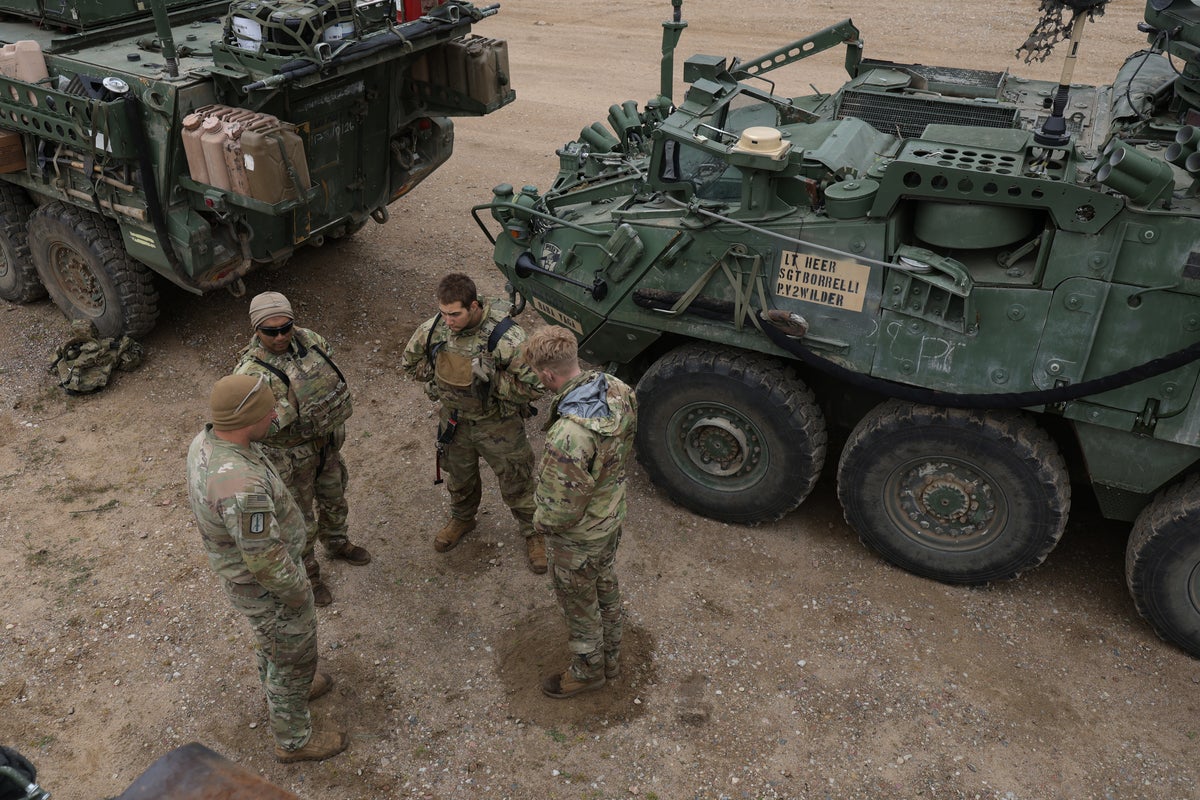
NATO allies downplay US troop withdrawals: U.S. allies in Central Europe are playing down the impact of Washington’s decision to pull troops from the continent — insisting the transatlantic relationship remains strong despite the turmoil caused by Donald Trump. “The U.S. will not leave NATO,” Sorin-Dan Moldovan, Romania’s deputy defense minster, said Thursday at the POLITICO Speakeasy at the GLOBSEC Forum in Prague. Trump said earlier this month he would pull at least 5,000 soldiers out of Germany after Chancellor Friedrich Merz criticized Washington’s war on Iran. Defense Secretary Pete Hegseth then blindsided Poland last week by cancelling an upcoming deployment of 4,000 rotational troops.
New Pentagon task force races to bring powerful AI tools to America’s most sensitive networks: The Pentagon’s cyber-warfighting arm is launching a task force to speed up the adoption of cutting-edge artificial intelligence tools with powerful hacking capabilities, according to three people with knowledge of the effort. The initiative from U.S. Cyber Command — which has not been previously reported — underscores the Pentagon’s concerns about the sudden emergence of private sector-built AI models that can unearth security flaws in digital systems faster than the world’s best hackers.
Russia pledges to support Cuba as Trump ramps up pressure on Havana: Russia will provide Cuba with “active support” as the U.S. increases pressure on Havana, Kremlin foreign ministry spokeswoman Maria Zakharova said Thursday. Washington’s move to cut off oil shipments from Venezuela and its threats to punish companies doing business with Cuba has caused a dire energy crisis on the island. On Wednesday, tensions between the two countries escalated further after the U.S. Justice Department announced it was bringing charges against former Cuban President Raúl Castro in connection with the 1996 killings of four people involved in civilian rescue flights.
More than 160 oil tankers carrying around 160 million barrels of crude oil and petroleum products are currently stranded in the Persian Gulf.
Britain’s Prime Minister Keir Starmer hosts a reception on May 19, 2026 in London, England. | Pool photo by Jaimi Joy/WPA/Getty Images
On Wednesday, Keir Starmer’s government achieved what three successive Tory administrations had failed to do: securing a trade deal with the six-nation Gulf Cooperation Council, with a combined wealth of around $2.3 trillion.
It’s no small feat for Brexit Britain, write POLITICO’s Sophie Inge and Caroline Hug.
While the GCC operates with a common external tariff, it does not always negotiate as a single entity on services, investment and regulatory issues — meaning the deal required agreement both with the council collectively, as well as with each of the six sovereign member states.
The riches on offer to the U.K. are significant. But as with any trade deal, there are winners and losers. Here are the British sectors that look most likely to benefit, and a few who appear to be missing out.
Read the full, unabridged version of the story here.
Winners
London’s services sector: As Gulf economies try to reduce dependencies on oil and diversify into tourism, infrastructure and renewables — through projects like Saudi Arabia’s 170km Line city — British legal, financial and engineering firms will be the main beneficiary of the deal.
“The GCC is doing so much investment in infrastructure,” said Stephanie Betant, head of global trade solutions at HSBC. “With infrastructure investment comes a lot of services need, and the U.K. is very good at it. I think it presents a big opportunity.”
For U.K. firms wary of shifting rules across the Gulf, the agreement also promises more predictable rules, reducing the risk of unfair treatment compared with local companies.
In an unexpected surprise, the government’s trade deal includes provisions that enable U.K. companies to store and process data outside the Gulf “for the first time ever,” according to the government — a significant win given the region’s strict data localization rules.
Carmakers: Another stand-out winner from the deal is Britain’s automotive sector, which will benefit from the full and immediate removal of tariffs on 90 percent of cars, including hybrids. Tariffs on electric vehicles and EV batteries will be phased out over the next decade.
The Society of Motor Manufacturers & Traders, one of the UK’s most influential trade associations, was cautious in its response, saying it welcomed the agreement in principle. “We look forward to seeing the full detail to understand its impact and ensure it supports the sector’s competitiveness and future growth,” said SMMT chief executive Mike Hawes, who stressed that the sector’s immediate priority was restoring stable trading conditions disrupted by the conflict in the Middle East.
Food and drink: The Gulf’s vast expat population means any opportunity to increase exports of British staples to the region would always be welcomed.
Once in place, the deal will see the full removal of tariffs on a number of favorites enjoyed by homesick Brits, including cheddar cheese, lamb, smoked salmon and breakfast cereals.
Food and Drink Federation chief executive Karen Betts described the deal as an “exciting opportunity to boost trade” with a rapidly growing market. “The removal of tariffs from day one on iconic British products like oats, breakfast cereals and biscuits will help food manufacturers build export momentum in the years ahead,” she said.
Meanwhile, in a move warmly welcomed by the National Farmers’ Union, the deal maintains current tariff levels on imports into the U.K. for chicken meat, eggs and pork.
Defense: As Gulf states operate in an increasingly unstable environment during the ongoing war in Iran, the deal helps them gain faster access to Britain for defense equipment and technology.
Likely short-term priority areas will include integrated air and missile defense systems — which detect and respond to incoming threats — counter-drone technology, and small drones. In the longer-term, joint ventures including BAE Systems partnerships in Saudi stand to benefit from easing red tape.
Britain, in turn, is happy to gain a willing customer to boost investment into the struggling sector.
Defense companies will get immediate tariff-free access for turbojets and aerospace parts that currently face a 5 percent tariff. Tariffs on internal combustion engines, valves and centrifuges will also be removed.
Losers
Energy campaign groups: Despite opposition from energy campaigners, the U.K deal now includes an investment protection chapter across all Gulf members, which contain investor state dispute mechanisms (ISDS).
The provisions give foreign investors the ability to sue governments over policies they believe will harm their business interests. Campaigners have argued the system can deter governments from pursuing measures in areas like climate policy.
While the U.K. already had this agreement with three of the six Gulf member states — Oman, Bahrain and the United Arab Emirates — it has now expanded these protections to Kuwait, Qatar and Saudi Arabia, extending the system across the bloc.
Human and labor rights campaign groups: Campaigners have long raised concerns about the Gulf states’ human rights record, with organizations including the Trade Justice Movement, Amnesty International UK, Human Rights Watch urging the prime minister in a joint letter last year to incorporate “strong human rights conditions” before the deal is signed.
Reacting to the details of the deal released on Wednesday, the Trade Justice Movement said it “looks to be silent” on human and labor rights “in return for minimal economic benefit.”
The government has contested that trade agreements are not the forum to directly address human rights issues, while arguing that the deal contains provisions that can contribute to the protection and promotion of human rights.
Did someone forward this email to you? Sign up here.
SUBSCRIBE to the POLITICO newsletter family: Brussels Playbook | London Playbook | London Playbook PM | Playbook Paris | Berlin Playbook | POLITICO Confidential | Sunday Crunch | EU Influence | London Influence | Berlin Bulletin | D.C. Playbook | D.C. Influence | Canada Playbook | POLITICO Forecast | All our POLITICO Pro policy morning newsletters