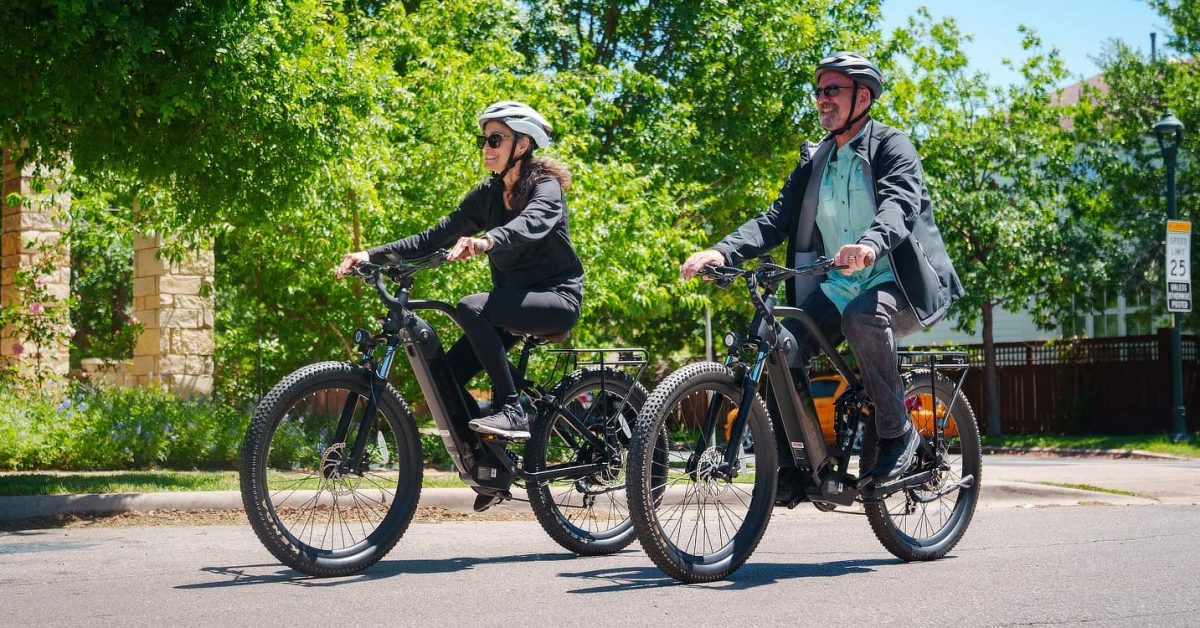
Americans can now use healthcare funds to buy e-bikes at a huge discount
For many Americans, the idea of buying an electric bike with healthcare funds probably sounds somewhere between confusing and too good to be true.
But increasingly, that’s becoming a real option.
And believe it or not, it may be easier than you think.
For example, Austin-based e-bike company MOD BIKES announced this week that eligible customers can now use HSA and FSA funds toward qualifying Class 1 electric bikes, potentially saving up to 30% by purchasing with pre-tax healthcare dollars instead of post-tax income. Advertisement - scroll for more content
And while more e-bike companies like MOD Bikes are helping riders navigate this process, the announcement highlights a broader shift in how electric bikes are increasingly viewed: beyond mere transportation or recreational devices, and now as legitimate wellness and mobility tools.
For anyone unfamiliar with the alphabet soup of healthcare acronyms, HSA stands for Health Savings Account, while FSA means Flexible Spending Account. Both allow Americans to set aside pre-tax money for qualified medical and wellness expenses. Traditionally, people think of using these accounts for prescriptions, doctor visits, or medical equipment.
But in certain cases, electric bikes can qualify too.
That’s because pedal-assist electric bikes can help people exercise more consistently while reducing strain that might otherwise prevent activity altogether. E-bikes have increasingly been studied and promoted for helping riders improve cardiovascular health, maintain mobility as they age, recover from injuries, manage joint pain, and replace sedentary car trips with moderate physical activity.
Unlike a traditional bicycle that may feel intimidating or physically demanding for some riders, an e-bike lowers the barrier to entry. Riders still pedal and remain active, but the motor assistance makes hills, long distances, and headwinds far more manageable. In fact, many studies have independently landed on a counterintuitive finding: Because e-bikes tend to encourage riders to spend more time in the saddle, they tend to result in the rider getting more exercise than on a pedal bike.
“This is not just another discount,” said MOD BIKES founder and CEO Dor Korngold. “For qualified customers, HSA and FSA funds can make a premium electric bike much more accessible. It gives people a smarter way to invest in something that helps them move more, spend more time outside, and replace more car trips.”
The key phrase there is “qualified customers.”
Typically, riders need documentation such as a Letter of Medical Necessity from a healthcare provider explaining how an e-bike may help treat or manage a specific condition. That can include issues related to obesity, arthritis, cardiovascular health, mobility limitations, mental health, or other conditions where increased low-impact physical activity may be beneficial.
MOD BIKES says qualifying Class 1 models are eligible under its new payment system, including bikes like the foldable MOD City+ commuter and the company’s distinctive Sahara SideCar e-bike.
This is such a good idea that I’m frankly a bit surprised that I was writing “Americans” in the headline.
Healthcare systems already encourage preventative exercise because keeping people active is dramatically cheaper than treating chronic illness later.
So if an electric bike helps someone consistently exercise, spend less time sedentary, reduce car dependency, or simply get outside more often, it’s not hard to see why some healthcare administrators are beginning to view them as legitimate wellness tools rather than luxury gadgets.
I’d say that the bigger takeaway here may be that electric bikes are continuing to evolve beyond “fun tech toys” into something increasingly recognized as meaningful transportation and health infrastructure.
FTC: We use income earning auto affiliate links. More.