Tony Benn’s lesson for Andy Burnham
Keir Starmer is facing the strangest dilemma of his leadership. He is expected to campaign for the victory of a man who would like to end his premiership. If Andy Burnham becomes Labour’s candidate in the Makerfield by-election, the Labour Party machine will be expected to campaign for him with the usual discipline and enthusiasm. Yet, every vote cast for Burnham is potentially another nail in Starmer’s political coffin.
It may be some comfort to Starmer to know that this situation is not entirely unprecedented in Labour’s history. In 1984, Neil Kinnock faced a similar dilemma when the man who was most likely to unseat him was selected for Labour in the first by-election of Kinnock’s leadership, held in Chesterfield.
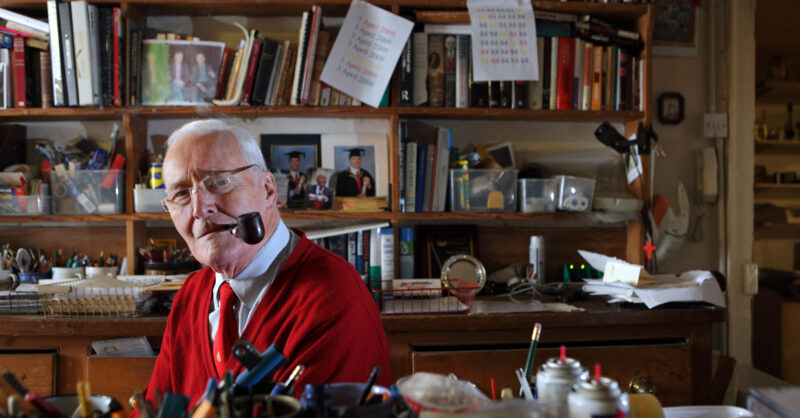
Tony Benn, Labour’s candidate, had stood for the leadership before. Like Andy Burnham, Benn’s first Labour candidacy was seen as premature, unnecessary, and vaguely humiliating. When Harold Wilson resigned in 1976, Benn threw his name into the ring, much to the annoyance of other left-wing Labour MPs who wanted Michael Foot. Former minister Judith Hart rushed to Benn’s office to plead with him to bow out: “Tony, I love you dearly. I greatly admire you. You must be leader of the party – one day – but not now.” Benn persisted but dropped out after the first round.
The next time Benn’s chance arrived, he bottled it. In 1980, when Jim Callaghan resigned as leader, Benn was reasonably well poised to square off against Denis Healey, who was on the right of the party. Benn, however, shirked this contest, on the grounds that its voting model, which only involved parliamentarians, was not “democratic”. The party was in the process of changing its leadership rules from an MP-only ballot to a vote at party conference involving members, MPs, and union affiliates, and Benn may also have fancied his chances better in the future, under this new arrangement.
Subscribe to the New Statesman for £1 a week
To his evident disappointment, it was not Healey, but fellow left-winger Michael Foot who won the contest. And once the new leadership election rules were finalised two months later, Benn saw an opportunity to exploit them. Rather than take on Foot, he targeted Denis Healey, who was deputy leader, challenging him at the 1981 party conference. With 49.6 per cent of the vote, Benn lost to Healey by an “eyebrow”, but he was determined that once the leadership became vacant, he could win it.
Benn thought his moment would come after the 1983 general election, when Foot resigned. The candidate of the Labour right candidate was the unimpressive Roy Hattersley. The only problem for Benn was that, at this crucial moment, he was not eligible to stand. He had lost his seat in the general election. Incensed by Benn’s behaviour in the 1981 deputy leadership contest, Michael Foot had come to view Benn as self-indulgent and overly ambitious. And so, with Benn out of the picture, Foot hastily announced his resignation, with his successor to be chosen at the party conference in October. Foot’s preferred candidate was his protégé and constituency neighbour, Neil Kinnock. Benn could only watch helplessly as Kinnock romped to victory, securing 71 per cent on the first ballot.
The Socialist Campaign Group had tried to stand a proxy candidate, Eric Heffer, in Benn’s absence, but this proved to be a mistake. Heffer’s derisory 6 per cent showed that Bennism without Benn had limited appeal. After three decades in the Commons, Benn was now unable to influence his party’s direction. The left-wing intellectual Ralph Miliband said to Tariq Ali: “Tony is depressed. We should do something to cheer him up.”
In an unorthodox but apparently spirit-boosting holiday, Benn travelled to Hiroshima where he cemented his opposition to nuclear weapons. He and his wife Caroline then flew to Cuba, in hopes of meeting Fidel Castro. The idea of meeting the Comandante, Benn said, made the pair “as excited as a couple of kids would be at the prospect of Santa coming down the chimney”. Their hopes were sadly thwarted by the American imperialists, who invaded Cuba’s ally Grenada, leading to their meeting being cancelled.
A couple of weeks after his return to England, Benn bumped into Michael Cocks, the shadow chief whip, at a funeral. Although on the right of the party, Cocks detested Neil Kinnock, whom Cocks believed had supported rival candidates to remove him from his position as chief whip. In the age-old idea that an enemy of my enemy is my friend, Cocks tipped off Benn that Eric Varley, another right-wing Labour MP, would soon be announcing his resignation from the House of Commons to take the chairmanship of the company Coalite.
Unlike Benn, Varley had been born and brought up in his Chesterfield constituency. A working-class member of Wilson’s Cabinet, Varley left school at 14 to work at Staveley Coal and Iron Company as a turner before rising through the National Union of Mineworkers (NUM) to become a Labour MP. Chesterfield, a Derbyshire seat with heavy mining and engineering interests, had been a solid Labour constituency for half a century. After his chat with Michael Cocks, Benn rang up Arthur Scargill, NUM president, to ask about his prospects in a seat where miners’ delegates made up a significant proportion of the Labour selectorate. Scargill said that it was possible for Benn to win the selection, but Benn would need to work hard for it. A workaholic, Benn accepted the challenge.
Over the next few weeks, Benn travelled up to Chesterfield to address local party and union branch meetings, seeking their nominations. On one occasion, Benn’s train missed Chesterfield station. Desperate not to miss the nominating meeting, Benn leaped from the train onto the tracks and walked the rest of the way to the meeting. “It was a risky thing to do, but I couldn’t afford to be late,” Benn assessed.
The prospect of Benn’s return was not welcomed by the Kinnock leadership, worried that Benn could reignite the same kind of internal party fighting that had proven so damaging for Foot’s leadership. At the same time, Kinnock did not want to be seen to block an experienced Labour politician. The NEC would not impose a candidate on the seat, but this did not stop Benn, who had been elected to the NEC as a constituency representative, from claiming that Kinnock was trying to pull strings behind the scenes to block him.
Although Kinnock protested that he had not interfered in the process, it was somewhat curious that when the shortlist was initially announced, Benn’s name was conspicuously absent. A furious Benn conscripted his ally Dennis Skinner, an ex-miner MP also on the NEC, to add Benn’s name to the list. Such was the influence of the NUM that the constituency executive relented and put Benn on. But even that wasn’t the end of his troubles. Portentously, at the selection meeting, a miner suffered an epileptic fit in the middle of Benn’s speech. Benn checked his watch to ensure he wouldn’t be deprived of his allocated time while members hauled away the “very heavy” man and left him at the back of the room, before Benn continued. After three ballots, Benn was selected.
When Kinnock heard the news of Benn’s selection, he could not have been thrilled, but he decided to take a pragmatic stance. He told Benn that the communications and organisation for the campaign would come from the party’s London headquarters. Benn, lacking a local or national infrastructure of his own, agreed, but also set up his own shadow communications operation, aided with talent from Ken Livingstone’s Greater London Council.
Benn’s leadership ambitions were thinly veiled during the campaign. During the by-election, local bingo callers took to using the phrase, “Number Ten, Wedgie’s Den”, a reference to Benn’s middle name Wedgewood. The Sun had asked an American psychiatrist to do an assessment of Benn’s personality, who concluded that Benn was power mad and would do anything to satisfy his hunger for the top job.
Kinnock feared Benn’s return to Parliament, but he also feared losing a safe Labour seat. The Chesterfield by-election was the first of his leadership, and the party was still licking its wounds from 1983. Kinnock was determined to show that he was a winner and, so, to stabilise his own leadership, he needed to support his would-be rival. The question of whether Benn would then turn on him in parliament could be handled further down the line.
In a show of unity, the Labour frontbench put on a brave face, travelling up to Chesterfield to hug Benn close. They took the view that it would be harder for Benn to attack the leadership if they were seen to be as supportive as could be. On one campaign visit, Kinnock told the press, “On all the essential areas of policy, I don’t think there is any disagreement between us”. (In Makerfield, expect Burnham’s potential rivals, like Wes Streeting, to pay a loyal visit or two.)
Denis Healey, the former Deputy Leader whom Benn had tried to depose, buried the old hatchet and threw his full support behind Benn. The two men visited a local pub, where Healey played the 1931 song “Jolly Good Company”, with the teetotal Benn belting out the refrain, “Here we are again, happy as can be, All good pals and jolly good company”. At another event, Denis Healey cheered, “Tony without Denis would be like Torvill without Dean,” a reference to the recent gold-winning ice skaters at the 1984 Winter Olympics. Ominously, just as Healey uttered these remarks, the party banner behind him came crashing to the floor.
In spite of having few connections to the area (aided by Debrett’s, Benn discovered that he had great-grandparents who had lived 45 miles away), Benn was a celebrity with real star quality on the platform. His campaign meetings were packed, often well beyond capacity. At one event, the General Secretary of the Labour Party sat in Benn’s lap, such was the shortage of seats. At another event, Benn tried to leap onto a platform, missed, and broke his glasses. “It hurt like anything, but I was determined not to show it”, a bruised Benn admitted.
On 1 March 1984, Tony Benn was elected to the House of Commons. The SDP doubled their vote from eight months earlier, but Benn still enjoyed a healthy majority. Had Benn lost this seat in coal country, not only would his political reputation have been in tatters, but real doubts would have been raised over Neil Kinnock’s ability to revive Labour’s electoral fortunes. On his return to parliament, Benn found that the shadow cabinet ministers who had been so warm towards him in the by-election had suddenly gone cold. Benn complained it took him three weeks even to be given a desk of his own.
From his seat on the backbenches, Benn criticised Kinnock’s leadership. In contrast to the image he holds today, Kinnock was regarded as dull and dreary. Barbara Castle bitterly claimed that Kinnock’s advisers “made him look like a bank clerk, who wouldn’t… make an impromptu speech. He wasn’t breathing the oxygen he so desperately needed.” Benn fumed in his diary: “His interviews are like processed cheese coming out of a mincing machine – nothing meaty, just a mass of meaningless rhetoric that defuses and anaesthetises the listener.”
Labour’s rules did not permit a challenge until the party conference in the autumn, and Benn concluded that the time was not ripe. He confided in his diaries: “The last thing we want is a row with [Kinnock] because he is still on his honeymoon.” In any case, Benn’s energies were quickly redirected from his leadership ambitions to a cause he came to regard as far more important than even the Labour Party itself. Two weeks after his victory in Chesterfield, the very same miners who had supported him were called out by their union. The miners’ strike had begun.
Benn did eventually challenge Kinnock for the leadership, but by the time he did, his star had considerably faded. After Labour’s defeat in 1987, Kinnock made an informal compact with the right of the party to change party policy in their direction in exchange for their continued sufferance of him as leader. Benn tried to unseat Kinnock, thinking he was at a low ebb, but his support was derisory: in his 1988 leadership challenge, he won just 11 per cent of the vote. He had missed his moment, and in politics timing is everything.
In Chesterfield and Makerfield, two Labour leaders found themselves in the awkward position of campaigning for their chief rival’s return to parliament. But, there are important differences between the two. Kinnock was still, as Benn recognised, in his honeymoon phase, having secured a massive mandate from the Labour membership only a few months earlier. Keir Starmer, in contrast, hasn’t faced Labour members for over six years, and many regard him as having been elected on a false prospectus. While the moment wasn’t ripe for Benn in 1984, this is unquestionably a moment of profound vulnerability for Starmer.
At the same time, Burnham’s chances of being returned to parliament are more fragile. Although some commentators speculated that the SDP could pull off a surprise victory in Chesterfield, the prospects were pretty slim. In Makerfield, Burnham faces an electorate who showed in local elections a comprehensive rejection of Labour. While, like Benn, Burnham brings a certain celebrity quality to the seat, he also brings the baggage of having taken policy positions, such as rejoining the EU, which put him much more at odds with local voters.
Kinnock was warm to Benn in the by-election but froze him out afterwards. Keir Starmer’s best chance of survival is that the voters of Makerfield freeze Burnham out of parliament altogether. It is a by-election that this Labour leader cannot afford to win.
[Further reading: The Labour Party is dead, and Starmer has killed it]
Content from our partners
Related