French admit ‘we have no solution’ to stop Channel boats amid UK’s weak immigration policies
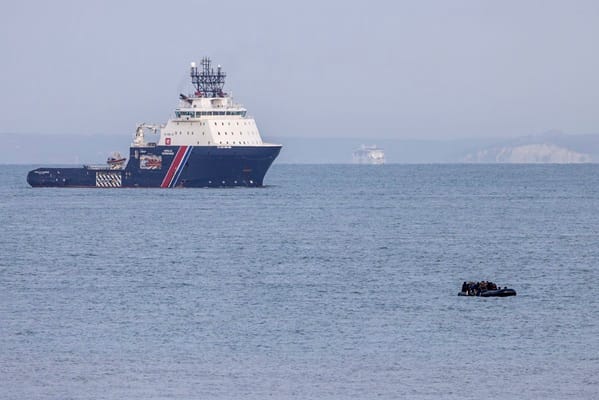
French officials have openly admitted they have “no solution” to stop the flow of small boats crossing the Channel, dealing a fresh political blow to Keir Starmer after Britain agreed a new £662 million border enforcement package with Paris.
The comments came despite Downing Street unveiling plans for expanded joint patrols, increased surveillance and the deployment of at least 50 riot-trained French officers to beaches used by migrant gangs operating along the northern French coastline.
Local politicians in the Pas-de-Calais region dismissed the measures as cosmetic and warned the crossings would continue regardless of British funding.
Alain Boonefaes, a deputy mayor responsible for security in Gravelines, said the agreement merely shifted the problem elsewhere rather than solving it.
“The money of the British will be used to secure a sector, but we only move the pile of sand,” he told La Voix du Nord.
“It starts from everywhere. It is a subject that must be dealt with at the global level. We have no solution. There will always be an influx of people who want to join the UK.”
The intervention will deepen concern inside Westminster over whether Britain’s latest financial commitment to France can meaningfully reduce crossings, which have continued at record levels despite repeated bilateral agreements.
Antoine Benoit, mayor of the coastal town of Audresselles near Calais, also expressed scepticism, saying round-the-clock patrols had failed to stem departures.
“We have gendarmes driving all night – it will not change anything,” he said.
Mr Benoit added he had become “disillusioned” with attempts to tackle the crisis, arguing: “There is no political treatment of the problem. We are not listened to.”
The remarks triggered fury among Conservative MPs, who accused Labour of handing over hundreds of millions of pounds without securing binding guarantees from France.
Chris Philp said the comments confirmed longstanding fears that British taxpayers were funding ineffective enforcement operations.
“This confirms what we have known all along,” he said.
“Shabana Mahmood has handed over half a billion pounds of our money to the French, most of it without performance conditions – and it will make no difference whatsoever.”
Mr Philp renewed Conservative calls for Britain to leave the European Convention on Human Rights, arguing that rapid deportations were the only credible deterrent.
“We need to leave the ECHR so all illegal immigrants can be deported within a week of arrival,” he said. “Then the crossings would soon stop.”
He also claimed Channel arrivals had risen sharply since Labour entered government and accused ministers of presiding over unprecedented levels of illegal migration.
Criticism has also emerged from coastal communities in Kent, where frustration continues to mount over the scale of the crossings.
A fisherman based in Dover claimed French authorities were failing to make any meaningful attempt to halt departures and alleged that migrants were often escorted rather than intercepted.
“There is no deterrent,” he said. “If they wanted to, I think they could stop it tomorrow. But they don’t.”
The controversy comes only weeks after figures indicated that more than 200,000 migrants have crossed the Channel since records began in 2018, underlining the extent to which the issue has become one of the defining political battlegrounds of modern British politics.
The Home Office defended the agreement, insisting the Government was intensifying efforts against smuggling gangs and illegal migration networks.
A spokesman said ministers had secured a “landmark new deal” with France that would strengthen enforcement operations and increase arrests of people traffickers.
The department also claimed that more than 42,000 attempted crossings had been prevented since Labour entered office and that nearly 60,000 people with no legal right to remain had been removed from Britain.
Despite those assurances, the blunt assessment from French officials is likely to reinforce growing doubts among voters over whether either side of the Channel possesses a workable long-term strategy to stop the boats