Moscow region hit in largest Ukrainian drone raid yet on Russian capital area
A wave of Ukrainian drones struck the Moscow region overnight in one of the most ambitious long-range attacks of the war, targeting fuel infrastructure, defence-linked industrial sites and areas close to the Russian capital in a direct challenge to the Kremlin’s claims of battlefield control.
The barrage prompted explosions across multiple districts around Moscow, disrupted air traffic at major airports and left several people dead, according to Russian officials, while Volodymyr Zelensky hailed the assault as a justified response to Russia’s relentless bombardment of Ukrainian cities.
Russian authorities claimed air defences intercepted hundreds of drones during the attack, which continued from late Friday into the early hours of Saturday morning.
Sergey Sobyanin said Russia had shot down 556 Ukrainian drones across the country, insisting Moscow’s air defence network had repelled the assault before greater damage could be inflicted.
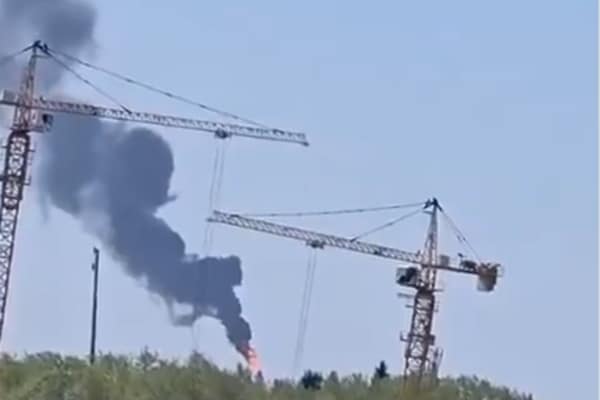
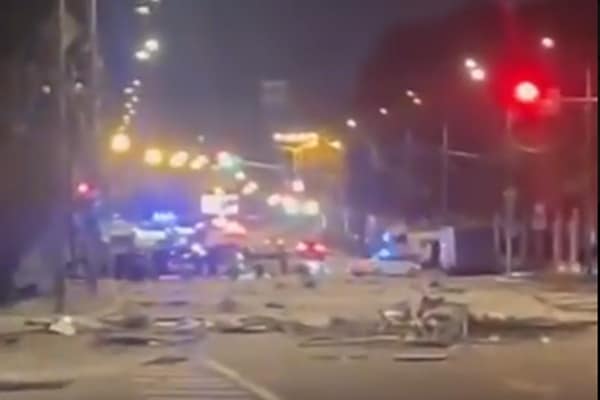
Yet videos circulating online appeared to show repeated flashes and fires illuminating the skies around the capital after 3am, with reports of explosions in Khimki, Klin and Zelenograd, as well as near Sheremetyevo International Airport and central districts of Moscow itself.
More footage of the Moscow suburbs being spanked.
Attacks on the "Angstrem" microelectronics plant and a "Transneft" facility in Zelenograd (Moscow, outside the Moscow Ring Road);
the "Solnechnogorskaya" filling station (Durikino village, Moscow Region), which stores and… pic.twitter.com/M22dDwPo4S
— Shaun Pinner (@ShaunPinnerUA) May 17, 2026
The scale and geographical spread of the strikes will raise fresh concerns inside the Kremlin over Ukraine’s growing ability to penetrate deep into Russian territory despite the heavy concentration of air defence systems surrounding the capital.
Andrey Vorobyov confirmed that at least three people had been killed during the attack, including two residents in the village of Pogorelki and another victim in Khimki.
Several others were reportedly injured after drones struck apartment blocks and residential properties across multiple districts.
One of the apparent targets was the Moscow Oil Refinery, where 12 people were said to have been injured near a checkpoint facility. Most were reportedly construction workers caught in the blast zone.
For Kyiv, however, the political message behind the attack appeared just as significant as the military impact.
“This time, Ukrainian long-range capabilities reached the Moscow region,” Zelensky declared after the strikes.
“We clearly tell the Russians: their state must end its war.”
A fuel depot in the Moscow region came under attack from Ukrainian drones, despite Russia's multi-layered air defense system. pic.twitter.com/ZN6raOD5PB
— Shaun Pinner (@ShaunPinnerUA) May 17, 2026
The Ukrainian president emphasised that the operation had struck targets more than 500 kilometres from Ukraine’s border, presenting the raid as proof that Moscow could no longer insulate its strategic infrastructure from retaliation.
Independent Russian outlet Astra reported that the Elma Technopark had been hit and set ablaze during the assault. The facility hosts firms involved in microelectronics, robotics, optical systems and other advanced technologies connected to Russia’s industrial and military sectors.
Astra also reported a strike on the Solnechnogorsk fuel-loading station, a major fuel transfer facility used for storing and shipping petrol and diesel supplies linked to Moscow’s broader pipeline network.
Russian Telegram channel Supernova+ further claimed that the Raduga Machine-Building Design Bureau in Dubna had come under attack. The bureau is responsible for designing and manufacturing cruise missiles and other precision weapon systems used by Russian forces.
The attack also caused widespread disruption across Moscow’s aviation network.
Around 200 flights were delayed or cancelled at Sheremetyevo Airport, while almost 100 additional flights were affected at Vnukovo International Airport as authorities scrambled to manage the fallout.
Explosions were simultaneously reported across occupied Crimea, suggesting Ukraine may have launched a coordinated series of strikes against military and logistical infrastructure overnight.
The assault comes amid a rapidly intensifying drone war between Kyiv and Moscow, with both sides increasingly relying on long-range unmanned systems to target infrastructure, energy facilities and military production centres far behind the front lines.
It also follows the Kremlin’s decision this week to tighten censorship surrounding drone attacks inside Russia. Under new rules, individuals and media organisations can now face heavy fines for publishing photographs, videos or operational details from strike locations without official authorisation.
The restrictions have fuelled speculation that Russian authorities are becoming increasingly concerned about the political and psychological impact of Ukraine’s expanding ability to strike deep inside Russia itself.
While the full extent of the damage remains unclear, the symbolism of Ukrainian drones reaching the Moscow region in such numbers is likely to resonate far beyond the battlefield.