Is Michael McDowell aware people in half of rural Ireland’s one-off houses are commuters?
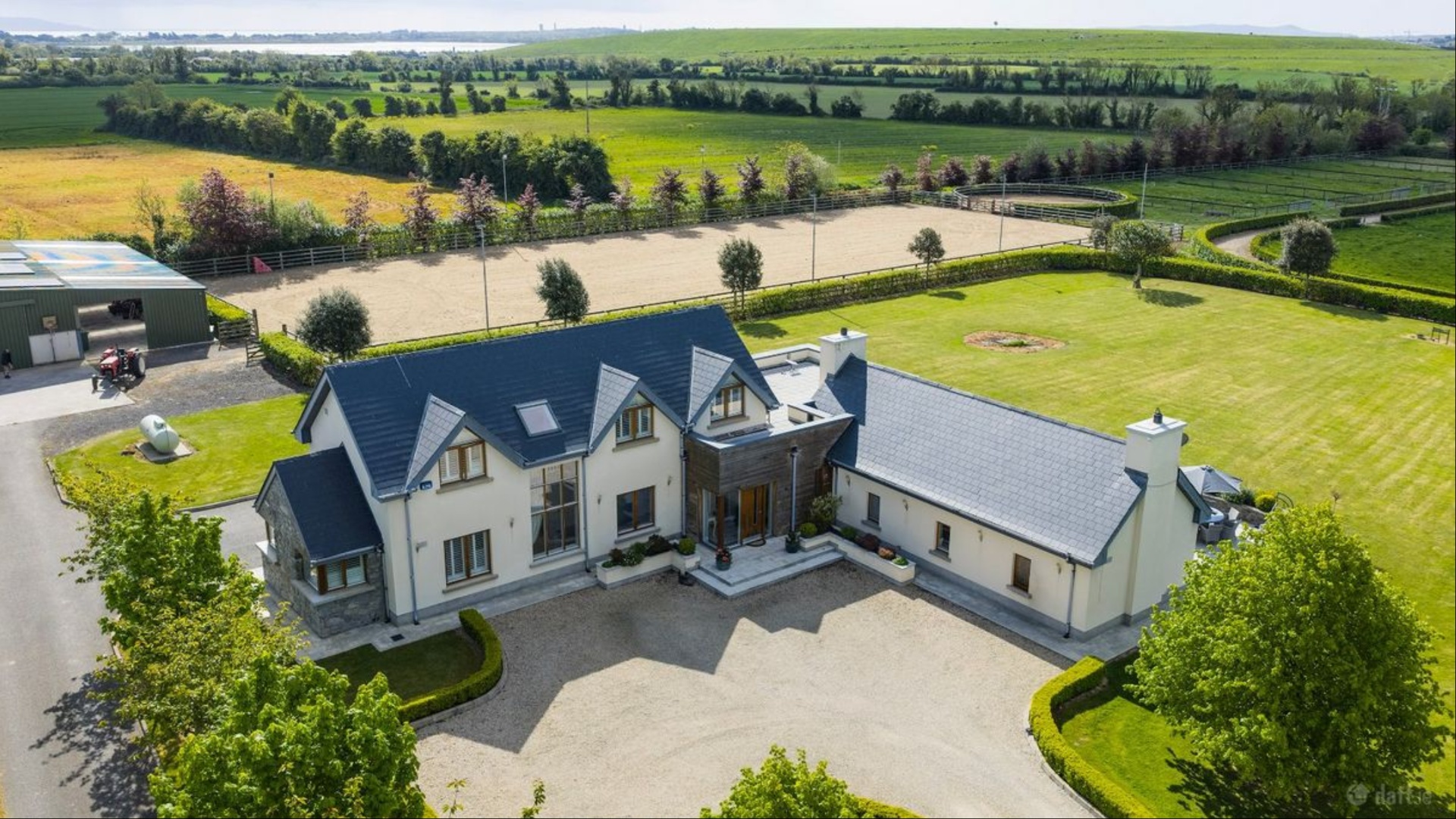
Sir, – Michael McDowell has returned to one of his pet topics, the defence of one-off houses in rural Ireland (“Stop demonising one-off rural housing. Not everyone wants to be surrounded by neighbours,” May 13th). He seems to think that there are unnecessary restrictions on the building of such houses despite the fact that the limited restrictions that exist have recently been eased. Is McDowell aware that 50 per cent of one-off houses in rural Ireland are urban generated, in that their occupiers work in towns and cities that in many cases are long distances from their houses? The occupiers of those houses are totally car dependent and many need two cars. This means that the carbon footprint of such houses is much greater than that of urban houses. Infrastructure provision for dispersed rural housing is vastly greater than for urban housing. In 2019 the government agreed a contract with a private consortium, Granahan McCourt, to provide high-speed broadband to all rural houses. Under that scheme, the taxpayer will pay €6,000 per household to connect rural houses to high-speed broadband.. READ MOREDublin Central poll: Hugh Linehan and Pat Leahy analyse the resultsFull list of all the Blue Flag beaches across Ireland revealedWhat will €400,000 buy in France, Portugal, the US, Greece and Co Sligo?Outlander: Caitríona Balfe’s steamy time-travel adventure has been one of TV’s wildest journeysDespite largely funding the rural broadband network, the State will not own it. The universal service obligation imposed on ESB Networks, An Post and the telecoms companies encourages the construction of one-off houses because services are provided for them at a highly subsidised price.A 2024 report by the Department of Public Expenditure and Reform showed the average one-off rural house is twice as large as the average urban multi-unit house. The report also calculated that one-off houses receive subsidies of up to €100,000, much greater than the subsidy to newly built urban houses, and are paid regardless of the means of the people building such houses.As 78 per cent of total taxes are paid by taxpayers in Dublin, Cork and Galway, urban taxpayers, many of whom cannot afford to buy even the smallest urban house, are heavily subsidising the owners of one-off rural houses.McDowell’s libertarian argument that people should be permitted to build houses wherever they please might have some validity if the owners of one of houses paid the full cost of such houses, including the environmental cost.While new houses in their hinterlands proliferate, many villages and small towns are in apparently terminal decline. If sustainable communities in rural Ireland are to be created, the current system of planning and land zoning must be radically changed. Land around villages and towns should be bought by local authorities at agricultural prices plus some reasonable compensation. A plan for the use of the land should then be developed which provided for not only housing but schools, medical facilities and industrial units. Without such a plan, rural villages and towns will continue to decline while the one-off house owners in their hinterlands will continue to drive past them to shop and buy services in the larger towns and cities where many of them work. – Yours, etc,SEAN BYRNE,Sutton,Dublin 13.Sir, – Isaac Asimov once lamented that the saddest aspect of life today is that science gathers knowledge faster than society gathers wisdom.Physics is our best way of understanding the physical world and modelling how it will change given a broad range of variables. It is not an “orthodox ideology”. The overwhelming consensus among climate scientists, readily accessible via the IPCC website, is that life on Earth could become very precarious if humanity does not change how it lives, especially with regard to its ever-increasing demand for energy and how it meets those demands.In his defence of continued rural one-off housing development, Michael McDowell displays a worldview that is dismissive of climate science and of our moral responsibility towards the natural world. McDowell appears to be an enthusiast for the private motorcar, and does not accept the strong moral dimension attached to moving 1.5 tonnes of steel for every routine daily errand – as is the norm with one-off rural housing. Transport is, by some distance, our largest national consumer of energy and emitter of greenhouse gases. There is a very strong moral case for curbing our dependence on the private car.I also fail to understand the argument that because the mid-19th century countryside was covered with one-off housing, this somehow represents a natural or desirable norm. Our countryside two centuries ago is merely a random snapshot in time, and there are many values and habits from our past that are best left there.With the knowledge we have accumulated about the climate and the natural world, we must be wise enough as a society to move away from car-dependent, low-density rural housing that despoils our countryside. The real prize lies elsewhere: revitalising our cities, towns and villages with high-quality housing and associated infrastructure – securing the future for coming generations and ensuring our countryside does not become one vast sprawl of one-off housing. – Yours, etc,CHRIS GARVEY,Glasnevin,Dublin 9.