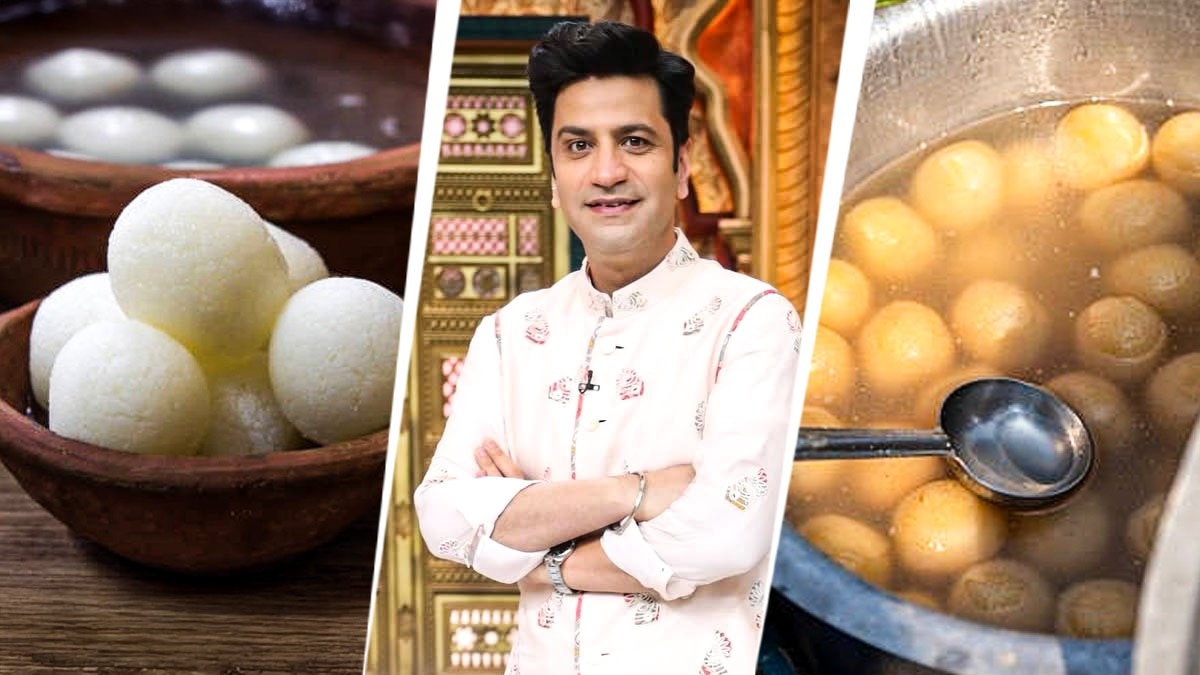
Not Bengal, rasgulla is from Odisha: Chef Kunal Kapur reopens the sweet debate
“Rasgulla belongs to Odisha.”We can already sense a sweet fire lighting up in people’s minds with that statement. But don’t come at us just yet, because we are not saying it.That is the sweet little storm celebrity chef Kunal Kapur recently stirred online — and honestly, if there is one dessert capable of triggering a full-blown interstate debate in India, it is this syrup-soaked ball of chhena.
In a podcast with Mirchi Punjabi, the chef shared his take on Indian culinary heritage, among other food-related conversations. And while discussing Indian sweets, the conversation suddenly became both sweet and spicy.After chef Kapoor mentioned that rasgulla is from Odisha, the host, RJ Abby, immediately said, "Ab Kolkata ke log mujhse thode naraz ho jaainge."To which, he responded, "Kaha jata hai, maine nahi bola, kaha jata hai ki rasgulla is from Odisha actually. Jo hai so hai. Humne jo suna hai.” (People from Kolkata might get upset, but it is widely believed — I am not saying it — that rasgulla is actually from Odisha.)
A classic white rasgulla (Photo: Pexels)
Because for years now, the rasgulla (or rasagola, or rasogolla — yes, even the spelling changes with geography) has been at the centre of one of India’s most passionate food rivalries: West Bengal vs Odisha.The chef further went on to explain how the two eastern states share a fairly similar sweet palate. “Kolkata and Odisha ki mithaiyan similar hai. Kolkata aur Odisha dono ke andar chhena ka kaam achha hai,” he said, praising the way both cuisines work with fresh chhena-based desserts.He also spoke highly of Odisha’s iconic chhena poda, calling it something that resembles a modern-day cheesecake — except the recipe has existed for ages.And no, this is not just about dessert. This is about culture, history, regional pride and perhaps a tiny bit of sugar-fuelled possessiveness.The debate has been simmering for decades, but currently rasgullas from both states have a Geographical Indication Tag (GI Tag) each. A GI tag is given to products that originate from a particular region and possess unique qualities, characteristics or reputation linked to that geographical location.
A rasagola from Odisha is often soft brown in colour (Unsplash)
You are not alone if you grew up believing that rasgulla hailed from Bengal. But eventually, both states began staking claims over the origin story. Soon, social media discussions exploded, politicians weighed in and suddenly India was emotionally divided over this cottage cheese balls floating in sugar syrup.The main argument from Odisha’s side is rooted in religion and tradition.The state has long argued that rasgulla has deep ties to the rituals of Jagannath Temple. According to Odisha’s claim, the sweet has historically been offered to Goddess Lakshmi during the Niladri Bije ritual associated with the Rath Yatra. References to rasgulla are also said to appear in the 15th-century Odia Ramayana, called Dandi Ramayana.
Former Chief Minister of Odisha, Naveen Patnaik's, X post
Meanwhile, Bengal’s claim centred around the modern sponge-style rasgulla that most Indians recognise today. Many food historians in Bengal credit renowned confectioner Nobin Chandra Das with popularising the iconic Bengali rasgulla in the 19th century. The Bengali version is typically softer, spongier and lighter in texture.While this remains the more widely known claim, there are several other versions of the story that also stake claim to the rasgulla.Then came the GI tags.In 2017, West Bengal was granted the GI tag for the Bengali version of the sweet as “Banglar Rasogolla”. Naturally, many people assumed the great food debate had finally been served in Bengal’s favour.But that was not the end of it.In 2019, Odisha received its own GI tag for “Odisha Rasagola”, recognising its separate regional version. In its submission before the GI registrar, it was described as “very soft to feel, juicy and non-chewy in consistency, and can be swallowed without teeth pressure.”Odisha’s rasagola is often described as softer, slightly more caramelised, with a light brown hue and strong ties to temple traditions. Bengal’s rasogolla, meanwhile, is celebrated for its airy sponge-like texture and confectionery craftsmanship.So yes, both states officially have their own GI-recognised versions. The sugary showdown eventually settled into a polite “everyone take a rasgulla and calm down.”And honestly? Probably for the best.But beyond the legal documents and cultural claims lies a larger truth: Indian food history has always travelled across regions, evolving with local tastes, techniques and traditions. Which means the rasgulla debate may never fully end — and maybe it is not supposed to.After all, some rivalries are simply too delicious to settle. Or are they?- EndsPublished By: Jigyasa SahayPublished On: May 15, 2026 16:44 IST