Rising fertilizer prices, shortages threaten Sri Lankan farmers with disaster
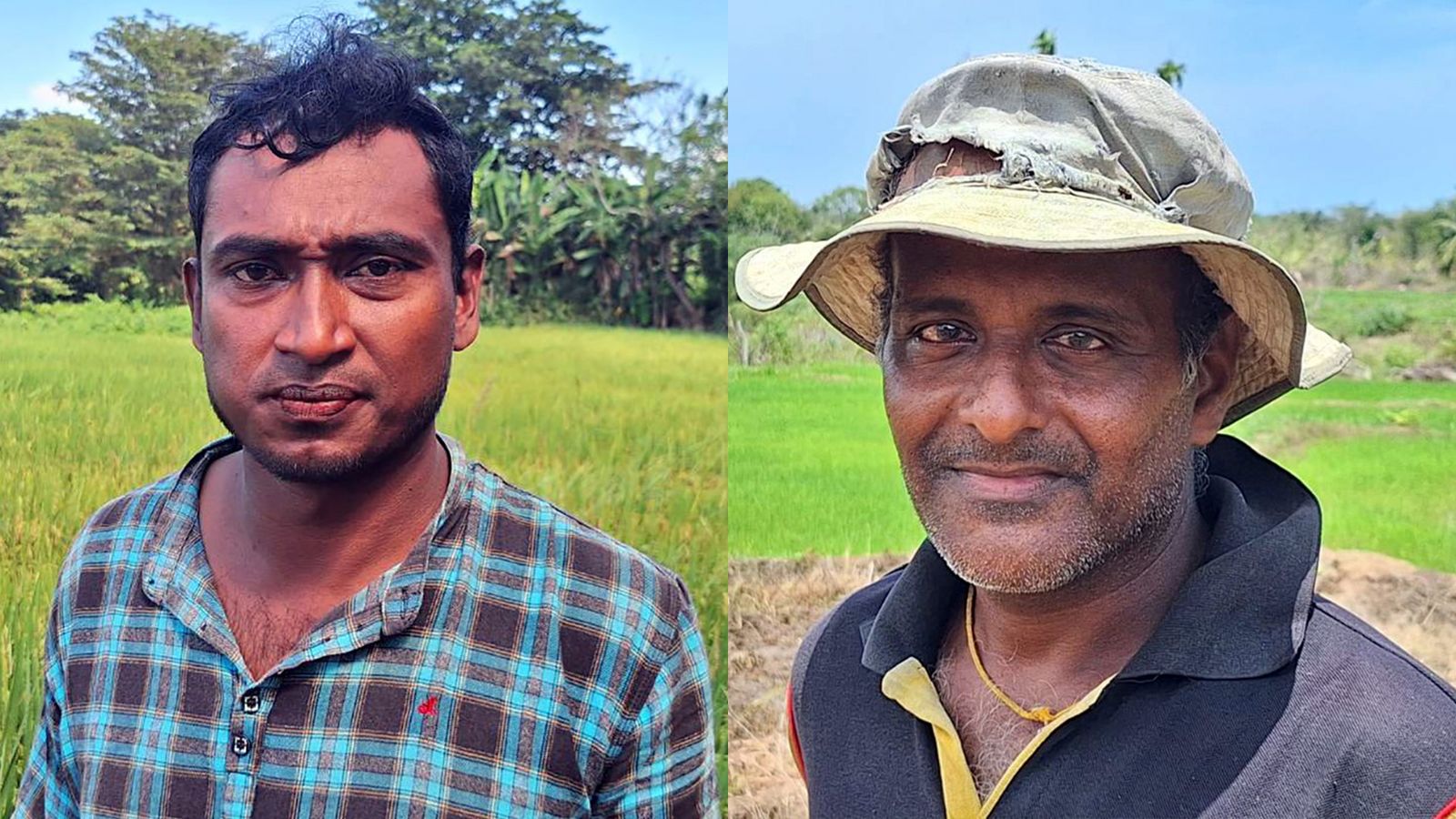
The US-Israeli war against Iran is inflicting devastating blows on Sri Lankan workers and the rural poor. Among the worst hit are hundreds of thousands of farmers growing paddy, maize, vegetables, fruits and other essential crops.The indefinite closure of the Strait of Hormuz has triggered a sharp surge in global energy prices and thrown international supply chains into turmoil. Farmers in Sri Lanka, like their counterparts across the world, are confronting soaring fuel and fertilizer costs that threaten to slash agricultural production and deepen the food security crisis affecting millions. Sri Lanka imports more than 90 percent of its fertilizer requirements with most of it—especially urea—purchased from Iran.In response to rising global fuel prices, President Anura Kumara Dissanayake has increased domestic fuel prices by between 25 and 35 percent since the outbreak of the Iran war on February 28. However, amid fears of mounting opposition and unrest by peasants and the rural masses, the government has so far delayed imposing corresponding increases in fertilizer prices.Addressing parliament on April 7, Dissanayake declared that the government would “ensure” farmers receive the necessary fertilizer supplies for the southwest monsoon cultivation season. The government, he stated, would purchase a 50-kilogram bag of fertilizer from private companies at 13,500 rupees ($US42) and distribute it to farmers at a subsidised price of 10,200 rupees.There is no guarantee, however, that the government will be able to maintain these prices as the war and the blockade of the Strait of Hormuz continues. The world market price of a tonne of urea rose to $726 in March and $857 in April, more than double last year’s price. The World Bank has predicted that overall fertilizer prices could rise by 31 percent this year, with urea prices increasing by around 60 percent compared to 2025.Farmers have already complained that they are unable to purchase fertilizer at the price “guaranteed” by Dissanayake and that the required quantities for cultivation are not available. Many fear that cultivation during the coming monsoon season will be severely disrupted. Even if the government supplies fertilizer at the promised subsidised rate, many impoverished and debt-ridden farmers say that they still cannot afford to purchase it.The country’s food security crisis has been compounded by the devastation caused by Cyclone Ditwah in late November 2025, which inflicted an estimated $814 million in agricultural losses, destroying around 20 percent of the Maha cultivation period paddy harvest and other crops. Maha is Sri Lanka’s main cultivation season. More than 227,000 farmers were affected as floods submerged about 530,000 hectares of paddy land, compromising the country’s food security. Many farming families are still struggling to recover from the disaster, having received inadequate compensation from the government.Agronomist Professor Buddhi Marambe has warned that 98,000 tonnes of urea are required for paddy cultivation during the monsoon season alone, with a total of 216,300 metric tons needed during the first six months of 2026. According to Fertilizer Secretariat director Chandana Lokuhewage, the combined stocks currently available to the government and private companies are just 151,000 tonnes.World Socialist Web Site (WSWS) reporters recently spoke to farmers about the agricultural crisis and the growing hardship caused by rising fertilizer prices and shortages.Ekanayake, a farmer from Ampara, said that the cost of paddy cultivation had increased sharply. “Due to higher fuel prices, it now costs 28,000 rupees to plough and harrow an acre, compared to 25,000 rupees previously. The fertilizer subsidy is 10,000 rupees per acre per season, but with fertilizer prices rising, that amount is not enough. The cost of all three types of fertilizer—urea, TSP and MOP—has more than tripled,” he explained.The father of two added: “The cost is high, but the income is low. Private traders buy paddy at 110–114 rupees per kilogram, but at least 140 rupees is needed. Last year, the total cultivation cost per acre was about 120,000 rupees; this time it will exceed 140,000. The government has no plan to address farmers’ problems.”RuwanRuwan, a tenant farmer from Ballagaswewa in Mayurapura, Ambalantota, cultivates about two acres of highland under an irrigated farming system. “Agriculture officials said they will not supply water or fertilizer to these lands because the tanks [dams] have dried up due to the drought. We hear that fertilizer supplies are being restricted because of the impact of the war in the Middle East. Only a small amount is being provided to irrigated paddy lands,” he said.Explaining that he currently pays rent equivalent to 750 kilograms of paddy per acre, Ruwan added: “I don’t know what will happen under the current situation. I also cultivated bananas. I bought fertilizer using borrowed money at high interest. I’m really afraid of what will happen if I lose my income.”Darshana, a young farmer from the same area, said: “Labour costs are now between 4,000 and 4,500 rupees per day. Last year it cost 25,000–27,000 rupees to plough an acre; this time it is 35,000 rupees. A 50-kilogram bag of fertilizer cost 11,500 rupees last season, but now it is 13,500 rupees. The government provides only 50 kilograms per acre, and to obtain it you must register with three different institutions. We do not have enough money to buy fertilizer from private traders at higher prices.”Nelum ChinthakaNelum Chinthaka, another farmer from the same area, said he had decided not to cultivate this season because of the shortage of water and fertilizer. “I’ve taken loans of more than 600,000 rupees over the past several years. Repaying those loans has become a huge problem,” he said. Without a stable income, he has taken temporary work at a motor garage and is struggling to earn enough to repay debts and support his family. He added that although there was a fertilizer crisis, big businessmen were receiving adequate supplies while small farmers were being neglected.Chinthaka said he had voted for the Janatha Vimukthi Peramuna-led National People’s Power (JVP/NPP) in the last election. “I participated in protests organised by the JVP during the 2022 mass uprising, hoping it would be good for the country and the people. But what has happened now is completely the opposite,” he said.He recalled that the Socialist Equality Party (SEP) had warned about the JVP’s pro-IMF policies and the dangers of war. “At that time, I didn’t pay attention to the SEP’s warning. But now I can see it was true, and that the JVP deceived us. The impact of the war has reached all of us. Farmers here are being severely affected. The struggle waged by the SEP against the war is very important, and I will participate in the meeting in Matara on May 24,” Chinthaka said.Poor farmers in Sri Lanka have suffered for decades from land shortages, exploitation by banks, moneylenders and agribusiness corporations, and the continuously rising cost of cultivation. Successive governments, particularly after the introduction of the open market policies of the United National Party government in 1977, exposed small-scale agriculture to the domination of corporate interests while slashing subsidies for fertilizer and other essential farming inputs.Beginning in September 2021, tens of thousands of farmers staged months-long protests against bans on chemical fertilizer and agrochemical imports imposed by President Gotabaya Rajapakse’s government on the pretext of promoting organic farming. The measure was introduced amid a sharp decline in foreign reserves driven by the deepening global economic crisis and intensified by the COVID-19 pandemic. In 2022, large numbers of rural poor joined the mass uprising that forced Rajapakse to flee the country and resign from office.The JVP/NPP alliance exploited this widespread anger to come to power in the 2024 elections by making false promises to resolve the social crisis confronting workers and farmers.The JVP/NPP government is ruthlessly imposing the full burden of the economic crisis and the impact of war on the working class and the rural poor while enforcing the austerity dictates of the International Monetary Fund. The deepening crisis facing workers and poor farmers cannot be resolved through appeals or attempting to pressure the government.The urgent problems confronting the peasantry can only be addressed by freeing rural producers from the domination of agribusiness conglomerates, exploitative middlemen and the debt-ridden banking system. This requires the nationalisation of major plantations, agribusiness corporations and banks under the democratic control of the working class.Such measures can only be achieved in the fight for a workers’ and peasants’ government to abolish capitalist rule, including that of the JVP/NPP government, as part of the broader fight for international socialism. In this struggle, the working class must provide political leadership to the rural masses by building action committees to unite workers, agricultural labourers and poor farmers in a common struggle against capitalism. These committees must fight for a Democratic and Socialist Congress of Workers and Rural Masses to discuss the necessary strategy to fight to defend the social and democratic rights of working people. Subscribe to the IWA-RFC NewsletterGet email updates on workers’ struggles and a global perspective from the International Workers Alliance of Rank-and-File Committees.