China showcases Zhejiang tourism and culture in Brussels
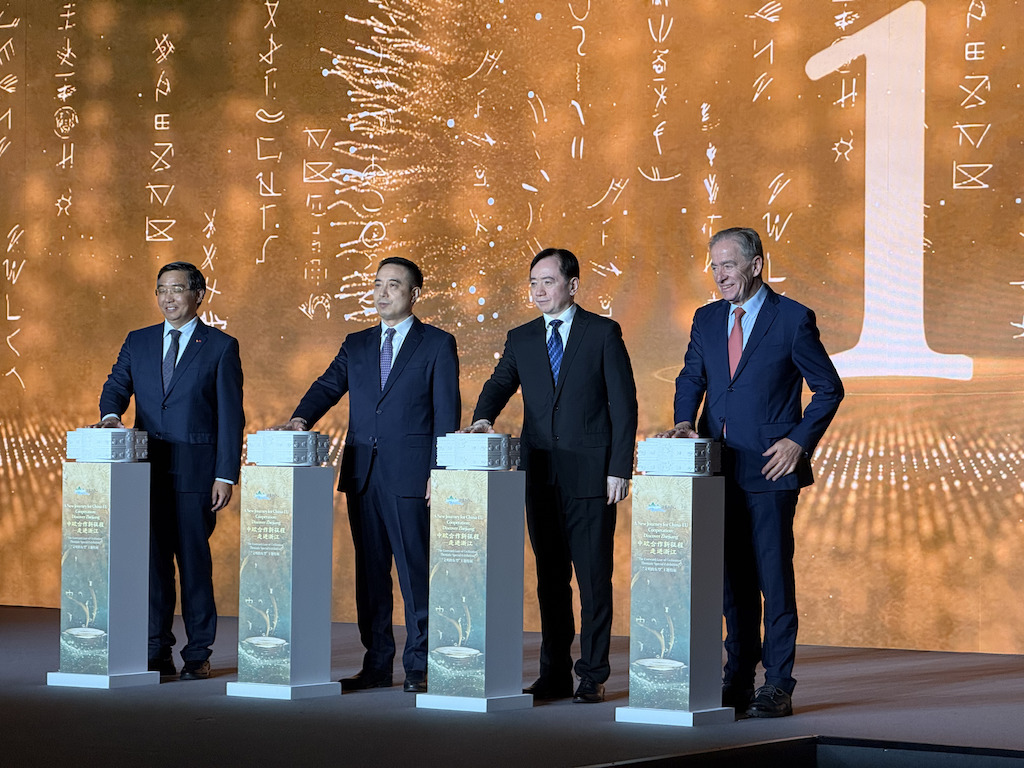
On 11 May 2026, the Mission of China to the EU presented Zhejiang Province’s tourism and cultural heritage at the opening of the exhibition “A New Journey for China–EU Cooperation: Discover Zhejiang” at Tour and Taxis.
The event brought together diplomats and cultural representatives to highlight Zhejiang’s landscapes, heritage, innovation, and contemporary culture. Through live demonstrations and performances, audiences in Brussels were introduced to a destination where traditions remain actively practised.
As part of this broader focus on making the region more accessible for future visitors, H.E. CAI Run, Ambassador of China China to the EU, said: “By expanding visa-free access to around 50 countries, including Belgium and many European partners, China is showing its openness to the world. We want to further deepen our relationship with the European Union through closer cooperation and shared development. Zhejiang Province serves as an important bridge for China–EU exchanges and cooperation, and we welcome European friends to visit and experience a multidimensional China.”
© Travel Tomorrow
Liangzhu heritage as a window into ancient civilisation
One of the central themes of the exhibition was Liangzhu Ancient City, a UNESCO World Heritage site located near Hangzhou, the capital of Zhejiang Province. The archaeological site is more than 5,000 years old and is considered one of the earliest examples of Chinese civilisation. Through videos and visual installations, visitors in Brussels were introduced to Liangzhu’s historical importance and its role in shaping early Chinese society. For travellers visiting Zhejiang, Liangzhu Archaeological Site Park offers museums, excavated ruins, and cultural exhibitions that provide insight into the origins of the region’s history.
The opening ceremony featured fashion and performance to reinterpret this heritage for modern audiences. Models appeared wearing outfits inspired by Liangzhu culture, combining ancient symbols with contemporary design. The performance was created to show how historical references continue to influence modern creative industries in Zhejiang. This connection between heritage and modern culture can also be seen across the province itself, particularly in Hangzhou, where traditional architecture, design studios, museums, and contemporary cultural spaces exist side by side.
© Travel Tomorrow
Master artisans bring Zhejiang’s craftsmanship to Brussels
Zhejiang is known for its strong craftsmanship traditions, which remain an active part of daily cultural life today. To bring these traditions closer to audiences in Belgium, several artisans travelled from China to demonstrate their work live during the exhibition. Their presence allowed visitors to look beyond the finished objects and gain a clearer understanding of the techniques, materials, and time involved in each craft.
Among the artisans invited to Brussels was Li Wei, fourth-generation inheritor of Pingyang lacquerware and founder of the Pingyang Lacquerware Art Museum. Li Wei demonstrated how multiple layers of lacquer are carefully applied and polished by hand to create decorative objects with deep colours and reflective surfaces. The craft has been practised in Zhejiang for generations and remains closely linked to the province’s artistic heritage.
© Travel Tomorrow
Another artisan featured during the exhibition was Jin Jiahong, recognised as a Master of Chinese Arts and Crafts. She presented Hangzhou embroidery, a textile tradition dating back to the Southern Song Dynasty. The embroidery style is known for its delicate stitching techniques, rich colour combinations, and the use of gold and silver threads, including the well-known “one golden thread” method.
© Travel Tomorrow
Traditional woodblock printing was represented by Wei Lizhong, a recognised inheritor of the craft. During the live demonstration, he carved designs into wooden blocks before manually printing them onto paper in front of visitors. Guests could closely follow each stage of the process and, in some cases, even participate themselves.
© Travel Tomorrow
These demonstrations also reflected experiences that travellers can find in Zhejiang itself. Across the province, local workshops, museums, and cultural heritage centres allow visitors to discover these traditional crafts more closely. In some places, travellers can observe artisans at work, while other workshops offer short introductory sessions where visitors can try parts of the process themselves.
Heritage that meets innovation
The exhibition highlighted Zhejiang’s connection between tradition and technology. During one of the performances, a musician played the suona, a traditional Chinese wind instrument known for its powerful sound. In a surprising contrast, a humanoid robot appeared on stage and danced alongside the live music performance, symbolising how Zhejiang combines historical culture with innovation and technological development.
© Travel Tomorrow
Culinary exchange between Zhejiang and Belgium
Zhejiang is known for its refined food culture, where presentation and craftsmanship play an important role in traditional cuisine. Delicate pastries, detailed preparation techniques, and regional tea culture are all part of the culinary experience visitors can discover across the province. During the exhibition in Brussels, this tradition was presented through a live demonstration in which floral forms were carefully shaped from mung bean cake, a traditional Chinese pastry. Alongside this, Belgian chocolates were prepared for guests, creating a cultural exchange between Chinese and Belgian artisanal food traditions.
© Travel Tomorrow
The exhibition underscored Zhejiang’s role as a bridge between tradition and innovation, while reinforcing cultural exchange and cooperation between China and the European Union. It also presented Zhejiang as a dynamic travel destination where culture, heritage, and innovation come together to shape the visitor experience.