What nobody tells you about selling your business
I sold my first company, Pariti, to Tandem Bank almost eight years ago now.
It was a small exit, never publicly announced in terms of numbers.
I took home enough to buy a house, not enough to never work again.
And I think that’s actually the reality for most founders who go through an exit.
The press writes it up as consolidation, as strategy, as success, but for me, the feelings were genuinely mixed.
There was pride. We’d done remarkable things with a tiny team. We secured direct FCA authorisation, built a B2B partnership with HSBC, and created a product people actually used.
But there was also a real sense of loss. Pariti was my baby, and suddenly it wasn’t mine anymore.
If I’m honest, there was frustration too, watching a much bigger organisation with far more resources struggle to move at the pace we’d managed with almost nothing.
What surprised me most was the identity shift. As a seed-stage CEO, you are the company. Every decision, every pitch, every crisis runs through you.
Overnight, I went from founder to employee, stepping into a chief product officer role at a regulated bank.
In many ways, it was a bigger, more serious role, with more resources and broader impact. But I wasn’t the one making the final call anymore. It took a good six months to find my stride and learn how to influence rather than decide.
Exit was not end point
I think one of the biggest misconceptions founders have is that the exit is the end point.
For most of us, especially those whose exits aren’t life-changing, it’s actually a pivot.
In my case, Pariti’s journey didn’t stop. The acquisition gave it a chance to scale in ways we simply couldn’t have funded ourselves, and that was genuinely exciting to see from the inside.
I’d be lying if I said I didn’t have regrets. You look at peers who kept going independently and wonder what might have been.
There were moments where selling felt like an admission of failure, even when everyone around you is saying congratulations. That’s a difficult tension to sit with.
But stepping away also gave me something incredibly valuable. I came out more financially secure, with less existential pressure and with a much broader skill set. More importantly, I had real clarity on what I wanted to build next.
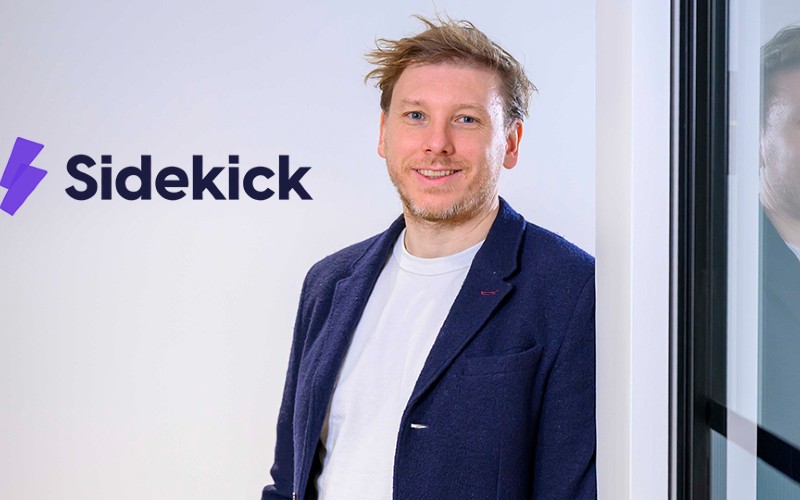
That’s what led me to start Sidekick. It’s a digital wealth manager designed for a generation of professionals who have outgrown entry-level investing apps but aren’t yet served by private banks.
I’d experienced that gap first-hand. You reach a point where your income increases, you might be receiving bonuses or building meaningful savings, and suddenly the stakes feel higher. But the tools and support available don’t evolve with you.
Sidekick is built to solve that. We’re focused on giving people clearer, more confident ways to grow their wealth, combining technology with a more considered, hands-on approach to investing. It’s about helping people move from guesswork to strategy at the point where their financial decisions start to really matter.
£8m raise
That vision has resonated. We recently raised £8m to accelerate our growth, invest further in the product and expand our reach in the UK.
For me, that funding isn’t just about scale, it’s about building something that genuinely improves how people experience managing their money.
I carry everything I learned from Pariti into Sidekick. The build, the exit and the uncomfortable bit in between.
It’s shaped how I think about product, about customers and about what success really looks like the second time around.