President opens Ireland’s Home for Poetry and Heritage
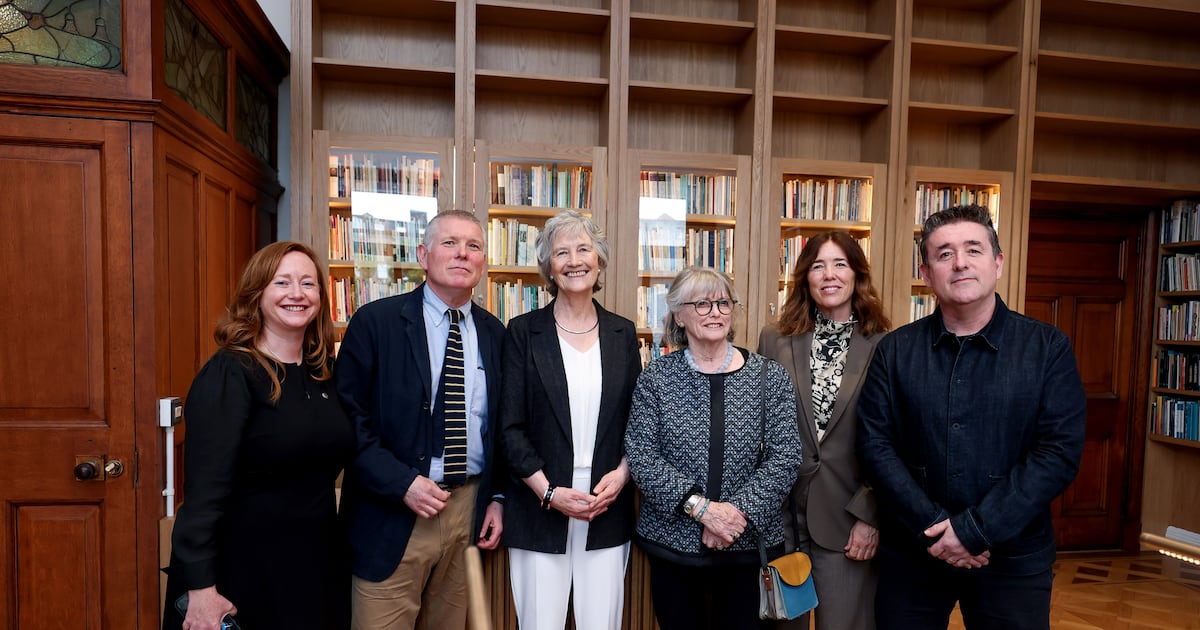
President Catherine Connolly has officially opened 11 Parnell Square, Ireland’s Home for Poetry and Heritage. The landmark €5.5 million conservation and restoration programme was made possible by €3.9 million from the Urban Regeneration and Development Fund (URDF) under Project Ireland 2040. A further €1.55 million was secured by The Irish Heritage Trust and Poetry Ireland from philanthropy and other sources. President Connolly said: “As President of Ireland, I warmly welcome the new life which the Irish Heritage Trust and Poetry Ireland/Éigse Éireann will breathe into this beautifully restored Georgian building, one which already holds almost three centuries of history.“Arts and cultural organisations have so often in the past been marginalised and forced into peripheral and sometimes inaccessible spaces. I am particularly pleased that the newly restored building will over the decades to come be an inclusive space where local communities are welcomed, where stories are shared, and where our past and heritage are woven thoughtfully into the present and the future.”The restoration showcases the substantial conservation of the Georgian facade, the preservation of the historically significant timber-lined Council Chamber, alongside the restoration of original parquet floors. The first floor will house The Seamus Heaney Poetry Library encompassing the late Laureate’s private collection from his study, kindly bequeathed by his family to Poetry Ireland. The poetry library will also house additional collections such as the Austin Clarke Poetry Collection, and a fine contemporary poetry library amassed over the past 50 years.John O’Donnell, chairperson of Poetry Ireland, said: “The opening marks a deeply significant moment for poetry in Ireland. This remarkable building, with its rich, layered past, is now transformed into a living, breathing home for poetry on this island. In partnership with the Irish Heritage Trust, we are proud to have shaped this space that brings poetry into the heart of civic life and will help us in our mission to connect poetry and people. With the establishment of The Seamus Heaney Poetry Library we honour one of Ireland’s greatest poets, while creating a lasting resource for future generations of readers and writers.”*In The Irish Times tomorrow, Claire Fuller tells Niamh Donnelly about her new novel, Hunger and Thirst; Anna Carey writes about how a health scare reminded her of the comforting power of art, a theme in her new novel, Love Scene; Lucy Caldwell writes about how the winter solstice at Newgrange inspired a story in her new collection, Devotions; and there is a Q&A with Juliano Zaffino, whose debut novel The Steps has just been published by Tramp Press.Reviews are Catriona Crowe on The Fallen: Magdalene Laundries and Ireland’s Legacy of Silence by Louise Brangan; Matthew O’Toole on Gordon Brown: Power with Purpose by James McIntyre; Sinéad Gibney on Francesca Albanese’s When The World Sleeps; Claire Hennessy on the best new YA fiction; Houman Barekat on Prestige Drama by Séamas O’Reilly; Kevin Rafter on RTÉ: Saints, Scholars and Scandals by Shane Ross; John Walshe on Weimar: Life on the Edge of Catastrophe by Katja Hoyer; Desmond Traynor on The Left and the Lucky by Willy Vlautin; Neasa MacErlean on Talking Classics by Mary Beard; Helen Cullen on The Things We Never Say by Elizabeth Strout; Edel Coffey on Frida Slattery as Herself by Ana Kinsella; Helena Mulkerns on Upward Bound by Woody Brown; and Roe McDermott on The Nuremberg Women: At the Trial that Brought the Nazis to Justice by Natalie Livingstone.*the European Bank for Reconstruction and Development (EBRD) has announced the three finalists for its 2026 Literature Prize, which celebrates outstanding fiction by authors from the economies where the Bank works, and the translators who bring their voices into the English-language literary landscape.The three titles are: People and Trees: A Trilogy by Akram Aylisli, originally written in Azerbaijani and translated by Katherine E. Young from the Russian translation (Plamen Press); Ice by Jacek Dukaj, translated from Polish by Ursula Phillips (Head of Zeus); and On the Greenwich Line by Shady Lewis, translated from Arabic by Katharine Halls (Peirene Press).The books were selected by an independent jury: Dr Maya Jaggi (chair); Prof Lea Ypi; Prof Chigozie Obioma; and Marek Kohn. *Swift, Vanessa & The Sluttery by Cathy Conlon, published by Savoy Editions, the fiction imprint of the Limerick Writers’ Centre, will be launched this Sunday, May 10th at 3pm in Barberstown Castle Hotel, Co Kildare.Set in 18th‑century London, Dublin and Kildare, the novel follows Esther Van Homrigh, a young woman seeking fortune, favour and a place in the glittering yet grimy world of Georgian society. Her path soon crosses with the brilliant and irascible Jonathan Swift – clergyman, satirist and rising political force, whose dazzling wit unsettles and captivates her in equal measure.*Hilary McCollum, a North of Ireland author and creative activist, will read from her new novel As A Lover and discuss it with Fiona O’Rourke at Keep’er Lit, a free-to-attend, inclusive literature event this Sunday, May 10th, at 2pm in the Hendrick Hotel, Dublin 7*What links Virginia Woolf, Christy Brown, and Hilary Mantel? Beyond their brilliance, each could have been a contender for The Barbellion Prize. This award honours writing that explores the lived experience of chronic illness and disability. Named after diarist W.N.P. Barbellion, known for his reflections on life with multiple sclerosis, it recognises outstanding English-language prose across genres. In 2021, Irish writer Lynn Buckle won for What Willow Says, a moving novel about a deaf child and her grandmother discovering connection through sign language, nature, and myth.The prize was founded by author Jake Goldsmith, inspired while writing his memoir Neither Weak Nor Obtuse (2019). Living with cystic fibrosis, Goldsmith examines how illness shapes perception and highlights literature’s therapeutic and social impact.A two-year hiatus followed the last award in 2023 and the prize was relaunched in 2025. It is now open for submission until September 1st, 2026.*Bealtaine Festival 2026, Ireland’s national festival celebrating the arts and ageing, offers a thoughtfully curated strand of literary events throughout May that brings together leading Irish voices in conversation, reflection and creative practice. At the Project Arts Centre, broadcaster Miriam O’Callaghan joins journalist Susan McKay to discuss her candid memoir Miriam: Life, Work, Everything. Alongside this, Carlo Gébler and Olivia O’Leary reflect on Gébler’s new memoir A Cold Eye: Notes from a Shared Island, 1989–2024.Contemporary questions around storytelling are explored in FAICT OR FAICTION, where writers including Jan Carson and Joanna Walsh examine the influence of speculative fiction in an age increasingly shaped by AI. Standing on the Shoulders of Giants, presented with the International Literature Festival Dublin, sees Phillip McMahon in conversation with Gerry Stembridge on creative influence and artistic lineage.Participation is central to the programme, with a range of workshops designed to support writers at all stages. Lust for Poetry, in partnership with Poetry Ireland, and Finding Your Voice offer in-person opportunities to develop craft, while Write So! with The Stinging Fly provides an accessible online space for both emerging and established writers.For more information and tickets, visit bealtaine.ie.*Children’s Books Ireland will next week call on Government to introduce a permanent school library funding stream as part of Budget 2027, warning that underfunded and understocked school libraries are limiting children’s access to reading. At a briefing for TDs and Senators at Leinster House, the national reading charity will propose annual funding of €68 million to support the purchase of library books for primary and secondary schools, beginning with five books per pupil in 2027 and increasing to 10 books per pupil per year by 2030. New data from CBI’s book-gifting initiative shows that between 2023 and 2026, two-thirds of primary schools and almost half of secondary schools applied for support to stock their libraries. In many cases, schools are relying on donations from parents and the wider community. CBI says the current situation stems from the withdrawal of sustained Government funding for school libraries in 2008.*Bestselling author David Baldacci will be interviewed by Edel Coffey at the Field Room, National Concert Hall Dublin on Monday, July 27th, at 7pm, followed by a Q&A session with the audience. Tickets for the event organised by Eason start at €11.99 and some ticket options include a signed copy of Nash Falls or Hope Rises (which you can collect at the venue on the night). *The Hubert Butler Essay Prize is intended to encourage the art of essay-writing with a European dimension and to expand interest in Butler’s work. There is a prize sponsored by Haus Publishing of €2,500.The title of this year’s essay is: “Poetry makes nothing happen” (W.H. Auden). What impact can high culture make in the real world?The quotation in the essay title is taken from Auden’s elegy for Yeats, written in 1939, just before the outbreak of the second World War. In times of global conflict, there can be an acute awareness of the impotence of art. What impact, if any, can high culture have in a world threatened by disaster?The deadline is July 3rd. For details on how to enter, visit hubertbutleressayprize.com*Two decades ago, from his house on Arran Street East, poet and novelist Philip Casey saw the future. An early adopter of the internet, he set up several websites. One of these, Irish Writers Online, was a working database of writers with an Irish connection. After Philip’s death in 2018 the site was no longer updated. Last year, his cousin Eamonn and I discussed reviving it as a tribute to his memory and his generosity. Philip never sought compensation for his work on the site; it was a gift. And it still is. Irish Writers Online is back as a free resource. Interested writers – whether new to the site or already on it – are invited to send a current listing. For an example of the format, check out the entry for Philip Casey, the site’s begetter and now its well-remembered patron saint. Visit irishwriters.online for guidelines and contact details.*The West Cork Literary Festival, which will be held in Bantry from July 10th to 17th, has unveiled its 2026 programme.This year’s festival will feature three‑day writing workshops, masterclasses, readings, in‑conversation events and an even stronger focus on translated literature. Attendees can also enjoy unique experiences such as a Pop Up Gaeltacht, the annual trip to Whiddy Island, yoga on the lawn of Bantry House, and a refreshing sea swim.Among the authors this summer are Sara Baume, Jung Chang, Jonathan Coe, Paddy Donnelly, Elaine Feeney, Karl Henry, Ashley Hickson‑Lovence, Anton Hur, Charlie Mackesy, Charlotte McConaghy, Dearbhla Mescal, Annemarie Ní Churreáin, Laureate for Irish Fiction Éilís Ní Dhuibhne, Miriam O’Callaghan, Louise O’Neill, Katriona O’Sullivan, Ian Rankin, Jessica Traynor, Sarah Webb, Djamel White and Nussaibah Younis.The festival also remains deeply committed to nurturing a love of literature among young audiences. All events for children and young people are free of charge, offering families an opportunity to explore books, storytelling, and creativity together with writers such as Sarah Bowie, Paddy Donnelly and Sarah Webb.westcorkmusic.ie/LFProgramme