Environmental law changes 'possible' to expedite resource projects: government House leader
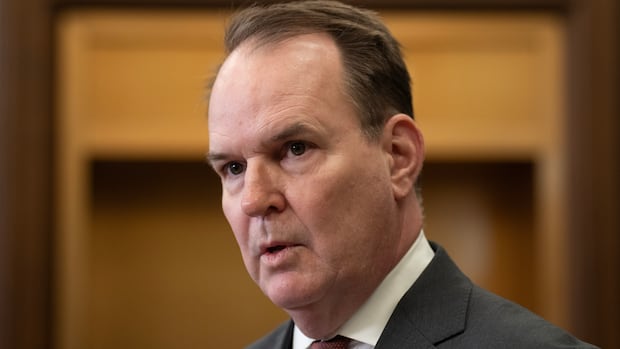
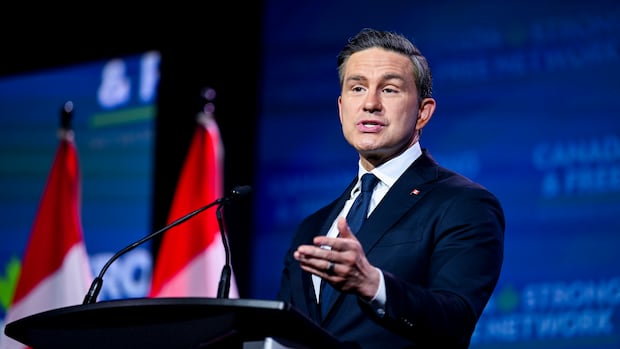
The government House leader confirmed on Thursday plans to change regulations and legislation in order to speed up the approvals of major resource projects. The confirmation comes following a report from CBC News, in which federal sources said the government plans to present proposals aimed at speeding up the approval process to fulfill the Liberal campaign promise of approving projects within a two-year timeframe. When asked if new legislation was coming, government House leader Steve MacKinnon said: “It’s possible.”"We have a lot of work to do to continue progress on reforming the regulatory process — make sure everyone is heard, but also make sure they go faster. I don't think that's a secret," MacKinnon said on Thursday.Two senior government sources told CBC News the government is considering amending the federal Impact Assessment Act and the Fisheries Act, as well as other potential legislative changes.These changes are part of a larger effort from the government to streamline the regulatory framework for all natural resource and federally assessed projects. CBC News is not naming the sources because they were not authorized to speak publicly about internal conversations. Heading into Thursday's cabinet meeting, reporters asked Prime Minister Mark Carney about the proposed changes. "We're moving forward at speed, but we're doing it in the right way," Carney said. WATCH | Prime Minister asked about CBC's reporting:On Thursday, Prime Minister Mark Carney was asked why his government hasn't yet applied the full extent of C-5 — a bill allowing lawmakers to overrule regulations to fast-track projects of national interest. 'The important thing is that we respect the law and the designation requires consultations in advance,' Carney said.Conservative Leader Pierre Poilievre said Canadians have been hearing for a year about how the Liberal government will remove the regulatory hurdles standing in the way of getting pipelines, mines and other resource projects built faster. "There's only one thing in the way: him," Poilievre said, referring to Carney. Speaking in the House of Commons, the Opposition leader added that what is needed is less policy and legislation."We need him to get out of the way, get rid of the industrial carbon tax," Poilievre said. "Get out of the way. Grant a permit for a pipeline to the Pacific. Get out of the way and legalize shipping oil off the west coast." The full scope of the proposed changes has not been shared with CBC News. The sources say there will be consultations ahead of major changes.However, Carney now wields a majority and any legislative changes are likely to pass through the House of Commons. In the past, changes to environmental legislation have been contentious, including amendments the Conservative Harper government made to one of the country's oldest laws, the Navigable Waters Act. WATCH | Industry says approvals take too long in Canada:The Carney government is considering changes to speed up approvals for pipelines and other major projects. The move is drawing criticism from environmental groups and support from parts of the energy industry.Canada remains a difficult place for oil and gas companies to do business, said Shannon Joseph, the chair of Energy for a Secure Future."We need to have a regime that is predictable, and that people can know that if they invest in Canada they can finish their projects and make a return," Joseph said. In recent years, Canada has fallen behind its peers in GDP per capita growth, which some blame on the country's bloated regulatory system. "Having a long timeline adds costs, it adds capital costs, interest costs, and it makes us less competitive," said Heather Exner-Pirot, a senior fellow and director of energy, natural resources and environment at the MacDonald Laurier Institute. Multiple sources spoke to CBC about the motives behind the changes the Carney government is proposing to introduce.The Building Canada Act, or Bill C-5, was the first piece of legislation the Carney government successfully passed through Parliament. It enabled the federal cabinet to create a list of nation-building projects.It was a temporary measure with a five-year sunset clause. Sources familiar with the government's thinking say the Liberals want to introduce new measures that are permanent and could be applied to all projects. Concerns have also been raised that Bill C-5 was too broad and rushed and risks exposing the federal government and proponents to court challenges. As some researchers have noted, the law contains a legislative tool known as a Henry VIII clause — named for the autocratic king — which would let cabinet exempt projects from regulations and laws. As one source put it, the bill uses a "sledgehammer" to crack a nut.WATCH | Ottawa planning to speed up approvals, sources say:Mark Carney is preparing sweeping changes to speed up approvals for natural resource projects, including pipelines, according to federal sources. A new framework could be announced this week.The new changes set to be proposed will apply equally to all projects, not just those handpicked by government. A federal source told CBC News on Wednesday that Indigenous consultation and robust environmental assessment will still be part of the process, but that environmentalists may not be pleased."Government officials have already said that they expect environmental groups to not be happy with the changes," said Anna Johnston, a staff lawyer with West Coast Environmental Law. "And we've been seeing the steady rolling back of environmental safeguards since this government came into power."Johnston's fear over the next decade? Canada will see massive resource projects getting approved with minimal regulatory oversight, she said. "We know that when we deregulate — to the extent that we're cutting corners and we're not taking that careful look at the risks of projects — that Canadians just end up being on the hook both healthwise and in terms of the cleanup costs," she said.