Russia’s Grinding War in Ukraine
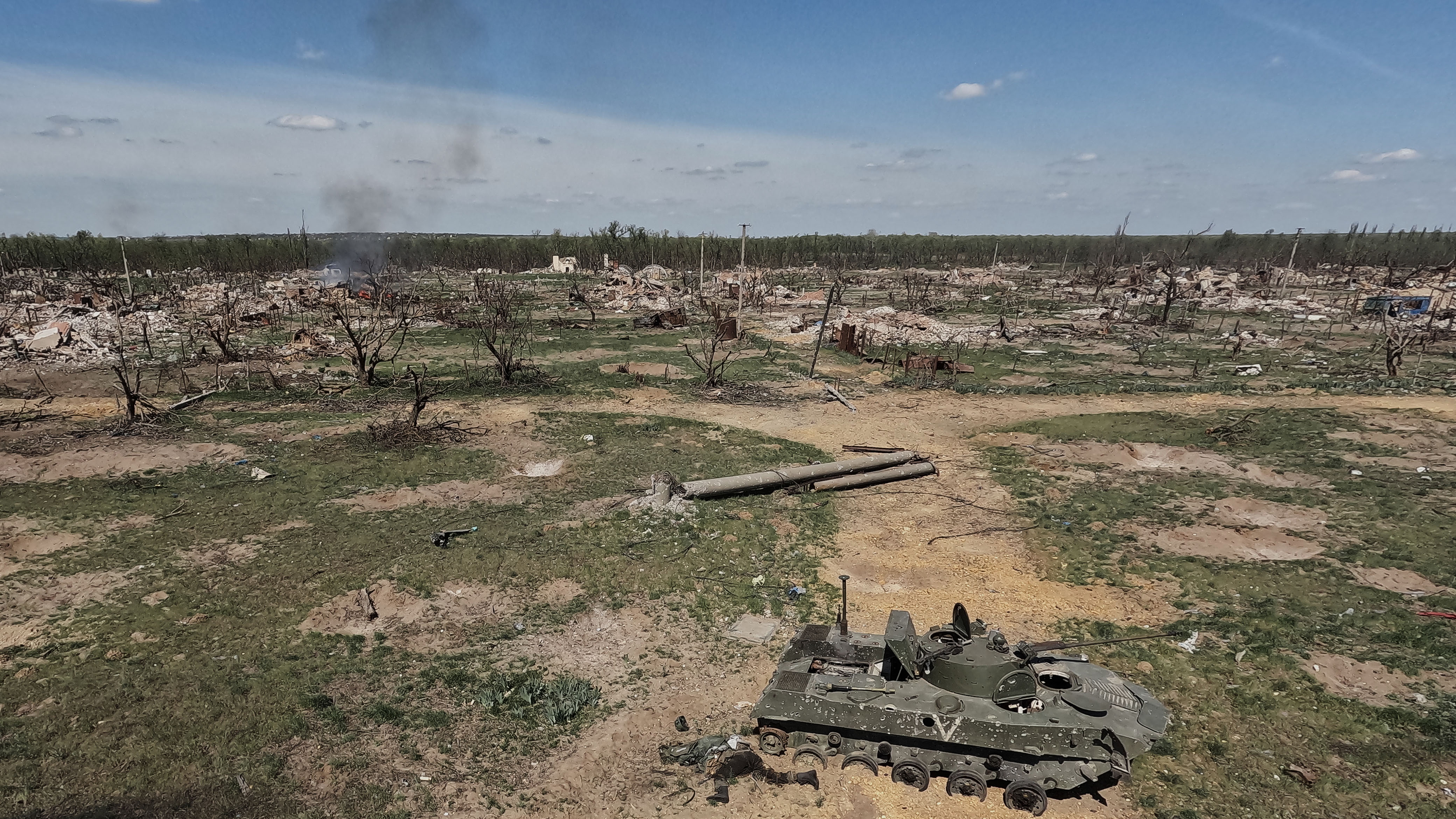
Russia’s space industry, which was once a global leader, has fallen to historically low levels. Roscosmos, the state corporation in charge of the Russian space program, carried out only 17 orbital launches in 2025, compared to 193 orbital launches by the United States (led by SpaceX) and 92 by China.44 Russia’s space industry has also suffered a range of embarrassing incidents, including an accident in December 2025 that caused severe damage to the launchpad Russia uses for sending astronauts and cargo to the International Space Station. In 2018, a Soyuz rocket carrying two astronauts failed as it headed to space; the emergency abort system carried the two to safety. In 2022, a Soyuz spacecraft docking at the space station sprang a leak after it was apparently hit by a meteorite. Russia’s last successful robotic planetary science mission was four decades ago, while the United States, China, Europe, and some others continue to conduct them. During its most recent attempt in 2023, the Luna-25 spacecraft crashed into the Moon as it prepared for landing.45To help prevent a further deterioration of Russia’s economy and defense industrial base, Russia has leaned heavily on China. China-Russia trade reached nearly $250 billion in 2024, up from $190 billion in 2022.46 China has been Russia’s top trading partner since 2014, with its share of Russia’s foreign trade increasing from 11.3 percent in 2014 to 33.8 percent in 2024.47 In addition, Russia relies on oil exports to China, which now make up about 75 percent of China’s imports, compared to a pre-2022 average of between 60 and 65 percent.48In the defense sector, China has significantly increased exports to Russia of “high-priority items,” a set of 50 dual-use goods that include computer chips, machine tools, radars, and sensors that Russia needs to sustain its war efforts.49 While Russia lacks the capacity to produce many of these goods in sufficient quantities, China’s massive manufacturing sector can produce a number of them at scale.50 Chinese exports helped Russia triple its production of Iskander-M ballistic missiles from 2023 to 2024, which Russia has used to pound Ukrainian cities.51 In addition, China accounted for 70 percent of Russia’s imports of ammonium perchlorate in 2024, an essential ingredient in ballistic missile fuel.52 China has also provided Russia with drone bodies, lithium batteries, and fiber-optic cables—the critical components for fiber-optic drones used in Ukraine, which can bypass electronic jamming.53 While Russia still possesses nuclear weapons and a large military, it does not measure up as a great power in virtually any category of military, economic, or science and technology indicators.54 Russia has suffered the highest casualty rate of any major power in any war since World War II, and its military has performed poorly, with historically slow rates of advance and little new territory to show for its efforts over the last two years.For comparison, it took the Red Army 1,394 days after Operation Barbarossa (the German invasion of the Soviet Union) to make it to Berlin during World War II.55 Russia hit that mark (1,394 days) on December 19, 2025, but had barely made it to Pokrovsk, over 500 kilometers from Kyiv. Russia will likely face a major challenge from the return of tens of thousands of soldiers, including many violent offenders and individuals who have faced traumatic combat experience. Russian military veterans that have returned from fighting in Ukraine have already perpetrated a growing number of violent crimes—including murders—against Russian civilians.56Russia’s wartime economy also faces serious problems. Manufacturing exports and high-tech goods are limited, and Russia will likely continue to fall behind in emerging technology. There is little chance that Russia will reintegrate into global trade and the financial system in the near term.Some data suggests that there has been a major decline in popular support inside Russia for the war. According to one poll, for example, 57 percent of Russians in May 2023 believed that most people in their inner social circle supported the war, compared to 39 percent who opposed the war. By October 2025, those numbers flipped, with 55 percent of Russians who believed that most people in their inner social circle opposed the war, compared to 45 who supported the war.57Still, President Putin remains undeterred by the high casualty and fatality rates, and Russia’s economic downturn is unlikely to bring the Kremlin to the negotiating table—at least on terms that would be acceptable to Ukraine or Europe. Putin may be willing to accept the high casualty and fatality numbers because most of these soldiers are from such regions as the Far East and North Caucasus—and not politically vital areas for him, such as Moscow and St. Petersburg.58 In addition, President Putin and the Russian government have been adept in conducting an aggressive disinformation campaign that has convinced some policymakers, including in Washington, that Russian victory is inevitable, despite substantial evidence to the contrary. Russia boosted its funding for state-run media in 2026 by roughly 54 percent, indicating a commitment to intensified information warfare.59 The Kremlin’s propaganda machine is designed to sustain domestic support for the regime and its war against Ukraine, as well as to convince key foreign audiences that the war has been successful and needs to continue.Yet as this analysis highlights, Russia has several vulnerabilities that the United States and Europe can exploit. Even with recent transatlantic tensions over Greenland and other issues, cooperation between the United States and Europe is possible.The first vulnerability is Russia’s economy. Increased sanctions against Russia’s energy sector—including sanctions against any country that buys Russian oil—would likely cause major pain.60 Energy sanctions could be combined with sanctions against other Russian exports, such as minerals, metals, agricultural goods, and fertilizers. Some members of Congress have suggested putting up to 500 percent tariffs on imported goods from countries that buy Russian oil, gas, uranium, and other products.61Russia’s “shadow fleet” is also vulnerable to action by the United States and European countries. The fleet is used to circumvent Western economic sanctions on Russian oil transported by sea. Many of the ships sail under the flags of other countries—such as Comoros, Gabon, Liberia, the Marshall Islands, and Panama—and sell oil to buyers in such countries as India and China.62 U.S. military and intelligence agencies could assist Ukraine and European navies by providing additional intelligence on Russian illegal shipping to better target these ships and place more diplomatic pressure on countries whose flags they use. Several European countries, such as France, have stepped up seizures of Russia’s shadow fleet.63A second Russian vulnerability is the blood cost of a protracted war. As this analysis has outlined, Russia has suffered massive numbers of fatalities and total casualties. If Moscow continues to drag its feet on peace talks, the United States and Europe should provide more advanced and longer-range weapons, mines, engineering capabilities, and other matériel to Ukraine. U.S. aid can come through the Prioritized Ukraine Requirement List, which includes packages of equipment and munitions provided by the United States, purchased by European countries, and coordinated by NATO. The United States and Europe could also provide additional training for Ukrainian corps-level commanders and staff.Despite Russian challenges, the great irony is that the United States and Europe have failed to fully wield the economic or military cudgels. Without greater pain, Putin will drag the talks out and keep fighting—even if it means millions of Russian and Ukrainian casualties.Seth G. Jones is president of the Defense and Security Department at the Center for Strategic and International Studies in Washington, D.C., and author, most recently, of “The American Edge: The Military Tech Nexus and the Sources of Great Power Dominance” (Oxford University Press). Riley McCabe is an associate fellow for the Warfare, Irregular Threats, and Terrorism Program at the Center for Strategic and International Studies (CSIS).Thanks to Mick Ryan for his review of an earlier draft and his excellent comments, as well as Erin Oppel and Alex Margolis for their help with research assistance.This brief was made possible through general support to CSIS. No direct sponsorship contributed to this brief.


Comments (0)