Bolivia’s Salar de Uyuni Salt Flats Hosting New Film Festival in May
A new film festival is launching against the stunning backdrop of ’s renowned salt flats with Bolivian filmmaker (“Tu Me Manques,” “Sexual Dependency”), tapped for the position of artistic director.
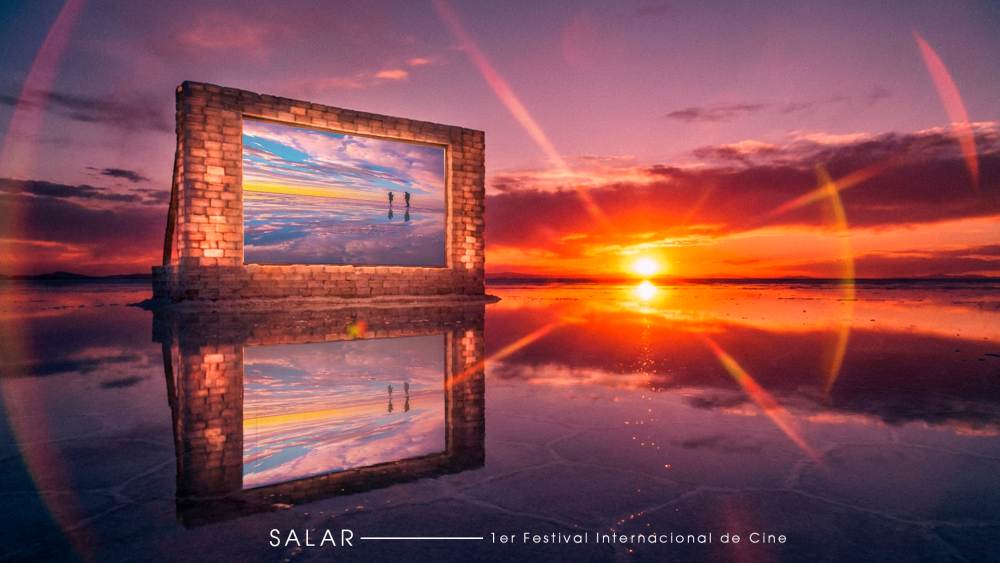
The inaugural Salar International Film Festival (SalarFF) kicks off May 28-31, staged entirely on the 3,861 square mile expanse of pure white salt where rains transform the surface into a massive mirror reflecting the sky. Aside from its famed “world’s largest mirror” effect, its other highlights include the cactus-studded Isla Incahuasi and the haunting Train Cemetery. Beyond the flats, the high-altitude desert reveals lagoons, geysers and striking, otherworldly rock formations.
Programmed under the inaugural theme “Mirror of the Soul,” the festival opens with Dolores Fonzi’s “Belén,” winner of the Goya for in the Ibero-American Film at the 40th Premios Goya, and shortlisted for an Interional Feature Film Osczar at the 98th Academy Awards.
Martín Boulocq’s documentary “Criminal Body” (“Cuerpo Criminal”) will close the festival, marking its Bolivian debut after its world premiere at the Malaga Film Fest in March.
The non-competitive showcase screens six recent international features that have garnered key prizes at Sundance, Berlin, San Sebastián and other A-list festivals, with titles from Argentina, India, Venezuela, Paraguay and Brazil.
Masterclasses will be led by prominent international guests, which include cinematographer Oren Soffer, named one of Variety’s “10 Cinematographers to Watch” in 2024, who shot Gareth Edwards’ Academy Award-nominated “The Creator” and recently wrapped Adam Wingard’s A24 feature “Onslaught.”
Also giving Masterclasses are Bolivian-American filmmaker Elle León Nostas, founder of Aymara Films and Aymara Interactive, whose Aymara Films is among the production companies behind Alexander Ullom’s “It Ends,” a SXSW 2025 critical breakout acquired worldwide by Neon for theatrical release in 2026 and Paraguayan producer Sebastián Peña Escobar, whose latest film, Marcelo Martinessi’s “Narciso,” snagged the Fipresci Prize in the Berlinale Panorama section in February.
A festival-wide short film competition will challenge accredited attendees to create original films – shot entirely on location at the Salar – in just four days. The winning short will be projected directly onto a screen built on the salt desert.
The winning short will be projected on a screen built on the salt desert. Courtesy of the Salar de Uyuni Film Fest
Across the same four days, the program will feature roundtables, panels and curated sessions developed in close collaboration with the Indigenous communities residing around the salt flat – centering their rhythms, knowledge and presence as core to the experience.
“Our main objective is to make the Salt Desert and Bolivia visible to the world through cinema,” said Bellott, adding: “We want to make our cinema, industry, locations and culture visible to the world.”
“In a place where the sky and the earth become one, SalarFF emerges with a perspective that invites us to see ourselves not only as Bolivians in isolation, but also in relation to others—to all perspectives, front and back, from within and outward.”
SalarFF is presented by Una Gran Nación, the Bolivian cultural-pride and content collective, in partnership with HidalgoCorp, the four-decade-old Bolivian hospitality and tourism group whose Palacio de Sal Hotel anchors the Uyuni region. The festival is organized in collaboration with Bolivia’s Vice Ministry of Sustainable Tourism, Culture, Folklore and Gastronomy alongside private partners.
Rodrigo Bellott Credit: Sebastían Ulloa