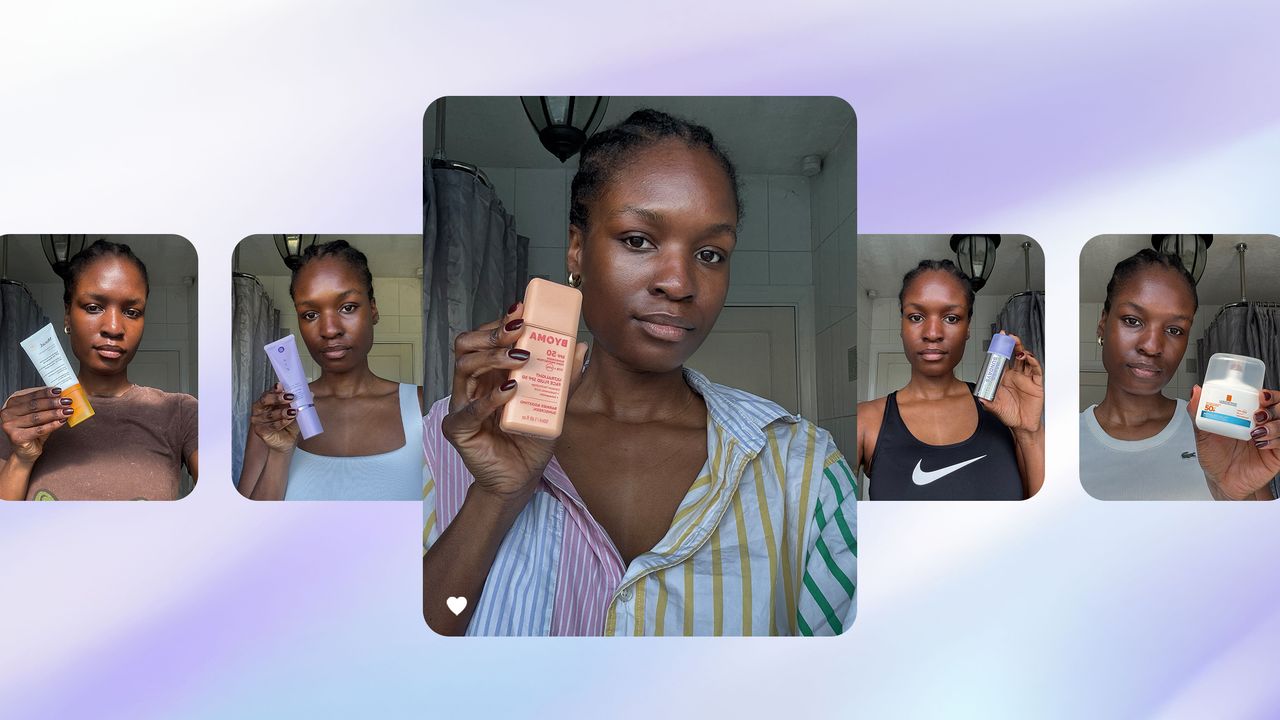
7 Best Sunscreens for Dark Skin That I've Tested For No White-Cast
“Honestly, I can’t really complain about this product, especially for the price. Perhaps I should mention that there is a slight tackiness to it that no amount of rubbing in will get rid of, but if you just leave it to dry down for a second, before applying foundation, then you’ll be good to go.”Why I love it: "Most sunscreen formulations tend to lean more towards the fluid side, but we can’t forget about the creams. This one from RéVive took five years to perfect, and it is just gorgeous.It is definitely the thickest sunscreen that I’ve tested which I think will work really well in the winter months – yes, we are wearing sunscreen even in winter. That said, even though it is thick, it melted into my skin so effortlessly and feels very lightweight on the skin. My skin felt so moisturised and hydrated which, once again, will come in handy in the winter months when our skin is usually dying of thirst. I know mine always is."On the day I tested this sunscreen, I went into town and stopped by a couple of events where I bumped into a make-up artist friend of mine who literally stopped me to ask what base I was using because my skin was glowing. I very smugly replied that it was just this sunscreen with some concealer under my eyes and some blush on my cheeks – which the sunscreen didn’t disturb.“Be prepared to pay a steep price for this one, but that £100 is what you have to pay for a product as luxurious as this is.”How to choose the best sunscreen for dark skin?Don’t know where to start when picking your sunscreen for dark skin. First, look at the SPF level. Per Sumayah Taliaferro, MD, a board-certified dermatologist at Atlanta Dermatology and Aesthetics, SPF (or sun protection factor) is just a measure of how well your sunscreen will protect your skin from the UV rays. Most dermatologists would recommend that you use SPF 30 or above, but in some cases, the ideal SPF level depends on what you’re doing and where you are. “Any broad-spectrum SPF 50 with UVA and UVB protection is essential” reaffirms Dr Dunne.“For darker skin, texture and finish matter – as traditional mineral sunscreens can leave a visible white tone. “The primary challenge for dark skin is the white cast left by certain UV filters,” Dr Dunne says.Chemical formulas:These use ingredients like tinosorb S, avobenzone, octisalate, and oxybenzone. They work by absorbing UV rays and converting them into heat. Because they are organic compounds, they typically rub in completely clear.Tinted mineral formulas:Traditional mineral filters, zinc oxide and titanium dioxide are physically white. "Tinted sunscreens containing iron oxides offer an added advantage: protection against visible light, which drives conditions like melasma and hyperpigmentation.”Hybrid formulas:These combine the gentle effect of minerals with the transparency of chemical filters.As for ingredients and formulations to avoid? That would be the below.Non-Nano Zinc/Titanium:Unless tinted, "non-nano" physical blockers have larger particles that sit on top of the skin, often leaving a white, grey or purple cast.Alcohol-Heavy Sprays:While they dry quickly, high alcohol content can overly dry skin, especially for those with conditions like eczema, which is common across all skin tones.Lastly, look at the product type. These days, you can find sunscreens in a variety of forms and consistencies from powders to creams to sprays. The type of sunscreen you choose all comes down to personal preference, as there are pros and cons that come with each. A lotion, for example, will give you the most even spread, as stated by Dr. Taliaferro, but some lotions can be messy, runny, or oily when left in the sun.Sunscreen sprays, on the other hand, tend to be less messy in comparison to lotions, and they come in handy on days when you need to reapply your sunscreen over makeup or other product that might be sitting on your face. That said, if you’re using a mist, you also run the risk of not covering the entire surface area of your face or body with the right amount of product.“With sunscreen sprays and mists, extra care must be taken to rub in the product to ensure adequate coverage and to not inhale the product,” Dr. Oliver explains. “I therefore recommend that those choosing to use sprays avoid directly spraying onto the face or during windy conditions.”Sticks are also handy if you want a non-messy application. “Sunscreen sticks require multiple passes over the same area followed by rubbing it into the skin to make sure you benefit from the level of SPF listed on the bottle,” she adds. “This also makes it less likely that you’ll miss a spot!”READ MORE: The best scalp sunscreens I've tried.Why is it important for people of every skin colour to wear sunscreen?When it comes to the sun, UVA and UVB rays do not discriminate. “UV radiation causes cumulative DNA mutations. While melanoma is less common in darker skin, it is often diagnosed at a later, more dangerous stage,” Melanie explains. “Let’s also not forget melanin slows down creasing and wrinkling, but UV rays still break down collagen and elastin, leading to leathery skin texture and sagging over time.”When applying your daily sunscreen the two finger rule is a guide for a reason as Melanie shares – who has worked with the likes of Victoria Beckham and Joan Smalls – that most people under-apply, effectively turning their SPF 50 into an SPF 15. And don’t forget to reapply throughout the day which can seem really annoying but when you factor in that filters break down after 2 hours of direct sunlight or sweating you really have no choice. And you can’t use wearing make up as an excuse as there are many different types of sunscreens out there that can help combat this - i’m talking sunscreen sticks, mists and powders.But remember prevention is only half the story. At Dr Dunne’s clinic Montrose, they do mole mapping with a specialist consultant using total body photography and dermoscopic tracking to help detect subtle changes, leading to earlier diagnosis of skin cancer which improves outcomes. Melanie also reminds us to check the palms of the hands, soles of the feet, and under the fingernails. “ When skin cancer does occur in dark skin, it frequently appears in areas with less pigment that people forget to check,” she says.How often should I reapply sunscreen?“Sunscreen lasts an average of two to three hours, so you should reapply every two to three hours when in the sun,” says Dr. Taliaferro. If you’re wondering how much sunscreen to apply, dermatologists recommend the two-finger rule for the face. “Draw the sunscreen out on your index and middle finger, roughly about half a teaspoon, or if easier, try for around a nickel-size amount,” Rachel Nazarian, MD, a board-certified dermatologist at Schweiger Dermatology Group in New York City, previously told Glamour. And don’t worry, sunscreen does not prevent tanning, so lather up.READ MORE: The best sunscreens for mature skin.Meet the experts:Brittany Oliver, MD, a board-certified dermatologistSupriya Rastogi MD, a board-certified dermatologist at Schweiger Dermatology GroupPaula Bourelly, MD, FAAD, a board-certified dermatologistSumayah Taliaferro, MD, a board-certified dermatologist at Atlanta Dermatology and AestheticsMaryam Safaee, MD, a board-certified dermatologistDr. Kenneth Mark, MD, a board-certified dermatologist