RFID, Pay-By-Plate, And Mail Tolls Are Easier Than Cash, But Can Create Big Headaches
When it comes to famous Assyrians who have left their mark on the modern world, Capt. John Yossarian, the World War II bombardier from Joseph Heller's "Catch-22," certainly stands out. And so does Ashurbanipal, the ancient king of the Assyrians, under whose reign the first toll road was deployed, in the seventh century B.C. The two come together today since a key benefit of toll roads is that they're supposed to help people move faster, but there's a catch: Toll roads can then attract more drivers who want to take advantage of that advantage, which slows things down.
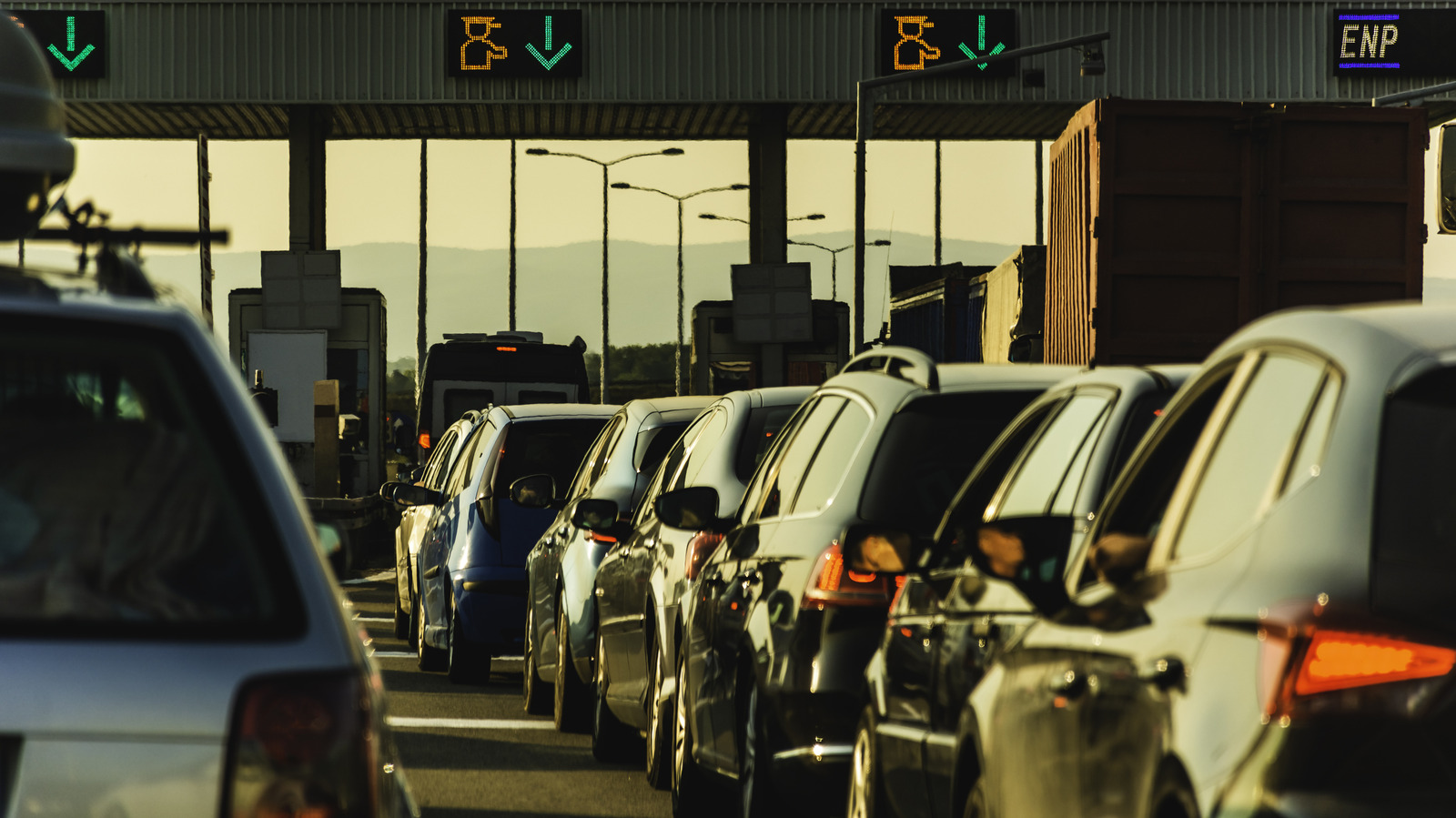
Automated tolling systems are one solution to that issue, but they have their own set of potential issues. These systems can use RFID (radio-frequency identification) chips or license-plate readers to capture vehicle ownership information and bill the driver — greatly reducing how long it takes to get through a toll station. Sure, you may have to slow down a bit to give the system time to read your chip or plate, but it's still much quicker than bringing a vehicle to a stop, interacting with an attendant, fishing out your credit card or cash, and completing the transaction. In fact, an all-electronic tolling system can handle more than five times as many vehicles as a manual-only setup in the same amount of time.
As a result, people using transponders can often pay less as a reward, which is great for them, but it can seem unfair to others. Of course, this can tilt the other way if you're in a rental car, which can come with additional costs, such as when Hertz AI charged a family $195 even after an employee found no damage to their returned car.
Automated tolling can lead to higher costs and more hassles
Although RFID setups and license-plate readers are often used together, each actually has its own issues. For instance, there have been occasions when license plate readers can't tell the difference between the numbers on a plate. A typical RFID chip can also contain personal data that you don't want to be public knowledge, and that data can be easily intercepted by hackers, since the chips can be read from as far as 98 feet away, and there is no way to be sure what the data captured by license-plate readers is ultimately used for — or who's collecting it. In some situations, police license plate scanners have even been streaming driver movements directly onto the internet.
Money-wise, RFID systems can eliminate the cost of toll booth attendants and associated expenses, lowering overall outlays, but they often require drivers to carry an account balance from which tolls are deducted. If the setup requires mailing toll bills to drivers, the total costs of the tolling process can be higher than with RFID or manual systems. This is because companies have to pay for expenses connected to getting the bills in the mail as well as waiting for payment – as opposed to it being automatically deducted from their accounts when the RFID chip is detected.
Certain driving scenarios aren't necessarily accounted for with automated tolling, either. Forget to change your address with the DMV, and you may not get the bills on time, leading to late charges and/or a possible jail time. Michigan is a case in point: Skip out on a toll in the Mitten State, and state law says you could face up to 30 days behind bars — on top of a fine of up to $500.
Rental cars can push toll prices even higher
Driving a rental car can also push up your outlay for tolls. Some may already come with a transponder right from the rental company, but it's another one of common car rental scams to avoid. The reason is that, in addition to adding the cost of the tolls to your bill, which seems appropriate, rental car companies will also often add a daily "convenience fee" for using them.
Budget Car Rental, for one, will charge you an extra $6.95 for every day during which you use the transponder, capping out at $34.95. Hertz ups the ante with its supposedly all-inclusive PlatePass, where you pay a flat daily rate that gets you through an unlimited number of tolls. The hitch here is that this fee — which Hertz says varies by state — can cost you more than if you paid the tolls yourself. Some sources report that PlatePass can set you back some $28 per day. Further, despite non-rental drivers often paying discounted rates for using a transponder, Hertz will bill you for the highest possible cash rate, with no discounts, for every toll, then hit you with another $5.95 "convenience fee" for every day you use the pass.
Prefer opting out? If you drive on a road with electronic tolling anyway, some rental companies such as Hertz will hit you with the maximum cash price of the toll along with an undisclosed administrative fee and, separately, another catch-all category for cost.