Donald Trump needs reality check on his Iran war
“Iran can’t get their act together. They don’t know how to sign a non-nuclear deal. They better get smart soon! President DJT,” Trump warned in his post, alongside an AI-generated meme of himself holding a gun and the tagline: “NO MORE MR NICE GUY.”
Trump’s social media message came last Thursday, just a day before he informed Congress that a key May 1 deadline his administration faces to secure congressional approval for the US-Israel war on Iran no longer matters because of the ongoing ceasefire with Tehran.
By law, under the 1973 War Powers Resolution, a US president must receive Congress’ approval within 60 days of notifying politicians of military action or else cease hostilities.
The law, while designed to ensure congressional oversight of military action, is one that, over decades, has been repeatedly challenged, reinterpreted, and at times bypassed by successive administrations.
READ MORE: Jewish academics call for unity to fight racism in wake of Golders Green stabbings
In the case of the war on Iran, that 60-day deadline expired on Friday and Trump, along with US defence secretary Pete Hegseth, have both challenged the law, arguing that the ongoing yet fragile ceasefire had effectively paused the clock on the deadline.
“There has been no exchange of fire between United States Forces and Iran since April 7, 2026. The hostilities that began on February 28, 2026, have been terminated,” Trump wrote in a letter to congressional leaders.
Needless to say, Trump’s interpretation of the law has not gone down well with Democrats, who argue that the law doesn’t allow for such a stop, noting that American forces remain deployed.
“That’s bullshit,” Chuck Schumer, the Democratic minority leader in the Senate, posted in response to the news.
“This is an illegal war, and every day, Republicans remain complicit and allow it to continue is another day lives are endangered, chaos erupts, and prices increase, all while Americans foot the bill.”
Jeanne Shaheen, the ranking member of the Senate’s armed services committee, agreed.
“President Trump declaring the war with Iran ‘terminated’ doesn’t reflect the reality that tens of thousands of US service members in the region are still in harm’s way, that the administration continually threatens to escalate hostilities or that the Strait of Hormuz remains closed and prices are skyrocketing at home,” Shaheen wrote.
“President Trump entered this war without a strategy and without legal authorisation and today’s announcement doesn’t change either fact.”
But it’s not just Democrats who are angry and bringing pressure to bear. Some Republican politicians having already broken ranks and are challenging the president’s authority to keep waging his increasingly unpopular conflict.
John Curtis, a first-term Republican senator from Utah along with two others, Rand Paul of Kentucky and Susan Collins of Maine, broke ranks last week to vote with all but one Democratic senator on a resolution directing the administration to remove American forces from the Iran conflict. The measure nevertheless failed to advance in the Republican-controlled Senate.
“As we reach this 60-day mark, it is time for decision-making from both the administration and from Congress,” Curtis was cited by the Financial Times (FT) as saying, adding he was engaged in “thoughtful discussions” with fellow senators and the White House on a “path forward that honours our respective constitutional roles”.
But as the war enters its third month, the wrangle and questions over the interpretation of the War Powers Resolution is only one of many over the direction the war is taking.
At home in the US, a number of polls have made it abundantly clear that this is an unpopular war among Americans.
One poll in particular has hit a raw nerve. According to a Washington Post-ABC News-Ipsos poll, “amid growing economic pain and fears of terrorism as a result of the military campaign, Trump’s war in Iran is as unpopular among Americans as the Iraq War during the year of peak violence in 2006 and the Vietnam War in the early 1970s”.
To put this in context, just two months after Trump launched operations in Iran, 61% of Americans now believe the mission was a mistake. George W Bush’s war in Iraq reached similar levels of opposition, but it took three years, not two months.
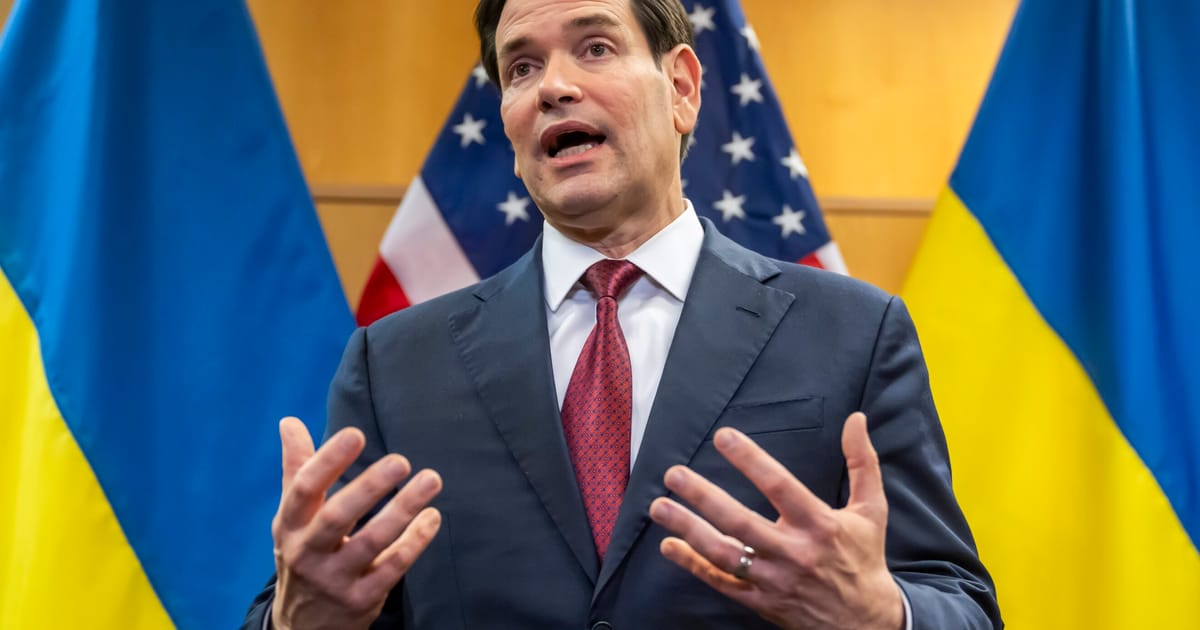
US President Donald Trump speaks about the conflict in Iran in the James S. Brady Press Briefing Room of the White House on April 6, 2026, in Washington, DC. (Photo by Brendan SMIALOWSKI / AFP via Getty Images).
As The Washington Post’s assessment also highlighted, it took six years for American opposition to the war in Vietnam to reach 61%, and that was during an era in which there was a military draft and casualty rates that were far worse than they are over Iran.
Americans, it seems, are waking up to the stark reality of what the Iran war has foisted upon them and the extent to which it is also punishing their wallets.
They are already paying more for petrol and air tickets as well as some services as more businesses start adding a fuel surcharge to their prices. Annual inflation rose to 3.3% in March, up from 2.4% in February.
“There’s not a delicate way to say it: the situation for the United States right now is not good,” was how Melanie Sisson, a senior fellow at the Brookings Institution, summed it up to CNN.
“Politically, gas prices are already bad and getting worse, which is unhelpful for the Trump administration. And diplomatically, Trump looks weak. He seems now to understand that resuming fighting will cost the United States a lot and isn’t very likely to produce the outcomes he wants – on the nuclear issue, on the strait, on regime change,” Sisson added.
It's a grim assessment, but one shared by many observers, some of whom also believe that the Iran war has finally exposed the true shallowness of Trump’s strategic thinking and that of his administration.
Talks with Iran about a deal to end the conflict have so far shown little promise. The key metrics of success described at various points by Trump – keeping Iran from possessing the fuel to make a nuclear weapon, helping the Iranian people topple a government much of the populace despises and reopening the Strait of Hormuz – remain at best elusive.
Among those who believe the war has well and truly exposed Trump’s lack of strategic nous is Nicholas Grossman, professor of international relations at the University of Illinois and an expert on US foreign policy.
“There’s a persistent myth that president Donald Trump knows what he’s doing. That his actions are strategic, rather than impulsive,” says Grossman.
“That he’s ‘playing 4D chess’ – anticipating, manipulating and generally outthinking opponents. That anything he breaks he can put back together – on terms more favourable to himself – or will keep operating regardless. So don’t worry,” Grossman added, in a recent article for MS NOW, the American online news channel.
Grossman argues that this still prevalent view has reached its limit with the Iran war and details what he describes as three reality checks for those who haven’t realised it yet.
The first of these is that economic disruption is already locked in and growing daily.
“The global economy is already broken and Trump can’t fix it. The earthquake has hit; the ensuing tsunami just hasn’t reached our shores yet,” warns Grossman.
The second reality check, he says, is just how scant the so-called “peace process” is and the fact that the sides are not even close.
This despite the fact – as The Wall Street Journal (WSJ) reported on Friday – that Iran has handed Washington a new proposal for ending the war, offering hints of compromise in a bid to revive talks.
The new Iranian proposal takes a step toward the US by offering to discuss Tehran’s conditions for opening the Strait of Hormuz at the same time as the US guarantees to end its attacks and unwind its blockade of Iranian ports, the WSJ cited people familiar with the details as saying.
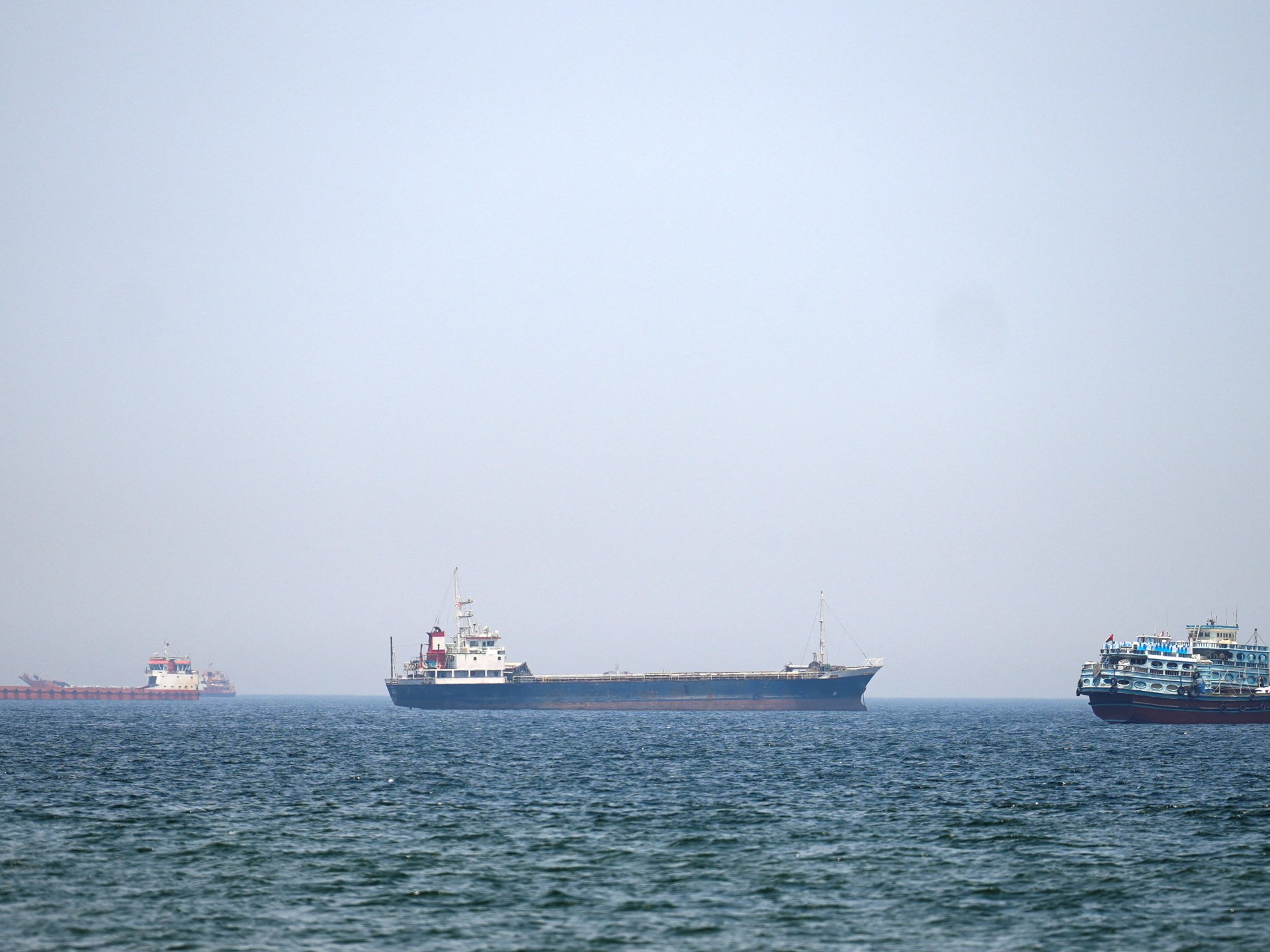
A man stands in the water, appearing to fish, as bulk carriers, cargo ships, and service vessels line the horizon in the Strait of Hormuz off Bandar Abbas, Iran (Razieh Poudat/AP)
Iran previously wanted the US to drop its blockade as a precondition for talks and agree to terms for ending the war before discussions on the future management of the strait and its nuclear programme.
Economic disruption and differences in the peace talks aside, the third reality check as to where the war stands, says Grossman, is the glaringly obvious fact that events are now mostly out of Trump’s control.
“No matter how many times Trump says Iran ‘has no cards’, it clearly does, and with the pending global energy supply crunch, time is on its side,” Grossman concludes.
To date, for Operation Epic Fury, the Trump administration has so far deployed nearly half the United States’ air power and roughly a third of its naval assets.
The cost is nearly $900 million a day, the Center for Strategic and International Studies has estimated, yet still, Iran refuses to yield to the combined US-Israeli onslaught.
So where do things go from here and can Trump find a way out of the military, diplomatic and economic straitjacket in which he has placed himself?
As it stands this weekend, things are not looking good. For despite some reports of Iran offering hints of compromise, Trump has said that he is “not satisfied” with Iran’s latest proposals, insisting “they’re asking for things I can’t agree to”.
He said too it was uncertain whether a deal would be reached, warning that he would “blast them away” if negotiations failed.
Adding to Trump’s woes, Iran’s military headquarters yesterday in turn released a statement saying the resumption of the war between Iran and the US is “likely, as evidence shows the US is not committed” to any agreement or treaty.
As Al Jazeera reported, the Iranians believe they have shown enough flexibility before the war during the negotiations, the talks held in Islamabad, and then during the ceasefire. But now say they haven’t seen the same approach from the US as each time Iran has eased its demands, all of which makes the shaky three-week ceasefire even shakier.
After the colossal airstrikes inflicted by the US and Israel, Iran has no navy or air force worth speaking of and lost and has used up many of its missiles and drones. To make more of them, it will have to contend with the fact that its economy has been set back years by more than 21,000 American and Israeli strikes.
As an editorial in The Economist last month observed, the best reason to think that Trump will not return to war is that he now perhaps grasps he should never have started it.
“His abhorrent chest-beating posts threatening to destroy Iran look like attempts to dress his climbdown in Kevlar,” the editorial noted.
“He knows that renewed war would panic the markets and that having hailed a ‘Golden Age’ in the Middle East, the player of four-dimensional chess would risk looking a fool,” the magazine’s leader concluded.
Some maintain that should the anticipated summit between Trump and China’s leader, Xi Jinping, actually take place in mid-May – after a previous delay – then the US president might take a temporary off-ramp in the Gulf. But as it stands and with talk of renewed hostilities imminent, that opportunity is fast dwindling.
As the FT’s US national editor Edward Luce recently noted, “no matter how many times Trump offers a new golden age for the Middle East, Iran will find it hard to believe he will not flip back to regime change if things do not go his way”.
“He has been veering from promising heaven to vowing hell on an almost daily basis. That Iran’s regime is brutal and fanatical is no excuse. Even the gentlest of negotiating counterparts would find it hard to take him at his word,” Luce concluded.
It’s perhaps now worth recalling that when Trump launched the war, he promised a swift and decisive victory. In fact, just 10 days into the conflict, he said the US had “already won the war in many ways”.
Two months later, nothing could be further from the truth given the clear failure in fulfilling the war’s declared aims. If ever there was a time for Trump and his administration to take a reality check on this disastrous conflict, it’s right now.